Blog List

Sunday, 27 March 2016

About How Many Calories Does 2 Ounces of Deli Ham Have?

While relatively low in calories, deli ham often contains high amounts of saturated fat and sodium. Two ounces of deli ham is approximately 56 grams, or two slices, depending on the fat content.
About How Many Calories Does 2 Ounces of Deli Ham Have?
Two ounces of deli ham has about 60 calories. Photo Credit Anna Boborwska/Hemera/Getty Images

Nutrition Facts

Two ounces of 97-percent fat-free deli ham contains 60 calories, 9 grams of protein, 1 gram of carbs and 2 grams of fat. To minimize the calories, eat the ham with low-fat cheese, vegetables and two small slices of whole-wheat bread.

Fat and Sodium

Focus on the fat and sodium content when reading the nutrition label. Try buying deli ham that is greater than 95-percent fat-free and low in sodium. The saturated fat found in deli meat can contribute to high cholesterol and heart disease if you eat too much of it. The average adult should consume less than 16 grams of saturated fat per day. As for sodium, you should aim for less than 140 milligrams per serving. To promote heart health, the American Heart Association recommends that you consume less than 1,500 milligrams of sodium per day .
www.livestrong.com

How to Cook Chicken Breasts on the Grill With Aluminum Foil

Elevate camping food to a new level by cooking chicken breasts wrapped in aluminum foil on your home grill. The foil not only reduces the mess, but it also accelerates cooking time and keeps the chicken tender by sealing in moisture. Add a few seasonings and some vegetables for a complete meal in a packet.

How to Cook Chicken Breasts on the Grill With Aluminum Foil
A grilled chicken breast on a plate. Photo Credit VankaD/iStock/Getty Images

Step 1

Preheat the grill to medium-high heat. Prepare two sheets of aluminum foil measuring 18 inches by 24 inches. Place the sheets together for durability.

Step 2

Place one thawed, boneless chicken breast on each stacked pair of foil sheets, positioning the chicken to one side of the foil. Season the chicken breasts well with any desired seasonings, such as salt, pepper, garlic powder, lemon pepper or mesquite seasoning. Add vegetables, such as carrots, onion, summer squash or peppers, or a savory sauce, if you like.

Step 3

Fold the other side of the sheet of foil over the chicken to create a pocket. Fold the outside edges over two or three times to make a tight seal.

Step 4

Place the foil packets on the preheated grill rack and cook for 15 to 20 minutes, turning once. Remove the packets from the grill and carefully insert a meat thermometer through the packets and into the chicken breasts. The chicken is done when the thermometer reads 165 F. Allow the chicken to rest for five minutes before slicing it.

Carrot Juice for Cancer

Drinking carrot juice is one of the best ways to prevent cancer or fight cancer. According to the "Antioxidant Miracle," carrot juice provides powerful antioxidants that support health and the immune system. Eating raw or cooked carrots are great ways to obtain vitamins, minerals and even fiber, yet it would be difficult to consume enough carrots in your daily routine to meet your body's cancer prevention needs. The juice from 1 lb. of raw carrots makes one glass of juice.
Carrot Juice for Cancer
Juicing carrots Photo Credit carrots image by Freeze Frame Photography from Fotolia.com

Nutrients

Carrots contain the cartenoid alpha carotene, beta-carotene and potent antioxidants. Recent studies published in the "Antioxidant Miracle," indicate that alpha carotene is a more potent cancer preventative and fighter than even beta-carotene. Carrots contain one of the few cartenoids with pro Vitamin A activity, which means that the body converts the beta-carotene into Vitamin A as needed. In addition, carrots contain calcium pectate, a source of soluble fiber, Vitamin B-complex, C, D, E and K, iron, calcium and phosphorous and manganese.

Preparation

Remove the tops from the carrots. Use organic carrots for juicing to ensure that you do not introduce pesticides into your juice. Wash the organic carrots before juicing, but do not peel them. If you do not use organic carrots, wash them using a vegetable wash solution to remove pesticides and scrape the peel, if desired, before juicing. The authors from "Juicing for Life, recommend preparing carrot juice to work in combinations with other nutrient-filled vegetables, to boost nutrients to fight cancer.

Tips

Serve your juice immediately after juicing. According to "Juicing for Life," that is when the juice is at its peak for flavor and antioxidants. If you cannot drink your juice immediately, cover the glass and refrigerate the juice so that it does not oxidize. Begin and end juicing with the softest vegetables or fruits. For example, to create an apple-carrot cocktail, begin with half of the apple, then add the carrots next and end with the remaining half of the apple.

Prevent Cancer

Since cancer is a complex disease, preventing what causes cancer is equally as complex. From research taken from the "Antioxidant Miracle," one of the best cancer preventative methods is to juice not only raw carrots, but carrots in combination with foods that have equal cancer fighting properties such as ginger root, garlic, apples, celery, green peppers, onion, spinach and parsley. For a cleansing carrot juice drink, add a ¼-inch of fresh ginger, one peeled raw beet and half of an apple.

Fight Cancer

Authors from "Prescription for Cooking," recommend creating carrot juice cocktails that are beneficial as cancer fighters. Add to your carrots juiced collard greens, kale, parsley and spinach for additional sources of cancer fighting beta-carotene. To add more Vitamin C in your diet, add kale, parsley, green pepper or broccoli with two carrots daily. Since juicers do not juice bananas, avoid adding them to the juicer. Carrots blend well with nearly every other fruit and are as delicious as they are refreshing.
www.livestrong.com

SPORE (AGRICULTURAL PUBLICATION)

Spore is a magazine published by the Technical Centre for Agricultural and Rural Cooperation ACP-EU (CTA) in English and French. It covers a wide range of agricultural topics and is extensively distributed and widely reproduced throughout African, Caribbean and Pacific (ACP) countries and elsewhere. Originally known as the Bulletin of CTA it now styles itself as "the magazine for agricultural and rural development in ACP countries".


Spore
CategoriesAgriculture
FrequencyBimonthly
First issue1 March 1986
CompanyTechnical Centre for Agricultural and Rural Cooperation ACP-EU (CTA)
CountryNetherlands
LanguageEnglish, French, Portuguese
Website[1]

Origin

Spore was first published at the beginning 1986, two years after the establishment of CTA. The first issue noted that "rather than promoting the agency putting it out, ..........Spore aims to ensure the widest possible dissemination of information of relevance to the agricultural world, in order to fertilize ideas and allow them to germinate. It is in this down-to-earth way that Spore hopes to participate in the process of rural development." The first issue included articles on locusts, fertilizer response, bananas, aquaculture, rice husks for fuel, and sorghum. Initially published in English and French, a Portuguese version (Esporo) was added in 1993, although rising costs meant that this was discontinued in 2016.

Distribution

The magazine appears bimonthly and also has an annual Special Issue in which a particular subject is treated in depth. It is available in print and online. Hard copies are available on request and free of charge to people living in ACP countries. They are also distributed through ACP ministries of agriculture and in partnership with local organisations, particularly where postal services are poor. In some countries the magazine has been very effective in reaching remote areas. In 2012 the print run of all three languages combined was around 70,000, with 53,000 of these being sent out directly to subscribers. It is estimated that around 300,000 people read each issue but the potential audience has been put at one million. Surveys in Cameroon and Uganda found several examples of income-raising activities inspired by the magazine. It is also used in literacy and adult education programmes. According to Google Scholar, articles in Spore had been cited 83 times in academic journals by the beginning of February 2014.

Reproduction of Articles

Articles appearing in Spore can be freely reproduced for non-commercial use, if credited as coming from the magazine. Reproduction of Spore articles is widespread in ACP countries and elsewhere, both in national newspapers and international media services such as Africa Online and in journals and web sites specializing on agricultural topics, such as City Farmer.

Contents

A typical bimonthly 28-page issue contains a two-page in-depth report on a particular topic that is usually also featured on the cover. This is followed by news items presented under the categories of Agriculture, Fisheries and Livestock, Environment, Research and Business and Trade. Other features include an interview with someone active in the field of agriculture, a detailed 7-page "Dossier" on a major issue, reviews of agricultural publications, and news about the work of the publisher, CTA.
Recent Special Issues have covered Climate Change (2015), Family Farming (2014), Structured Grain Trading (2013); Agricultural Value Chains (2012); Modernizing Farms (2011) and Population and Agriculture (2010).
Back Numbers
Issues from September 1997 (No. 72) to the present are available at the magazine's website [3].
Issues 1-69 are available from [4].
References

  1. ^ "SPORE Bulletin of the CTA No. 01: Spore dissemination and germination". Collections.infocollections.org. Retrieved 2014-02-02.
  2. ^ "The First Ten Years", CTA, 1994. ISBN 929081 1110.
  3. ^ "African Press Organization 29 June 2010. Spore, the CTA magazine for agricultural and rural development in Africa, the Caribbean and the Pacific gets a new look". Appablog.wordpress.com. 2010-06-29. Retrieved 2014-02-02.
  4. ^ "Raising the Bar: CTA Annual Report 2012" (PDF). Retrieved 2014-02-02.
  5. ^ The Cotonou Agreement: A User's Guide (PDF). Retrieved 2014-02-07.
  6. ^ Pye-Smith, Charlie (2014). Stories of Change (PDF). Wageningen: CTA. p. 70. ISBN 978-92-9081-545-7.
  7. ^ http://scholar.google.co.uk/scholar?hl=en&q=spore.cta.int&btnG=&as_sdt=1%2C5&as_sdtp.
  8. ^ "Rwanda:Financial innovation for growth". Africa Online. 2013-05-26. Retrieved 2014-02-05.
  9. ^ "Spore Magazine: Urban Agriculture - City Farmers". City Farmer. 2012-02-24. Retrieved 2014-02-07.

- Wikipedia 

Saturday, 26 March 2016

ADDITIVE FOR CUT FLOWERS

Additives for cut flowers are substances added to water, intended to extend the viability of cut flowers. Once flowers are removed from the plant they continue to grow slowly, but have a diminished capability of receiving the nutrients that are vital for their survival.
There are different techniques of ensuring that fresh cut flowers remain alive for the longest amount of time.


Flower display in a US supermarket.
Sterilization

According to James C. Schmidt, a horticulturist at the University of Illinois, originally putting cut flowers in a sterilized vase is important to extending the life of the flowers. Vases can be cleaned using a household dish detergent or a combination of water and bleach. Using these disinfectants ensures that there will be less bacteria growing within the vase that could potentially cause the plant to wilt and die at a faster rate. Schmidt also claims that cutting the flowers diagonally with a sharp knife under running water ensures that they can immediately take up fresh and clean water. Re-cutting the stems periodically will ensure that there is a fresh surface from which the stems can take up water. This will allow the flowers to last even longer.

Additives
According to the Brooklyn Botanical Garden, different additives can be used to prolong the lives of fresh cut flowers. Experiments were performed with various substances mixed with water, including aspirin, vitamin pills, vinegar, pennies and flower food to test their effect on cut flowers' lifespans. Each plant was placed in the same environment and the same type of plant was used in each vase.
This research found that the best additive for flowers was the retailer-provided "flower food" that is usually given with a bouquet. Plants are known to thrive in an environment where there are few bacteria, plenty of food for energy, and water uptake is encouraged. Flower foods contain an acidifier that helps to adjust the water's pH. With a lower pH the water and food conducting system within the flower can work at maximum efficiency. The sugar in the food will be used by the plant as an energy source, which had been lost when the flower was cut away from its root. With these nutrients the plant will be able to fully develop. Finally, there are stem unpluggers that will make sure that the flower can easily take up water and nutrients that can later be used to take care of the needs of the rest of the plant. This combination gives the fresh cut flowers everything that they need to survive longer. When tests were carried out in St. Mary's College C.S.S.p, Rathmines, Dublin, however, results showed that glucose was more effective at prolonging the life of cut flowers than the commercial plant food. The experiment was carried out as part of the Junior Certificate Science Examination set by the Irish State Examinations Commission 2008.
References

  1. ^ [1].
  2. ^ "Additives for cut flowers".
  3. ^ Additives for cut flowers

External Links

  • Cut-Flower Care — How to Make Your Fresh-Cut Flowers Last, by Rose G. Edinger, Brooklyn Botanical Garden, Spring 2003, retrieved October 21, 2006
  • Omniflora.


- Wikipedia 

CUT FLOWERS

Cut flowers are flowers or flower buds (often with some stem and leaf) that have been cut from the plant bearing it. It is usually removed from the plant for indoor decorative use. Typical uses are in vase displays, wreath sand garlands. Many gardeners harvest their own cut flowers from domestic gardens, but there is a significant commercial market and supply industry for cut flowers in most countries. The plants cropped vary by climate, culture and the level of wealth locally. Often the plants are raised specifically for the purpose, in field or glasshouse growing conditions. Cut flowers can also be harvested from the wild.
Rose, hydrangea, calla wedding bouquet
The cultivation and practices of raising cut flowers form a part of horticulture. They are often included in that branch of horticulture called floriculture.
Uses
A common use is for floristry, usually for decoration inside a house or building. Typically the cut flowers are placed in a vase. A number of similar types of decorations are used, especially in larger buildings and at events such as weddings. These are often decorated with additional foliage. In some cultures, a major use of cut flowers is for worship; this can be seen especially in south and Southeast Asia.
Sometimes the flowers are picked rather than cut, without any significant leaf or stem. Such flowers may be used for wearing in hair, or in a button-hole. Masses of flowers may be used for sprinkling, in a similar way to confetti.
Garlands (especially in South Asia ), and wreaths (in Europe and the Americas) are major derived and value added products.


Flower garland sellers outside Banke Bihari Temple, Vrindavan, India
Longevity of cut flowers
Live cut flowers have a limited life. The majority of cut flowers can be expected to last several days with proper care. This generally requires standing them in water in shade. They can be treated in various ways to increase their life.
In most countries, cut flowers are a local crop; because of their limited life after harvest they have to be marketed quickly. In India, much of the product has a shelf life of only a day. Among these are marigold flowers for garlands and temples, which are typically harvested before dawn, and discarded after use the same day.
There is also a market for 'everlasting' or dried flowers, which include species such as Helichrysum bracteatum. These can have a very long shelf life.


A flower market in Vietnam
Commerce
The largest producers are, in order of cultivated area, China, India and the United States. The largest importer and exporter by value is the Netherlands, which is both a grower and a redistributor of crops imported from other countries. Most of its exports go to its European neighbours.
In recent decades, with the increasing use of air freight, it has become economic for high value crops to be grown far from their point of sale; the market is usually in industrialised countries. Typical of these is the production of roses in Ecuador and Colombia, mainly for the US market, and production in Kenya and Uganda for the European market. Some countries specialise in especially high value products, such as orchids from Singapore and Thailand.
The total market value in most countries is considerable. It has been estimated at approximately GBP 2 billion in the United Kingdom, of the same order as that of music sales.
References

  • Jack Goody. The culture of flowers. Cambridge University Press,
  1. ^ "Sectoral Activities Department (SECTOR). Ilo.org. Retrieved 2011-12-05.
  2. ^ http://www.foodnet.cgiar.org/market/Uganda/reports/Roses.PDF.
  3. ^ Gardening (2007-07-13). "Country roses: A cut above". London: Telegraph. Retrieved 2011-12-05.

- Wikipedia 

ENDOSPORE

An endospore is a dormant tough, and non-reproductive structure produced by certain bacteria from the Firmicute phylum. The name "endospore" is suggestive of a spore or seed-like form (endo means within), but it is not a true spore (i.e., not an offspring). It is a stripped-down, dormant form to which the bacterium can reduce itself. Endospore formation is usually triggered by a lack of nutrients, and usually occurs in gram-positive bacteria. In endospore formation, the bacterium divides within its cell wall. One side then engulfs the other. Endospores enable bacteria to lie dormant for extended periods, even centuries. Revival of spores millions of years old has been claimed. When the environment becomes more favorable, the endospore can reactivate itself to the vegetative state. Most types of bacteria cannot change to the endospore form. Examples of bacteria that can form endospores include Bacillus and Clostridium.
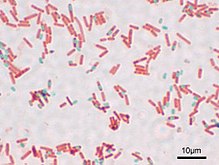

A stained preparation of Bacillus subtilis showing endospores as green and the vegetative cell as red
The endospore consists of the bacterium's DNA, ribosomes and large amounts of dipicolinic acid. Dipicolinic acid is a spore-specific chemical that appears to help in the ability for endospores to maintain dormancy. This chemical comprises up to 10% of the spore's dry weight.
Endospores can survive without nutrients. They are resistant to ultraviolet radiation, desiccation, high temperature, extreme freezing and chemical disinfectants. Thermo-resistant endospores were first hypothesized by Ferdinand Cohn after studying Bacillus subtilis (pictured to the right) growth on cheese after boiling the cheese. His notion of spores being the reproductive mechanism for the growth was a large blow to the previous suggestions of spontaneous generation. Astrophysicist. Steinn Sigurdsson said "There are viable bacterial spores that have been found that are 40 million years old on Earth – and we know they're very hardened to radiation." Common anti-bacterial agents that work by destroying vegetative cell walls do not affect endospores. Endospores are commonly found in soil and water, where they may survive for long periods of time. A variety of different microorganisms form "spores" or "cysts," but the endospores of low G+C gram-positive bacteria are by far the most resistant to harsh conditions.
Some classes of bacteria can turn into exospores, also known as microbial cysts, instead of endospores. Exospores and endospores are two kinds of "hibernating" or dormant stages seen in some classes of microorganisms.


Phase-bright endospores of Paenibacillus alvei imaged with phase-contrast microscopy
Structure
Bacteria produce a single endospore internally. The spore is sometimes surrounded by a thin covering known as the exosporium which overlies the spore coat. The spore coat, which acts like a sieve that excludes large toxic molecules like lysozyme, is resistant to many toxic molecules and may also contain enzymes that are involved in germination. The cortex lies beneath the spore coat and consists of peptidoglycan. The core wall lies beneath the cortex and surrounds the protoplast or coreof the endospore. The core contains the spore chromosomal DNA which is encased in chromatin-like proteins known as SASPs (small acid-soluble spore proteins), that protect the spore DNA from UV radiation and heat. The core also contains normal cell structures, such as ribosomes and other enzymes, but is not metabolically active.


Variations in endospore morphology: (1, 4) central endospore; (2, 3, 5) terminal endospore; (6) lateral endospore
Up to 20% of the dry weight of the endospore consists of calcium dipicolinate within the core, which is thought to stabilize the DNA. Dipicolinic acid could be responsible for the heat resistance of the spore, and calcium may aid in resistance to heat and oxidizing agents. However, mutants resistant to heat but lacking dipicolinic acid have been isolated, suggesting other mechanisms contributing to heat resistance are also at work. Small acid-soluble proteins (SASPs) are found in endospores. These proteins tightly bind and condense the DNA, and are in part responsible for resistance to UV light and DNA-damaging chemicals.
Visualising endospores under light microscopy can be difficult due to the impermeability of the endospore wall to dyes and stains. While the rest of a bacterial cell may stain, the endospore is left colourless. To combat this, a special stain technique called a Moeller stain is used. That allows the endospore to show up as red, while the rest of the cell stains blue. Another staining technique for endospores is the Schaeffer-Fulton stain, which stains endospores green and bacterial bodies red. The arrangement of spore layers is as follows:
  • Exosporium
  • Spore coat
  • Spore cortex
  • Core wall
Location 
The position of the endospore differs among bacterial species and is useful in identification. The main types within the cell are terminal, subterminal, and centrally placed endospores. Terminal endospores are seen at the poles of cells, whereas central endospores are more or less in the middle. Subterminal endospores are those between these two extremes, usually seen far enough towards the poles but close enough to the center so as not to be considered either terminal or central. Lateral endospores are seen occasionally.
Examples of bacteria having terminal endospores include Clostridium tetani, the pathogen that causes the disease tetanus. Bacteria having a centrally placed endospore include Bacillus cereus, and those having a subterminal endospore include Bacillus subtilis. Sometimes the endospore can be so large the cell can be distended around the endospore, this is typical of Clostridium tetani.
Formation and destruction

Under conditions of starvation, especially the lack of carbon and nitrogen sources, a single endospore forms within some of the bacteria. The process is called sporulation (def).(Kaiser, 2011)
When a bacterium detects environmental conditions are becoming unfavourable it may start the process of endosporulation, which takes about eight hours. The DNA is replicated and a membrane wall known as a spore septum begins to form between it and the rest of the cell. The plasma membrane of the cell surrounds this wall and pinches off to leave a double membrane around the DNA, and the developing structure is now known as a forespore. Calcium dipicolinate, the calcium salt of dipicolinic acid, is incorporated into the forespore during this time. The dipicolinic acid helps stabilize the proteins and DNA in the endospore. Next the peptidoglycan cortex forms between the two layers and the bacterium adds a spore coat to the outside of the forespore. In the final stages of endospore formation the newly forming endospore is dehydrated and allowed to mature before being released from the mother cell. The cortex is what makes the endospore so resistant to temperature. The cortex contains an inner membrane known as the core. The inner membrane that surrounds this core leads to the endospore's resistance against UV light and harsh chemicals that would normally destroy microbes. Sporulation is now complete, and the mature endospore will be released when the surrounding vegetative cell is degraded.
Endospores are resistant to most agents that would normally kill the vegetative cells they formed from. Unlike persister cells, endospores are the result of a morphological differentiation process triggered by nutrient limitation (starvation) in the environment; endosporulation is initiated by quorum sensing within the "starving" population. Most disinfectants such as household cleaning products, alcohols, quaternary ammonium compounds and detergents have little effect on endospores. However, sterilant alkylating agents (e.g. ethylene oxide), and 10% bleach are effective against endospores. To kill most anthrax spores, standard household bleach (with 10% sodium hypochlorite) must be in contact with the spores for at least several minutes; a very small proportion of spores can survive longer than 10 minutes in such a solution. Higher concentrations of bleach are not more effective, and can cause some types of bacteria to aggregate and thus survive.
While significantly resistant to heat and radiation, endospores can be destroyed by burning or by autoclaving at a temperature exceeding the boiling point of water, 100 °C. Endospores are able to survive at 100 °C for hours, although the longer the number of hours the fewer that will survive. An indirect way to destroy them is to place them in an environment that reactivates them to their vegetative state. They will germinate within a day or two with the right environmental conditions, and then the vegetative cells, not as hardy as endospores, can be straightforwardly destroyed. This indirect method is called Tyndallization. It was the usual method for a while in the late 19th century before the introduction of inexpensive autoclaves. Prolonged exposure to ionising radiation, such as x-rays and gamma rays, will also kill most endospores.
Certain types of endospores are used to ensure that an autoclaved item has been rendered truly sterile: a small capsule containing the spores is put into the autoclave with the items; after the cycle it is checked to see if anything will grow from it. If nothing will grow, then the spores were destroyed and the sterilization was successful.
In hospitals, endospores on delicate invasive instruments (e.g., video endoscopes) are killed by low-temperature and non-corrosive, non-toxic, plasma-activated concentrated hydrogen peroxide vapor in sterilizers. In contrast, "high level disinfection" does not kill endospores but is used for instruments that don't enter sterile bodily cavities (e.g., a colonoscope). This latter method uses only warm water, enzymes, and detergents.
Bacterial endospores are resistant to antibiotics, most disinfectants, and physical agents such as radiation, boiling, and drying. The impermeability of the spore coat is thought to be responsible for the endospore's resistance to chemicals. The heat resistance of endospores is due to a variety of factors:
  • Calcium dipicolinate, abundant within the endospore, may stabilize and protect the endospore's DNA.
  • Small acid-soluble proteins (SASPs) saturate the endospore's DNA and protect it from heat, drying, chemicals, and radiation. They also function as a carbon and energy source for the development of a vegetative bacterium during germination.
  • The cortex may osmotically remove water from the interior of the endospore and the dehydration that results is thought to be very important in the endospore's resistance to heat and radiation.
  • Finally, DNA repair enzymes contained within the endospore are able to repair damaged DNA during germination.

Reactivation
Reactivation of the endospore occurs when conditions are more favourable and involves activationgermination, and outgrowth. Even if an endospore is located in plentiful nutrients, it may fail to germinate unless activation has taken place. This may be triggered by heating the endospore. Germination involves the dormant endospore starting metabolic activity and thus breaking hibernation. It is commonly characterised by rupture or absorption of the spore coat, swelling of the endospore, an increase in metabolic activity, and loss of resistance to environmental stress.
Outgrowth follows germination and involves the core of the endospore manufacturing new chemical components and exiting the old spore coat to develop into a fully functional vegetative bacterial cell, which can divide to produce more cells.
Endospores possess five times more sulfur than vegetative cells. This excess sulfur is concentrated in spore coats as an amino acid, cystine. It is believed that the macromolecule accountable for maintaining the dormant state has a protein coat rich in cystine, stabilized by S-S linkages. A reduction in these linkages has the potential to change the tertiary structure, causing the protein to unfold. This conformational change in the protein is thought to be responsible for exposing active enzymatic sites necessary for endospore germination.
Endospores can stay dormant for a very long time. For instance, endospores were found in the tombs of the Egyptian pharaohs. When placed in appropriate medium, under appropriate conditions, they were able to be reactivated. In 1995, Raul Cano of California Polytechnic State University found bacterial spores in the gut of a fossilized bee trapped in amber from a tree in the Dominican Republic. The bee fossilized in amber was dated to being about 25 million years old. The spores germinated when the amber was cracked open and the material from the gut of the bee was extracted and placed in nutrient medium. After the spores were analyzed by microscopy, it was determined that the cells were very similar to "Bacillus sphericus" which is found in bees in the Dominican Republic today.
Importance
As a simplified model for cellular differentiation, the molecular details of endospore formation have been extensively studied, specifically in the model organism Bacillus subtilis. These studies have contributed much to our understanding of the regulation of gene expression, transcription factors and the sigma factor subunits of RNA polymerase.
Endospores of the bacterium Bacillus anthracis were used in the 2001 anthrax attacks. The powder found in contaminated postal letters was composed of extracellular anthrax endospores. This intentional distribution lead to 22 known cases of anthrax (11 inhalation and 11 cutaneous) making the case fatality rate among patients with inhalation anthrax 45% (5/11). The six other individuals with inhalation anthrax and all the individuals with cutaneous anthrax recovered. Had it not been for antibiotic therapy many more might have been stricken.
According to WHO veterinary documents, B. anthracis sporulates when it sees oxygen instead of the carbon dioxide present in mammal blood; this signals to the bacteria that it has reached the end of the animal, and an inactive dispersable morphology is useful.
Sporulation requires the presence of free oxygen. in the natural situation, this means the vegetative cycles occur within the low oxygen environment of the infected host and, within the host, the organism is exclusively in the vegetative form. once outside the host, sporulation commences upon exposure to the air and the spore forms are essentially the exclusive phase in the environment.
Geobacillus stearothermophilus endospores are used as biological indicators when an autoclave is used in sterilization procedures.
Biotechnology

Bacillus subtilis spores are useful for the expression of recombinant proteins and in particular for the surface display of peptides and proteins as a tool for fundamental and applied research in the fields of microbiology, biotechnology and vaccination.

Endospore-forming bacteria
Examples of endospore-forming bacteria include the genera:


Acetonema
Scientific classification
Kingdom:Bacteria
Phylum:Firmicutes
Class:Clostridia
Order:Clostridiales
Family:Veillonellaceae
Genus:Acetonema
Kane and Breznak 1992
Type species
Acetonema ecieslongum
Species
A. longum

ACETONEMA
Acetonema is a genus of bacteria in the family Veillonellaceae. It is H2-oxidizing CO2-reducing acetogenic strictly anaerobic endospore-forming Gram-negative motile rod-shaped, isolated from gut contents of the wood-feeding termite Pterotermes occidentis. Cells are catalase positive, oxidase negative, and have 51.5 mol percent G + C in their DNA. Optimum conditions for growth on H2 + CO2 are at 30-33 degrees C and pH (initial) 7.8. Acetonema longum is the sole species within the genus.

References;


  1. a b c LSPN bacterio.net.
  2. ^ Kane MD, Breznak JA (1991). "Acetonema longum gen. nov. sp. nov., an H2/CO2acetogenic bacterium from the termite, Pterotermes occidentis.". Arch Microbiol 2 (156): 91–8. PMID 1723588.

References

  1. Murray, Patrick R., and Ellen Jo. Baron. Manual of Clinical Microbiology. Vol. 1. Washington, D.C.: ASM, 2003. Print.
  2. ^ C.Michael Hogan. 2010. Bacteria. Encyclopedia of Earth. eds. Sidney Draggan and C.J. Cleveland, National Council for Science and the Environment, Washington DC.
  3. ^ Cano, RJ; Borucki, MK (1995). "Revival and identification of bacterial spores in 25- to 40-million-year-old Dominican amber". Science 268: 1060–1064. doi:10.1126/science.7538699. PMID 7538699.
  4. ^ "endospore" at Dorland's Medical Dictionary.
  5. ^ "Bacterial Endospores". Cornell University. Retrieved 2014-01-30.
  6. ^ BBC Staff (23 August 2011). "Impacts 'more likely' to have spread life from Earth". BBC. Retrieved 2011-08-24.
  7. ^ "Bacterial Endospores". Cornell University. Retrieved 2014-01-25.
  8. ^ Prescott, L. (1993). Microbiology, Wm. C. Brown Publishers, ISBN 0-697-01372-3.
  9. ^ http://micro.cornell.edu/research/epulopiscium/bacterial-endospores.
  10. ^ Pommerville, Jeffrey C. (2014). Fundamentals of microbiology (10th ed.). Burlington, MA: Jones & Bartlett Learning. p. 141. ISBN 1449688616.
  11. ^ Cornell University College of Agriculture and Life Sciences, Department of Microbiology. http://micro.cornell.edu/research/epulopiscium/bacterial-endospores.
External Links


- Wikipedia 

Advantages and Disadvantages of Fasting for Runners

Author BY   ANDREA CESPEDES  Food is fuel, especially for serious runners who need a lot of energy. It may seem counterintuiti...