Blog List

Thursday, 12 October 2017

Apply now for Native American research assistantships

Author
Posted on August 19, 2016

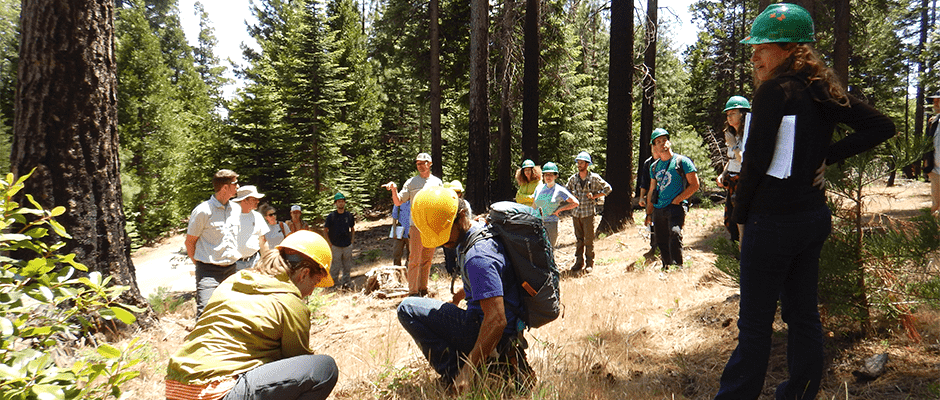
Jessica Lackey and Raymond Gutteriez participated in a research assistantship during Summer 2015. During a two-day field workshop at Blodgett Forest hosted by Pacific Southwest researchers, Ray and Jessica hit the ground to sample wild strawberries, one of the species desired by tribal members seeking to restore conditions favoring black oak. ©U.S. Forest Service
The U.S. Forest Service (USFS), Premier Partner of The Wildlife Society, is sponsoring a research assistantship program for Native American students. This will be the third year for the program, which will facilitate mentoring opportunities for USFS Research & Development (R&D) scientists with the students and promote student advancement and training for careers in natural resource and conservation-related fields. The USFS uses an ecological science-based approach to make informed decisions on the multiple-use management of the National Forests and Grasslands.
A short-term assistantship is available for Native American students interested in wildlife and forest resources and excited to learn and work with an interdisciplinary team of researchers. Applicants must be a member of an American Indian or Alaska Native tribe, First Nations, or a Native Hawaiian or Pacific Islander, or have some other indigenous identification, and be currently enrolled in an undergraduate or graduate program from an accredited academic institution. A bachelor’s or master’s degree in wildlife biology, ecology, forestry or other closely related natural resource discipline is preferred.  Students with Associates degrees from TCUs or other community colleges will be considered.
Potential project topics include:
  1. Interrupting the disease cycle of Psuedogymnoascus destructans (Pd): Leveraging knowledge of disease and treatment dynamics to design integrated disease management strategies
  2. Evaluating regional and landscape-scale movement patterns of wood turtles
  3. Assessment of wildfire risk in treated and untreated Mexican spotted owl (Strix occidentalis lucida) territories on tribal lands
  4. Assessment of camera trap surveys to estimate wild pig and white-tailed deer density
  5. Space use, survival, and nesting ecology of avian cavity excavators in prescribed burns
View the application form for more details on each project, including project objectives, location, housing, and duration. Only a limited number of projects may be funded and are dependent on a suitable student/mentor match.
The appointment is for 3 to 5 months within the 2017 calendar year, depending on the project. Starting dates are negotiable within the context of the seasonality of the research topics.  For more information and instructions on how to apply, please download an application form. The deadline for applications is November 4, 2016.
For further information log on website :
http://wildlife.org/apply-now-for-native-american-research-assistantships/

Apply now for Native American Research Assistantships

Author
Posted on August 18, 2017

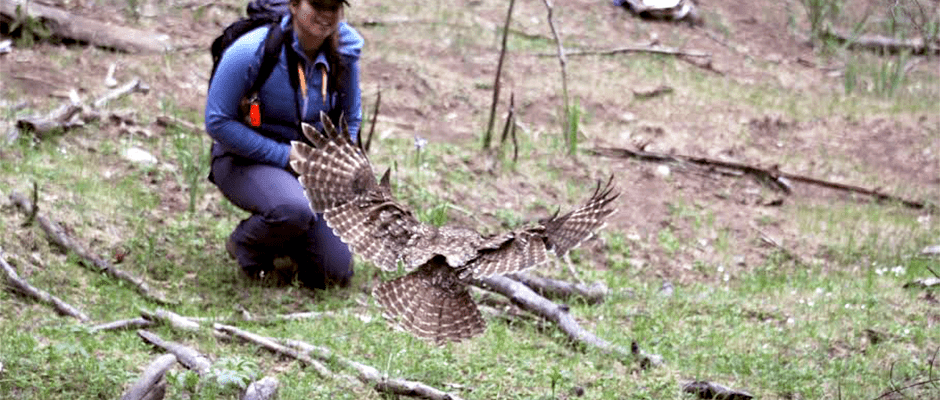
Kelci Renshaw, a research assistant in the 2017 program, observes a Mexican spotted owl. ©ISerra Hoagland
The U.S. Forest Service (USFS), Premier Partner of The Wildlife Society, is sponsoring a research assistantship program for Native American students. This will be the fourth year for the program, which will facilitate mentoring opportunities for USFS Research & Development (R&D) scientists with the students and promote student advancement and training for careers in natural resource and conservation-related fields. The USFS uses an ecological science-based approach to make informed decisions on the multiple-use management of the National Forests and Grasslands.
Short-term assistantships are available for Native American students interested in wildlife and forest resources and excited to learn and work with an interdisciplinary team of researchers. Applicants must be a member of an American Indian or Alaska Native tribe, First Nations, or a Native Hawaiian or Pacific Islander, or have some other indigenous identification, and be currently enrolled in an undergraduate or graduate program from an accredited academic institution. A bachelor’s or master’s degree in wildlife biology, ecology, forestry or other closely related natural resource discipline is preferred.  Students with Associates degrees from TCUs or other community colleges will be considered.
Potential project topics include:
  1. Assessment of camera trap surveys to estimate wild pig and white-tailed deer density
  2. Integrating wildlife habitat into non-conventional forest management
  3. Evaluating regional and landscape-scale movement patterns of wood turtles
  4. Long term monitoring of treated and untreated Mexican spotted owl (Strix occidentalis lucida) territories on tribal lands
  5. Space use, survival, and nesting ecology of avian cavity excavators in prescribed burns
  6. Woodpecker Surveys in the Black Hills of South Dakota and Wyoming
View the application form for more details on each project, including project objectives, location, housing, and duration. Only a limited number of projects may be funded and are dependent on a suitable student/mentor match.
The appointment is for 3 to 5 months within the 2018 calendar year, depending on the project. Starting dates are negotiable within the context of the seasonality of the research topics.  For more information and instructions on how to apply please download an application form. The deadline for applications is October 18, 2017.
For further information log on website :
http://wildlife.org/apply-now-for-native-american-research-assistantships-2/

Urban and Community Forests


[image:] urban plan with trees and a park
Trees and forests are resources that significantly affect the health and well-being of people who live in urban areas where more than 80 percent of the U.S. population resides. These trees within our cities and communities provide many ecosystem services and values to both urban and rural populations. Healthy urban and rural forests are critical for sustaining quality of life for people in urban areas, but many forces could change the quantity and quality of urban trees and forests in the coming decades.

Key Findings

  • From 1990 to 2000, urban land increased from 2.5 percent to 3.1 percent in the conterminous United States, and from 4.9 percent to 5.9 percent in the North.
  • By 2050, urban land is expected to increase to 8.1 percent in the conterminous United States and to 13.7 percent in the North.
  • Most of the urban expansion across the conterminous United States occurred in forests (33 percent) or agricultural land (33 percent), compared to 42 percent in agricultural land and 37 percent in forests for the North.
  • Based on projected land-use changes, overall tree cover would decrease by as much as 1.6 percent in 2060 in the conterminous United States and by as much as 1.9 percent in the North.
  • Projected changes in tree cover resulting from land-use change would be variable across the conterminous United States, with decreases in forested areas and increases in deserts, grasslands, and agricultural areas.
  • Although U.S. urban tree cover is estimated at 35 percent, a recent study revealed that 17 out of 20 cities have recently experienced statistically significant decreases in tree cover.

Maps and Figures

[map:] Percentage of U.S. non-urban forest land projected to be converted to urban land, 2000 to 2050 (Nowak and Walton 2005).
Percentage of U.S. non-urban forest land projected to be converted to urban land, 2000 to 2050.
[map:] Area of U.S. non-urban forest land projected to be converted to urban land, 2000 to 2050
Area of U.S. non-urban forest land projected to be converted to urban land, 2000 to 2050

For further information log on website :
https://www.nrs.fs.fed.us/futures/future_conditions/urban_community_forests/

Projecting Future Conditions: What will forests be like in the future?

Future Conditions: What will forests be like in the future?

[image:] Two people looking into a crystal ball to predict future forest conditions.
The future condition of northern forests will depend on many variables.  It is impossible to consider every possible future, and so NFFP efforts focus on developing projections from a set of possible future scenarios. Projecting future forest composition and structure under a range of scenarios provides a better basis for judging whether management plans are reasonable and sustainable.

Key Findings

  • Forest area is projected to decrease between 3.5 and 6.4 percent with losses concentrated around existing urban and suburban areas.
  • Projected forest removals resulting from land-use changes are likely to average about 13 percent of total removals, with the remainder resulting from harvesting; in some populous Eastern States, removals resulting from land-use changes could exceed 50 percent of all removals.
  • By 2050, urban land is expected to increase to about 8 percent in the conterminous United States and to 14 percent in the North.

Projection Methods

One purpose of the Northern Forest Futures Project is to project change in future forest attributes across the 20 States in the U.S. North for the period that extends from 2010 to 2060. There are six scenarios, each representing a global greenhouse storyline (IPCC 2007) paired with a harvest regime:
  • A1B:  high economic growth, moderate population growth
  • A2:  moderate economic growth, high population growth
  • B2:  low economic growth, low population growth

Harvest Regimees

  • -C: Scenario projections assume harvest will continue at recently observed levels
  • -BIO: Harvest will increase to reflect increased harvest for bioenergy production

Future Conditions Data

In addition to the Criteria and Indicators, you can view a variety of statistics.

View the Future Conditions by State

map of the twenty northeastern statesMinnesotaConnecticutIllinoisIndianaIowaMissouriNew HampshireOhioPennsylvaniaRhode IslandVermontWest VirginiaMassachusettsMassachusettsNew YorkMichiganWisconsinNew YorkMassachusettsMaineNew JerseyDelawareMaryland
 
For further information log on website :
https://www.nrs.fs.fed.us/futures/future_conditions/

Solar drying of West Indian ginger (Zingiber officinale Roscoe) rhizome using a wire basket dryer

Author
D.A. BalladinI.Chang YenD.R. McGaw and O. Headley
Renewable Energy, 1996, vol. 7, issue 4, 409-418

Abstract: A wire basket dryer (1.8 m × 0.9 × 0.2 m) was used to dry sliced (0.15 cm) West Indian ginger (Zingiber officinale Roscoe) rhizome to an acceptable moisture content of 10.2% (dry weight basis) over a 3 day period. The optimum charge size was 14.97 kg, with a packing density of 462.04 kg m−3 and a specific drying rate of 0.446 h−1. The quantities (determined by high-pressure liquid chromatography) of the main pungent principles (gingerol and shogaol) extracted from fresh, non-steam-distilled solar-dried and steam-distilled solar-dried ginger rhizomes showed increases of 0.068, 0.46 and 0.67 g [per 100 g (dry weight basis)], respectively, with a decrease in the oleoresin quality (reflected in pungency profile) of the same order.
Date: 1996
References: View complete reference list from CitEc
Citations View citations in EconPapers (3) Track citations by RSS feed

Downloads: (external link)
http://www.sciencedirect.com/science/article/pii/0960148195001379
Full text for ScienceDirect subscribers only

Related works:
This item may be available elsewhere in EconPapers: Search for items with the same title.

Export reference: BibTeX RIS (EndNote, ProCite, RefMan) HTML/Text
Persistent link: https://EconPapers.repec.org/RePEc:eee:renene:v:7:y:1996:i:4:p:409-418
Access Statistics for this article
Renewable Energy is currently edited by Soteris A. Kalogirou and Paul Christodoulides
More articles in Renewable Energy from Elsevier
Series data maintained by Dana Niculescu (repec@elsevier.com).

For further detail slog on website :
https://econpapers.repec.org/article/eeerenene/v_3a7_3ay_3a1996_3ai_3a4_3ap_3a409-418.htm

High pressure liquid chromatographic analysis of the main pungent principles of solar dried West Indian ginger (Zingiber officinale Roscoe)

Author
D.A. BalladinO. HeadleyI. Chang-Yen and D.R. Mcgaw
Renewable Energy, 1998, vol. 13, issue 4, 531-536

Abstract: The main pungent principles of West Indian ginger (Zingiber officinale Roscoe) were quantified and qualified using High Pressure Liquid Chromatography. This procedure was used to evaluate the pungency profile of fresh, solar dried and solar dried/steam distilled ginger rhizomes. In this investigation, the total oleoresin extracted was in the ratio [20:1:2] for [fresh ginger: solar dried: solar dried/steam distilled ginger rhizomes] with respect to the [6]-gingerol content. This simple isocratic HPLC method can be used to investigate the pungency profile of the extracted oleoresin from the ginger rhizomes.
Date: 1998
References: View references in EconPapers View complete reference list from CitEc
Citations Track citations by RSS feed

Downloads: (external link)
http://www.sciencedirect.com/science/article/pii/S0960148198000299
Full text for ScienceDirect subscribers only

Related works:
This item may be available elsewhere in EconPapers: Search for items with the same title.

Export reference: BibTeX RIS (EndNote, ProCite, RefMan) HTML/Text
Persistent link: https://EconPapers.repec.org/RePEc:eee:renene:v:13:y:1998:i:4:p:531-536
Access Statistics for this article
Renewable Energy is currently edited by Soteris A. Kalogirou and Paul Christodoulides
More articles in Renewable Energy from Elsevier
Series data maintained by Dana Niculescu (repec@elsevier.com).

For further details log on website :
https://econpapers.repec.org/article/eeerenene/v_3a13_3ay_3a1998_3ai_3a4_3ap_3a531-536.htm

Technical note Liquid chromatographic analysis of the main pungent principles of solar dried West Indian ginger (Zingiber officinale Roscoe)

Author
D.a Balladin and O Headley
Renewable Energy, 1999, vol. 18, issue 2, 257-261

Abstract: The main pungent principles and essential oils of West Indian ginger (Zingiber officinale Roscoe) were identified and quantified by liquid chromatography. The stationary phase used was (5.0 g silica gel 70–230 mesh) and the mobile phase [petroleum ether (60–80°C) : diethyl ether (3 : 7 v⧸v)]. The first 15 ml contained the very volatile and least polar compounds present in the extracted oleoresin from the solar dried ginger rhizome. These compounds are the essential oils (Rf = 0.90) and 25.63% (w⧸w) of the total oleoresin charge to the column. The next 5 ml aliquot was without any compounds. The following 25 ml contained the shogaol fraction (Rf = 0.42) and 47.74% (w⧸w) of the total oleoresin charge to the column. The next 5 ml aliquot was without any compounds. The following 35 ml contained the gingerol fraction (Rf = 0.20) and 27.13% (w⧸w) of the total oleoresin charge to the column. This simple liquid chromatography method can be used to investigate the essential oils and pungent principles of the extracted oleoresin from the solar dried ginger rhizomes.
Date: 1999
References: View complete reference list from CitEc
Citations Track citations by RSS feed

Downloads: (external link)
http://www.sciencedirect.com/science/article/pii/S0960148198007642
Full text for ScienceDirect subscribers only

Related works:
This item may be available elsewhere in EconPapers: Search for items with the same title.

Export reference: BibTeX RIS (EndNote, ProCite, RefMan) HTML/Text
Persistent link: https://EconPapers.repec.org/RePEc:eee:renene:v:18:y:1999:i:2:p:257-261
Access Statistics for this article
Renewable Energy is currently edited by Soteris A. Kalogirou and Paul Christodoulides
More articles in Renewable Energy from Elsevier
Series data maintained by Dana Niculescu (repec@elsevier.com).

For further detail s log on website :
https://econpapers.repec.org/article/eeerenene/v_3a18_3ay_3a1999_3ai_3a2_3ap_3a257-261.htm

Exotic Invasive Shrub Glossy Buckthorn Reduces Restoration Potential for Native Forest Herbs

Author
Caroline Hamelin (hamelinc@uregina.ca), Daniel Gagnon (btruax@frfce.qc.ca) and Benoit Truax (btruax@frfce.qc.ca)
Additional contact information

Sustainability, 2017, vol. 9, issue 2, 1-13

Abstract: Invasive glossy buckthorn could reduce restoration potential for understory native forest herbs by compromising their growth and biodiversity. Few studies of glossy buckthorn’s effects on forest herbs exist, and none were done in early-successional, partially open hardwood forests. This study was conducted in a mature hybrid poplar plantation invaded by buckthorn, located in southeastern Québec. We tested the effect of buckthorn removal on the growth of three forest herb species, whether this effect varied among species, and if canopy type (two poplar clones) influenced this effect. Forest herbs were planted in herbicide (buckthorn removed) and control treatments in the plantation understory, an environment similar to that of early-successional hardwood forests. Over the first two growing seasons, species showed specific reactions to buckthorn cover. Mean relative growth rate (RGR) for Asarum canadense and Polygonatum pubescens was increased in the herbicide treatment (48% and 33%, respectively) and decreased in the control treatment (−35% and −33%, respectively). Sanguinaria canadensis growth was the highest among species, with no difference between treatments. No effects of canopy type were detected. Results suggest that planting forest herbs for restoration purposes may be unsuccessful if buckthorn is present. Important changes in understory flora biodiversity are likely to occur over the long term in forests invaded by buckthorn.
Keywords: Frangula alnusintroduced specieseastern North Americasoutheastern Québecunderstory biodiversityearly-successional forestspoplar plantationbloodrootwild gingerSolomon’s seal (search for similar items in EconPapers)
JEL-codes: Q Q0 Q2 Q3 Q5 Q56 O13 (search for similar items in EconPapers)
Date: 2017
References: View complete reference list from CitEc
Citations Track citations by RSS feed

Downloads: (external link)
http://www.mdpi.com/2071-1050/9/2/249/pdf (application/pdf)
http://www.mdpi.com/2071-1050/9/2/249/ (text/html)

Related works:
This item may be available elsewhere in EconPapers: Search for items with the same title.

Export reference: BibTeX RIS (EndNote, ProCite, RefMan) HTML/Text
Persistent link: https://EconPapers.repec.org/RePEc:gam:jsusta:v:9:y:2017:i:2:p:249-:d:89987
Access Statistics for this article
Sustainability is currently edited by Prof. Dr. Marc A. Rosen
More articles in Sustainability from MDPI, Open Access Journal
Series data maintained by XML Conversion Team (xml-conversion@mdpi.com).

For further details log on website :
https://econpapers.repec.org/article/gamjsusta/v_3a9_3ay_3a2017_3ai_3a2_3ap_3a249-_3ad_3a89987.htm

Analysing The Performance Of Two Export-Oriented Spice Chains In Nepal: Taking The Smallholder Perspective

Author
Salil BhattariMichael Lyne and Sandra Martin
No 160194, 2013 Conference, August 28-30, 2013, Christchurch, New Zealand from New Zealand Agricultural and Resource Economics Society

Abstract: This study assesses the performance of supply chains for two major export crops produced in Nepal (ginger and large cardamom) from a smallholder perspective. It aims to identify factors that constrain marketing choices available to smallholders, limiting the chain’s robustness from their perspective. A qualitative case study method was used to gather and analyse data on farmer-buyer dyads in the ginger and cardamom chains. These case studies were informed by a conceptual model based on Transaction Cost Economics. The analysis included a cross-case comparison to identify the effects of exogenous chain attributes on the channels available to smallholders. Informal market trading was the only form of smallholder engagement observed in both chains. However, there was evidence that smallholders had previously engaged in relational contracts in the ginger chain, and in ‘captive’ relational contracts in the cardamom chain. There was no evidence that smallholders had ever engaged in either spot markets or conventional contracts in these chains. Although the informal market channel continues to operate, the ginger and cardamom chains are not robust from a smallholder perspective as producers are unable to select channels that better match their risk-reward preferences. The analysis suggests that access to other channels is constrained mainly by underinvestment in value-adding assets. Government should give more attention to the cooperative model that it supports to promote collective marketing. Traditional cooperatives can and do help to resolve problems of asymmetric information and high unit transaction costs, but more innovative cooperative models are required to encourage the investment needed to finance value-adding assets and activities.
Keywords: Large cardamomgingertransaction costcollective marketingcase studyAgribusinessAgricultural and Food PolicyAgricultural FinanceCommunity/Rural/Urban DevelopmentConsumer/Household EconomicsCrop Production/IndustriesDemand and Price AnalysisEnvironmental Economics and PolicyFarm ManagementFood Consumption/Nutrition/Food SafetyLand Economics/UseProduction EconomicsProductivity Analysis (search for similar items in EconPapers)
New Economics Papers: this item is included in nep-agr
Date: 2013-08
References: View references in EconPapers View complete reference list from CitEc
Citations Track citations by RSS feed

Downloads: (external link)
http://purl.umn.edu/160194 (application/pdf)

Related works:
This item may be available elsewhere in EconPapers: Search for items with the same title.

Export reference: BibTeX RIS (EndNote, ProCite, RefMan) HTML/Text
Persistent link: https://EconPapers.repec.org/RePEc:ags:nzar13:160194
Access Statistics for this paper
More papers in 2013 Conference, August 28-30, 2013, Christchurch, New Zealand from New Zealand Agricultural and Resource Economics Society Contact information at EDIRC.
Series data maintained by AgEcon Search (aesearch@umn.edu).

For further details log on website :
https://econpapers.repec.org/paper/agsnzar13/160194.htm

Extraction and evaluation of the main pungent principles of solar dried West Indian ginger (Zingiber officinale Roscoe) rhizome

Author
D.A. BalladinO. HeadleyI. Chang-Yen and D. McGaw
Renewable Energy, 1997, vol. 12, issue 2, 125-130

Abstract: The pungent principles (gingerols and shogaols) were extracted after the sliced dried ginger rhizomes (Zingiber officinale Roscoe) had been either solar dried or solar dried/steam distilled using acetone or ethanol separately as the extraction solvent. These pungent principles were monitored using high pressure liquid chromatography. Based on 100 g (dry weight basis) of the ginger rhizomes, the percentages very between 4.8 and 9.3 of the pungent principles extracted, using the laboratory scale extraction apparatus (after 200 h of extraction time). Similar values were obtained using the pilot plant extraction apparatus.
Date: 1997
References: View references in EconPapers View complete reference list from CitEc
Citations View citations in EconPapers (1) Track citations by RSS feed

Downloads: (external link)
http://www.sciencedirect.com/science/article/pii/S0960148197000335
Full text for ScienceDirect subscribers only

Related works:
This item may be available elsewhere in EconPapers: Search for items with the same title.

Export reference: BibTeX RIS (EndNote, ProCite, RefMan) HTML/Text
Persistent link: https://EconPapers.repec.org/RePEc:eee:renene:v:12:y:1997:i:2:p:125-130
Access Statistics for this article
Renewable Energy is currently edited by Soteris A. Kalogirou and Paul Christodoulides
More articles in Renewable Energy from Elsevier
Series data maintained by Dana Niculescu (repec@elsevier.com).

For further details logon website :
https://econpapers.repec.org/article/eeerenene/v_3a12_3ay_3a1997_3ai_3a2_3ap_3a125-130.htm

Advantages and Disadvantages of Fasting for Runners

Author BY   ANDREA CESPEDES  Food is fuel, especially for serious runners who need a lot of energy. It may seem counterintuiti...