Blog List

Tuesday, 5 June 2018

9 Breathtaking City Concepts That Could Be Your Future Neighborhood

Author
From the author of Ziptopia

It’s fun to imagine what the cities of the future will look like. Underwater bubble-homes? Sure. Cities that float? Why not? Houses that look like leafy trees? We’re on board!
We’ve got to give credit, then, to the artists, architects, and other creative voices who’ve dreamed up these futuristic urban visions. These city concepts span from garden bridges to self-contained biospheres and—while they probably won’t all make it past the drawing board—we’re hoping that future urban planners take note. (Seriously, we definitely want to live in a floating city.)

Whatever floats your boat may also support your home of the future. Image courtesy of Seasteading Institute.Whatever floats your boat may also support your home of the future. Image courtesy of Seasteading Institute.
1. THE SEASTEADING INSTITUTE’S FLOATING CITIES:

Picture it: a self-contained community that floats on water…and exists entirely off-the-grid, thanks to its sustainability and reliance on clean energy sources. Meet Seasteading Institute’s Floating City Project, which isn’t just a hallucinatory oasis. Negotiations for this project are currently underway, and the very first floating city could be unveiled as early as 2020.

If you lived in the Sub-Biosphere 2, you could host your next open house on the open water. Image courtesy of Phil Pauley/PAULEY.If you lived in the Sub-Biosphere 2, you could host your next open house on the open water. Image courtesy of Phil Pauley/PAULEY.
2. SUB-BIOSPHERE 2: 

Water isn’t just a one-time solution to urban over-crowding. It’s an idea that’s also driven innovator Phil Pauley’s Sub-Biosphere 2, which is envisioned as a fully self-contained community that floats on the water’s surface during good weather…and goes submarine when the waves get rough.  

A vision of Paris’s future sees greener skies ahead. Image courtesy of Vincent Callebaut.A vision of Paris’s future sees greener skies ahead. Image courtesy of Vincent Callebaut.
3. PARIS SMART CITY 2050:

Envisioning what the world’s best-known cities will look like in 2050 is always a fun game, and this projection of Paris is, well…pretty impressive. Belgian architect Vincent Callebaut is behind the concept, which imagines antismog towers with de-polluting properties, photosynthesis towers covered in algae, and vertical farming oriented “farmscrapers.” Mmm, green.

Beijing’s 2050 vision is looking up. Image courtesy of MAD Architects.Beijing’s 2050 vision is looking up. Image courtesy of MAD Architects.
4. BEIJING 2050:

Next up is Beijing, which gets the 2050 treatment courtesy of MAD Architects. Though the city is frequently in the news for its smog problems, the architects have reimagined the Chinese capital as a decidedly greener place. We’re particularly obsessed with these gleaming, elevated gardens. Can we get some of those near us?

London’s Garden Bridge adds greenery to the scenery. Image courtesy of Arup.London’s Garden Bridge adds greenery to the scenery. Image courtesy of Arup.
5. GARDEN BRIDGE, LONDON:

It’s great to see how many of these futuristic city concepts are focused on bringing more greenery into the urban setting, and London’s Garden Bridge is no exception. A Thames-spanning walkway filled with pretty foliage, the proposed project has received planning permissions and is slated to open up as early as 2018. Fingers crossed for new, leafier commutes.

OAS1S aims to have you live in the forest, without leaving the city. Image courtesy of OAS1S.OAS1S aims to have you live in the forest, without leaving the city. Image courtesy of OAS1S.
6. OAS1S:

Ever wanted to live in a tree house? What about a house that’s also a tree? From stage left, OAS1S: one of the coolest city concepts out there. The plan envisions abodes that are inspired by and effectively function as trees. They’re oxygen-producing, sustainable, off-grid…and pretty, too.

Paris get video game-ified in this high-tech digital rendering. Image courtesy of Paul Chadeisson/Capcom.Paris get video game-ified in this high-tech digital rendering. Image courtesy of Paul Chadeisson/Capcom.
7. PARIS OF THE FUTURE:

Created by illustrator Paul Chadeisson, this stunning vision of a futuristic Paris is awesome and spooky all at once. A cheery bistro is one of the only indications of the Paris we know; otherwise, industrial, high-tech design seems to have taken over. As this image was created for Dontnod Entertainment’s “Remember Me” video game, it probably won’t be a reality soon. (That’s okay. We really like all those bistros as-is.)

Sleep with the fishes (in a non-mob way) in this underwater vision. Image courtesy of AT Design Office.Sleep with the fishes (in a non-mob way) in this underwater vision. Image courtesy of AT Design Office.
8. FLOATING CITY: 

Not to be confused with Seasteading Institute’s Floating City, this one is the work of Chinese firm AT Design Office. And they’ve really thought it out. From submarine transit to underwater entertainment centers, this is one city we’d move to in a heartbeat. Too bad it’s not real (yet).

This for-real vertical forest features treeside views from top to bottom. Image courtesy of Paolo Rosselli.This for-real vertical forest features treeside views from top to bottom. Image courtesy of Paolo Rosselli.
9. VERTICAL FOREST:

All right, you’ve caught us; this isn’t an artist rendering but a grade-A photo. The Vertical Forest, proposed and created by Milanese architectural studio Stefano Boeri Architetti, is an example of a futuristic, super-green project that has actually made it into the real world. Let this be an inspiration, then. With any luck, the rest of these super-cool city concepts will soon become reality.
For further information log on website :
https://www.zipcar.com/ziptopia/future-city/9-city-concepts-that-could-be-your-future-neighborhood

Converging Urban Agendas: Toward Healthy and Sustainable Communities

Author

Centre for Sustainable Community Development, School of Resource and Environmental Management, Simon Fraser University, Burnaby, BC V5A 1S6, Canada
These authors contributed equally to this work.
*
Author to whom correspondence should be addressed.
Academic Editor: Jerry D. Marx
Received: 21 December 2015 / Revised: 20 June 2016 / Accepted: 27 June 2016 / Published: 5 July 2016

Abstract

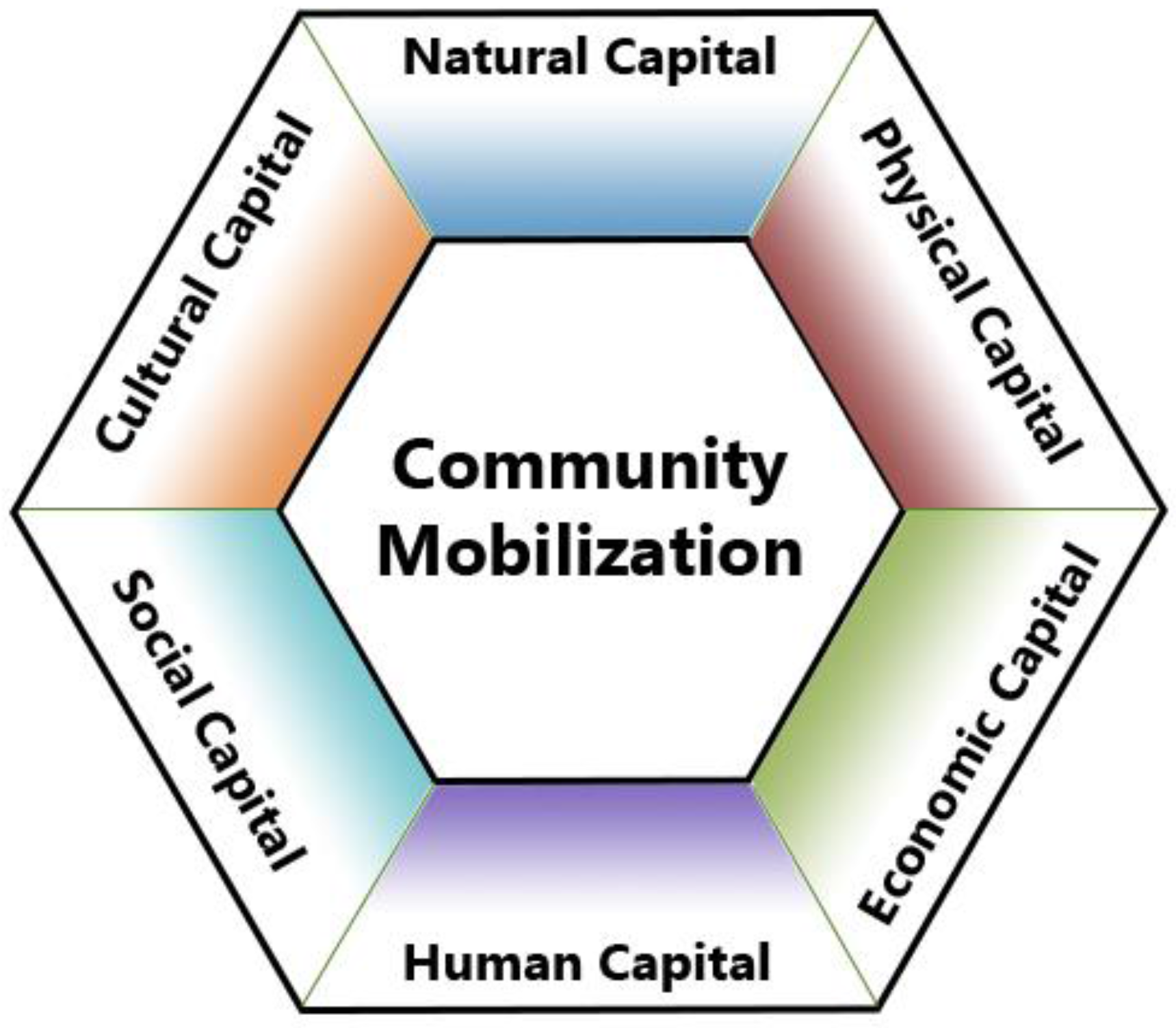
In light of recent developments such as the COP21 Paris climate agreement, the UN adoption of the Sustainable Development Goals for 2030, and the Habitat III Conference, there is increasing recognition of the role of human settlements as key components of both global challenges and global solutions. “Urban sustainability” under various names has matured over the last three decades not only in planning and related fields, but also in wider professional and popular discourse. In this paper we trace a historical overview of urban sustainability theory and practice, and explain why urban sustainability planning and development currently face limited and inconsistent application. We show that this lack of public uptake is due in part to monitoring, assessment, and decision-support frameworks and tools that do not engage citizens and their governments in a shared “strong sustainability” analysis and/or vision. We argue that urban sustainability today clearly needs to embrace equity, inclusion, and other social considerations; contribute to constructive societal mobilisation and compelling policy-making; advocate for development as a better alternative to growth; encourage the integration of human and environmental health interests; and encompass triple-bottom-line-inspired outcomes. Focusing on community capital productivity and regeneration may be the key to advancing healthy and sustainable communities. View Full-Text
 Figures
Figure 1
This is an open access article distributed under the Creative Commons Attribution License which permits unrestricted use, distribution, and reproduction in any medium, provided the original work is properly cited. (CC BY 4.0).
SciFeed

Share & Cite This Article

MDPI and ACS Style
Roseland, M.; Spiliotopoulou, M. Converging Urban Agendas: Toward Healthy and Sustainable Communities. Soc. Sci. 20165, 28.
AMA Style
Roseland M, Spiliotopoulou M. Converging Urban Agendas: Toward Healthy and Sustainable Communities. Social Sciences. 2016; 5(3):28.
Chicago/Turabian Style
Roseland, Mark; Spiliotopoulou, Maria. 2016. "Converging Urban Agendas: Toward Healthy and Sustainable Communities." Soc. Sci. 5, no. 3: 28.
For further details log on website :
http://www.mdpi.com/2076-0760/5/3/28?utm_source=TrendMD&utm_medium=cpc&utm_campaign=Soc_Sci_TrendMD_1

Developing a geospatial web-GIS system for landscape and urban planning

Author
Pages 580-588 | Received 06 Apr 2011, Published online: 25 Nov 2011

This study discusses a geographical information system (GIS) for operating a local government's landscape and urban planning activities via a website. Implementing this web-GIS system will help build a more realistic landscape and urban planning model that includes citizen participation and city marketing. The approach is applicable to ubiquitous city (u-city) development based on geospatial web and its related systems. The approach presented is built on six selected elements of a u-city system. The outcome of the study includes sustainable analysis, environmental planning, urban planning, and city marketing. The outcome is applicable to cities that are planning to adopt the u-city system or advanced telecommunication or planning tools into their urban frameworks.
For further details log on website :
https://www.tandfonline.com/doi/full/10.1080/17538947.2011.631223?utm_source=TrendMD&utm_medium=cpc&utm_campaign=International_Journal_of_Digital_Earth_TrendMD_0

Integrated Assessment System of Sustainable Communities using BIM Technology

Author
Pages 64-73 | Received 04 Feb 2010, Accepted 10 Sep 2010, Published online: 07 Mar 2012


Utilizing the concepts of sustainability in urban community design, the elements of the physical spatial design – such as building stock lay–out, building form including envelope design, and landscape design – are strongly considered to integrate with the issues of the urban landscape view planning and the environmental planning – such as energy efficiency, sunshine access, CO2 emissions and absorptions, natural ventilation, and urban heat island phenomena. While high-rise apartment style has dominated most of urban community design as physical patterns of spatial design widely ranging from new towns to urban redevelopments in Korea, basic design evaluation tools hardly have been developed yet. Also, there is no specialized assessment system focused on urban community design. Therefore, the purpose of this research was to develop an integrated design evaluation tool focused on the basic design phase for urban community development, named ‘SUSB–UC for Basic Design’. It was a part of an integrated framework for whole urban community design and evaluation systems focused on the high-rise apartment style housing. The main purpose of this research was considerations of the relationship between indicators concerning the urban landscape view planning, physical spatial design and the performance by environmental planning based on the BIM technology.
For further details log on website :
https://www.tandfonline.com/doi/abs/10.5390/SUSB.2010.1.1.064?utm_source=TrendMD&utm_medium=cpc&utm_campaign=International_Journal_of_Sustainable_Building_Technology_and_Urban_Development_TrendMD_0

A proposed model for sustainable urban planning development for environmentally friendly communities

Author
Pages 176-194 | Received 23 Feb 2012, Accepted 11 May 2012, Published online: 02 Nov 2012

The purpose of this study is to shed light on the importance of sustainable urban planning development for communities and give a comprehensive review of key issues in terms of underpinning concepts, principles and challenges. The study will focus on a number of aspects related to the built environment, neighbourhoods and services, including the infrastructure, and public transport. Moreover, it aims to critically evaluate the most common and established frameworks of sustainable urban communities. Limitations of these frameworks are discussed, including regional variations. These are factored in a new approach for sustainable communities. The contribution of this research is to propose a scalable framework for an effective sustainable urban planning development for communities that address the gaps and the limitations of the existing models. This takes into account the core issues of urban communities including environmental, social, economic and planning perspectives.
For further details logon website :
https://www.tandfonline.com/doi/full/10.1080/17452007.2012.738042?src=recsys

New approach addressing sustainability in urban areas using sustainable city models

Author
Pages 297-305 | Received 21 Jul 2014, Accepted 21 Jul 2014, Published online: 01 Dec 2014


A brief analysis of the environmental, social and economic paradigm of today's cities, allows a simple conclusion to be reached: current cities are not sustainable. Considering this, it is very important to study the causes of city problems and to develop city models implementing sustainability practices. There are a limited number of studies developing sustainable city models, but in the scientific community there is an even greater lack of studies about the rehabilitation of current cities to implement these models. This work emerges with the objective of analysing how it is possible to implement sustainability practices in cities through the development of a sustainable city model and an urban rehabilitation plan. The development of sustainable city models is a very complex topic and the analysis of the literature shows that it is necessary to consider the relation between environmental and social aspects in the development of sustainable cities, while taking special care when considering the economic issues. It was also concluded that sustainable city models and rehabilitation plans should be subject to sustainability assessments and should consider the active participation of the city inhabitants. In fact, a city can only be sustainable if its population is in harmony with the city model and we can only assess results by predicting and measuring performance levels.
For further details log on website :
https://www.tandfonline.com/doi/abs/10.1080/2093761X.2014.948528

Thursday, 31 May 2018

Putrajaya to set up ‘save Malaysia’ fund

Author
By The Malaysian Insight
Published on 30 May 2018

Putrajaya to set up ‘save Malaysia’ fund 
Dr Mahathir Mohamad says the Finance Ministry will manage the fund. – The Malaysian Insight pic, May 30, 2018.

PUTRAJAYA is setting up a fund for the people to chip in reduce the national debt, Prime Minister Dr Mahathir Mohamad.
"We welcome their patriotic stand. They hope that their contributions reach the responsible party and in this case the donations will be handled by the Finance Ministry," said Dr Mahathir.
The bank account number to donate to will be provided later, he said. 
A young Malaysian has recently launched a crowdfunding campaign to help pay off the national debt of RM1 trillion.
Law graduate Nik Shazarina Bakti, 27, reminded Malaysians of the time the people raised money for Tunku Abdul Rahman's famous Merdeka Mission to London.
"And this time, We are doing it! We can tell our children and grandchildren about this, that we all took part to save Negaraku Malaysia," her campaign description reads.
Nik Shazarina, a legal officer at Sisters in Islam (SIS), said the money would be handed over to the government at the end of the campaign.
The Finance Ministry said contributions should be made in Malaysian ringgit and channelled to the Maybank account number 566010626452.
"On behalf of the government, I would like to express my sincere appreciation and gratitude to all Malaysians for your support, concerns and willingness to help the government in addressing the current economic situation," said Finance Minister Lim Guan Eng.
Dr Mahathir had previously announced that Malaysia’s debt and liabilities had crossed the RM1 trillion mark under the previous administration of Najib Razak.
This was later confirmed by Lim. – May 30, 2018.
For further information log on website :
https://www.themalaysianinsight.com/s/51047

Please Help Malaysia!

Fundraising campaign by Nik Shazarina Bakti


I am a 27-year-old Malaysian, very much in love and proud of my country. I am a LLM (Master of Laws) graduate from SOAS, University of London and currently a Legal Officer at Sisters in Islam (SIS). I believe I am an activists for the benefit of human kind.

Recently, it was announced that Malaysia has a debt of RM 1 trillion (~USD 250 billion). That is a lot of 0s.
I set this fundraising page up as I hope to gather Malaysians and also the rest of the world to help contribute towards reducing Malaysia's debt.

Dearest Malaysians, do you remember that time when our forefathers gave their jewellery, money and valuables up just so that Tunku and the then Government could raise enough funds to go to London and claim for Merdeka (Independence)?

LET'S DO IT AGAIN!

And this time, WE are doing it!
We can tell our children and grandchildren of this initiative that we all took part in to save Negaraku Malaysia.

Please share this and may God bless Malaysia.


Note: All proceeds will be channeled to the Government of Malaysia (eg: The Minister of Finance) at the end of the campaign. I will not pocket any of the funds, I created this page as a medium to raise funds. Please feel free to contact me for any questions.
*Many have inquired on how sure will the funds be given to the Government, I know I am a stranger to most but believe me, I am not going to pocket any of the funds. I will update the PayPal account summary daily and when the day comes, I will make sure I upload proof of the funds being channeled to the Government.
**If we could work together during the 14th General Elections (remember we trusted anyone who could help us?) I am sure we can work together for another round.
*** Please click on the Updates tab above for the latest updates.
Thank you for reading.

Photo: Credits to Niklas Amundson
For further information log on website :
https://gogetfunding.com/please-help-malaysia/

How to Fast With Protein Shakes for Weight Loss

Author
BY 

When it comes to losing weight, the most important factor is your calorie balance. You need to eat less calories than you burn to drop pounds. Incorporating some sort of fasting protocol into your diet may be beneficial, too, as this helps reduce your calorie intake. However, if you're not ready for a full-on fast, you could try drinking protein shakes during your fasting periods to reduce hunger pangs.

VIDEO OF THE DAY


Every Other Day

One of the most popular forms of fasting is alternate-day fasting, according to dietitian Juliette Kellow in an article on the weightlossresources.co.uk website. This involves eating as you would normally one day, followed by a very low-calorie day the next. During this low-calorie, or fast day, Kellow suggests eating small amounts of nutrient-dense foods like fruits and vegetables, along with proteins like lean red meat, fish and poultry. You could, however, substitute these proteins with a protein shake.

The Macros Matter

The macronutrients include protein, carbohydrate and fat. When looking for a shake to use for your fasting protocol, you need to pick one that's high in protein, but low in carbohydrates and fat. Dr. Michael Mosley, creator of the Fast Diet, recommends that on fasting days, women eat 500 calories and men eat 600 calories. Whatever shake you choose needs to be low enough in calories that it won't push you over your calorie limit.

The Post-Fast Meal

When you finish your fasting or low-calorie period, it's likely that you'll be hungry, which can lead to binging or over-indulging, sending your weight loss off course. The Harvard Medical Publications website recommends eating protein at breakfast to curb your appetite for the rest of the day -- and the same theory applies when breaking a fast at any time. Include a protein shake in your post-fast meal to help ensure that you don't overdo your calorie intake for the rest of the day.

Not So Fast

Before switching to a fasting diet, or introducing new supplements into your diet, check with your doctor or a dietitian. You don't need to fast to lose weight, or even include protein shakes in your diet, but both could potentially be beneficial. According to a study published in the July 2005 edition of "The American Journal of Clinical Nutrition," while alternate-day fasting in non-obese subjects did increase fat oxidation, participants also experienced increased hunger on fasting days throughout the entire study. Therefore, having a shake or two on a fast day, perhaps with some other protein-dense foods, low-calorie vegetables or salad items, may enable you to get the benefits of fasting without the hunger pangs.
For further information log on website :
https://www.livestrong.com/article/29305-fast-protein-shakes-weight-loss/

Advantages and Disadvantages of Fasting for Runners

Author BY   ANDREA CESPEDES  Food is fuel, especially for serious runners who need a lot of energy. It may seem counterintuiti...