
Blog List

Wednesday, 4 October 2017

Part 7 of 8. Trip to Maliau Basin, Sabah’s Lost World – Day 6

Author
Murphy

Lost World – Day 6

Sunrise of Maliau Basin
Print Friendly, PDF & Email

Continued from Part 6

Maliau Rim Observation Tower

Day 6, 5am in the morning, when I was in deep sleep, someone shake me to wake me up. I thought it was Mr. T, who has been bugging me to join him to look for Banteng in early morning, so I just say, “No lah… don’t want!” Then I hear the voice of Mr. J, “are you sure you don’t want to see sunrise at observation tower?” Why not? This is an extra programme which was not in our itinerary. I don’t feel sleepy anymore.
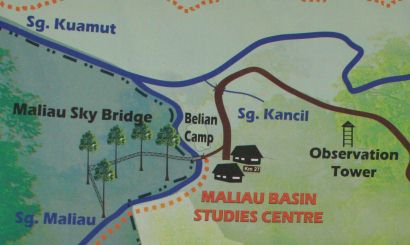
Map to tower
Maliau Rim Observation Tower
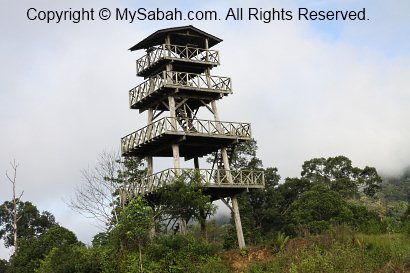
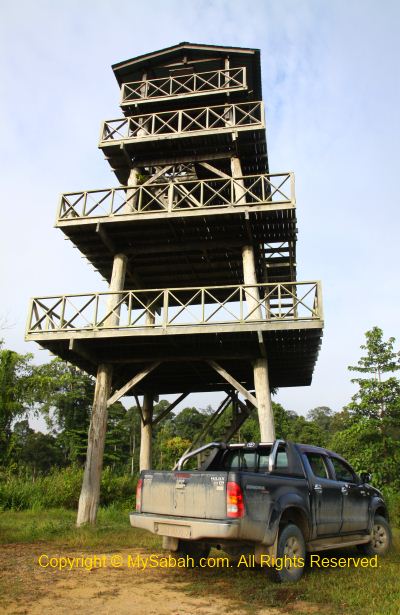
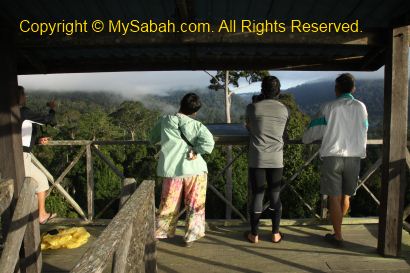
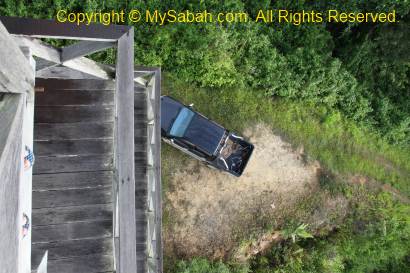
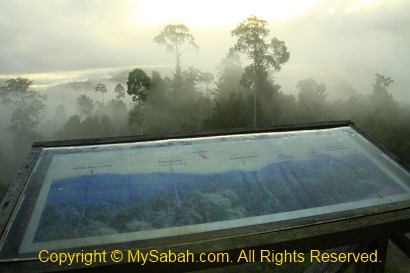
Quickly everyone dresses up and head to Maliau Rim Observation Tower which is only 3 KM away from our hostel (24 KM from the security gate). This 4-storey wooden observation tower is 18.6M (61 Feet) tall and offers a 360 degree panoramic view of Maliau Basin rim. The surrounding area of this tower is clear so no tall tree blocking our view.
Maliau Rim Observation Tower
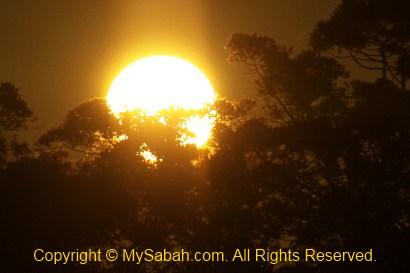
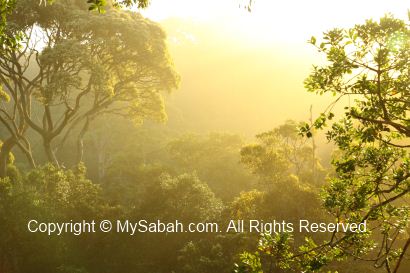
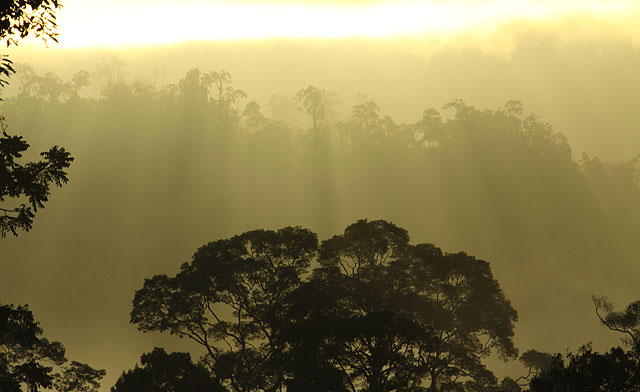
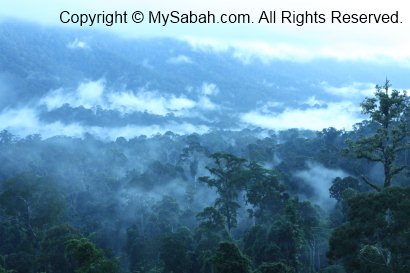
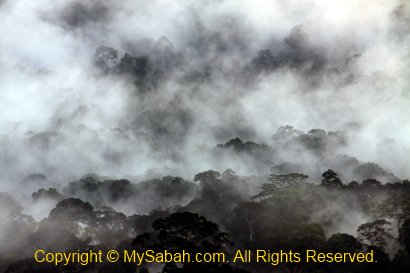
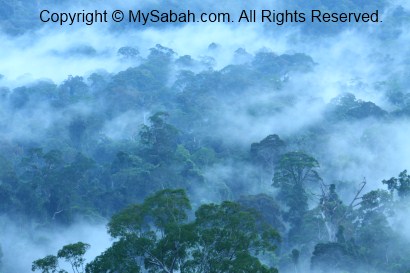
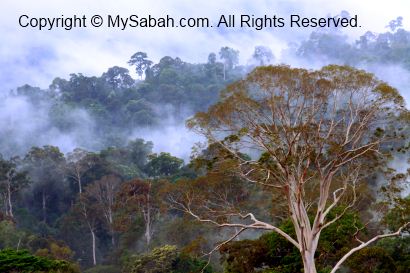
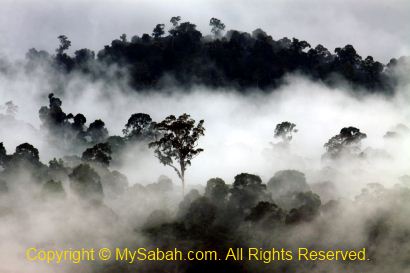
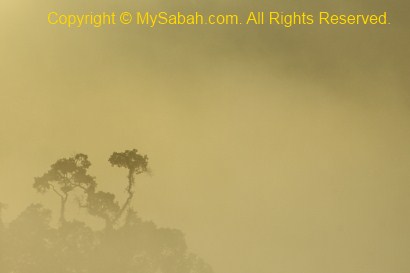
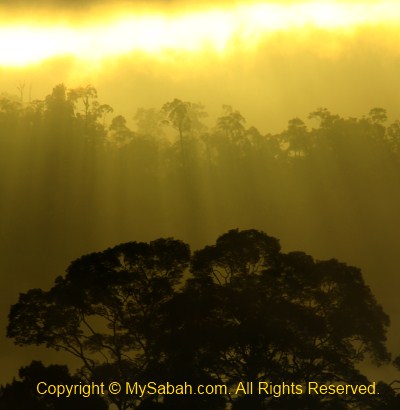
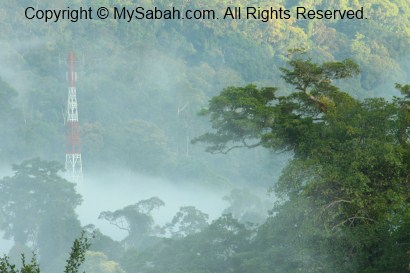
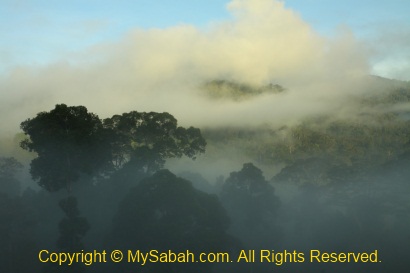
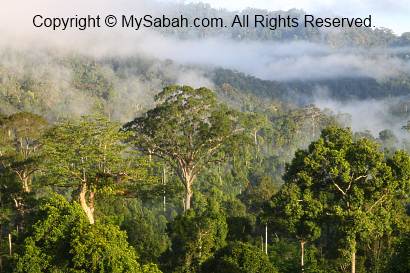
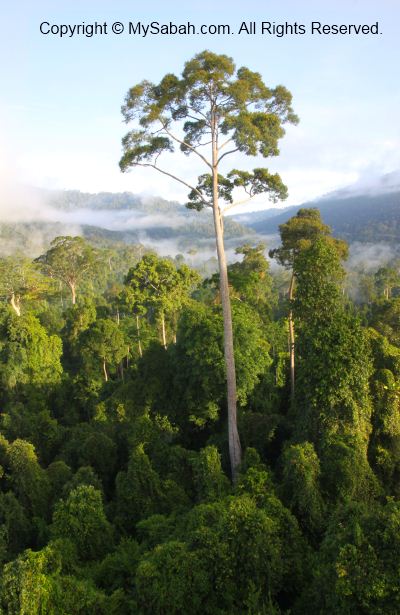
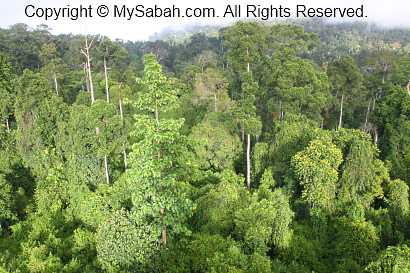
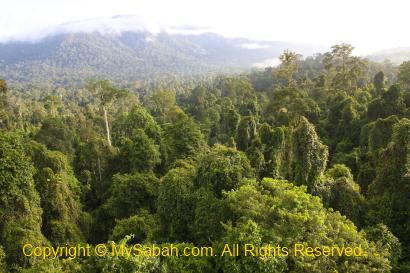
We are up there waiting at 5:35am and it is still dark. When the magic moment approaches, the forest is gradually lighted and we find that we are surrounded by sea of misty forest and mountains! The sunrise casts its warm golden light through layer of rising mist, and then the green forest emerges. As dawn passes, various birds start their morning orchestra. We hear or see Barbet, Great Argus Pheasant, Minivet, Swiftlet and Malkoha. Some birds perch on the trees quite far away, so it is advisable to bring a binocular for bird watching.
sunrise in Maliau Basin
Below is a 1.5-minute video of Maliau Basin sunrise:

Click Here to see bigger video.

You Choose: “Monkey or Gold?”

Looking at this magnificent scenery that is rare nowadays, I feel sad how human greed destroys the beautiful creation of God. Some people just can’t sleep if they can’t cut these trees. Thanks to the Sabah government, the buffer zone of Maliau Basin Conservation Area is being logged now.
sunrise in Maliau Basin
 watching sunrise in Maliau Basin
Maliau Basin is a coastal river delta 9.15 million years ago, where plant decayed and accumulated in peat swamp. After long period of compression, this carbon layer forms coal seams between mud and sandstone layers. An estimated 200 million tons of coal deposit is discovered in Maliau Basin. On top of the coal reserve is a huge area of pristine forest with the most valuable commercial timbers. Inevitably Maliau makes many politicians mouth-watering.
view from top of tower
sunrise in Maliau Basin
In 1992, an EIA (Environment Impact Analysis) report stated that conservation and coal mining are incompatible in Maliau Basin, so either you mine the coal to destroy the place, or you do nothing to leave everything intact. In 1997, Sabah government upgraded Maliau Basin to First Class Protected Forest Reserve, which means NO logging and mining are allowed. In 1999, Maliau was further gazetted as a cultural heritage site under the state Cultural Heritage (Conservation) Enactment. All these show our determination to protect Maliau Basin.
sunrise in Maliau Basin
In year 2000, Primary Industries Minister Datuk Seri Dr Lim Keng Yaik asked Sabahans, “What do you want: Monkeys or Gold?” and said, “There is no reason for the Sabah government to prevent the prospecting of coal in the Maliau Basin.” Well, giving Federal 95% of our oil royalty doesn’t make Sabah rich, so why giving them our coal? Of course Sabah decides to keep the monkeys. Guess what? 10 years later West Malaysia wants to relocate some of our orang-utan to KL. Now they know our monkeys are as worthy as gold too. The response of Sabahans is a middle finger to them. Ok, orang-utan is an ape and not a monkey, but now you see my point right.
sunrise in Maliau Basin
Therefore, Federal fails to get our black gold and monkeys. Sabahans don’t want to surrender Maliau Basin, but none of us believes that the evil federal government will give up. When Sabah Electricity proposes to build a coal power plant in east coast (so near to Maliau), everyone smells something fishy. We suspect the coal power plant is just a conspiracy for creating excuse to mine the coal in Maliau Basin in future. I’m not sure if this is true but I would say this is a credible doubt. Let’s hope Maliau Basin will be listed and protected as a UNESCO World Natural Heritage Site soon, so someone can stop daydreaming.
sunrise in Maliau Basin
Since we talk about Maliau Rim, probably you are interested to know how Maliau Basin was formed. I copied the info below from the Internet. But to be frank, I don’t know what the heck it talks about.

How was Maliau Basin formed?

By early Middle Miocene, between 14 and 15 million years ago, the eastern part of Sabah was subjected to NW-SE compression as tectonic plate interaction continued in this region. Active volcanism in eastern Sabah during this time was probably related to this tectonic force. The compression resulted in the gentle folding of the older Neogene and concentric shape of the smaller basins, with the faults acting as their boundaries. At this time, most of eastern Sabah was still under the sea, mostly very shallow waters.
sunrise in Maliau Basin
The concentric-shaped basins were subsequently filled by younger Neogene sediments continuously until about 9 million years ago when the basins was uplifted above sea level due to continued compression in eastern Sabah. The compression resulted in the gentle folding of the sedimentary layers and at the same time accentuated the concentric shape of the basins, through the reactivation of old faults.
sunrise in Maliau Basin
The intrusion of Mt. Kinabalu in West Sabah occurred during this time. As a result of the crustal shortening of the region due to the continued tectonic plate collision in this region, the whole of Sabah, including the shallow coastal area we see today, was fully uplifted above sea level by the end of Miocene time, about 5 million years ago. The Maliau Basin and the surrounding areas were probably uplifted to its present height with a slight tilt to the South-east. Following the uplift, the Maliau Basin and surrounding areas were subjected to intense weathering and erosion that continued up to this day.
sunrise in Maliau Basin
Get it? Don’t ask me okay. My geography sucks. I only know in Murut language, Maliau has three meaning, (1) Land of the Giant Staircase, (2) Milky or Murky (river) and (3) Bowl / Basin.

Return to Kota Kinabalu

We return to the hostel to pack our stuffs. Before we leave Maliau Basin, we collect our certificate at the Administration Office of Maliau Basin Studies Centre (MBSC). Yes, anyone who reaches Maliau Falls is eligible to get a certificate. The number is still in 3 digits (my number is 500 something). If it is a serial number, that means less than 1,000 people have seen Maliau Falls? Wow, such a big deal. Perhaps I should include this certificate in my resume or CV, together with my blood donation and Mt. Kinabalu certificates, to impress my interviewers. We also take a peek at the Nature Gallery in MBSC. The gallery presents a lot of interesting photographs and information about Maliau Basin. It will be open soon. My camera is out of battery so I didn’t take any photo.
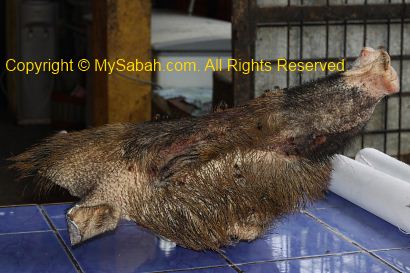
head of wild boar
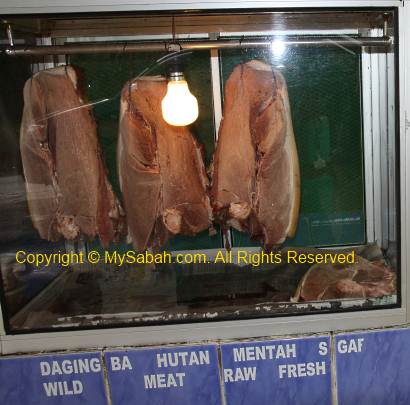
We use the Tambunan road to go back to Kota Kinabalu. It is really misty and the visibility is poor. Our car always stuck behind the slow-moving trucks. On the way, we drop by a famous roadside stall that sells wild boar meat. I didn’t buy any wild boar meat. Yesterday I just admire the wild boar, then I put it on dinner plate today? It is kind of weird so I didn’t buy any. I am not really fond of wild boar meat because its smell is stronger than pork. Someone say this is because most wild boars they hunt are those that eat oil palm fruits in plantation. The wild boar from “real jungle” tastes a lot better.
wild boar meat for sale
At last I arrive home at 6:30PM and conclude my trip to Maliau Basin officially. I still have one last blog that contains useful info for those who plan to go to Maliau Basin.
For further information log on website :
http://www.mysabah.com/wordpress/part-7-of-8-trip-to-maliau-basin-day-6/

Part 6 of 8. Trip to Maliau Basin, Sabah’s Lost World – Day 5

Author
Murphy

Rare orchid of Maliau Basin

Print Friendly, PDF & Email

Continued from Part 5

Hundred-Feet Observation Tower

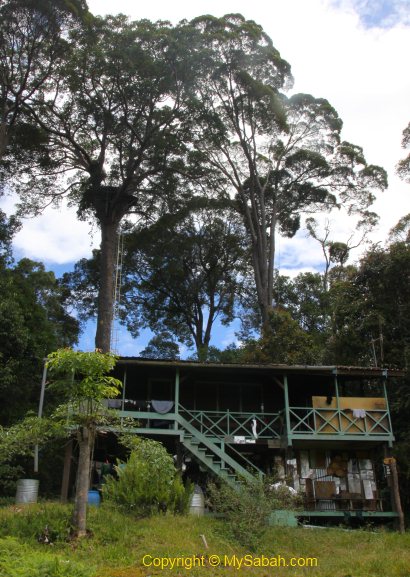
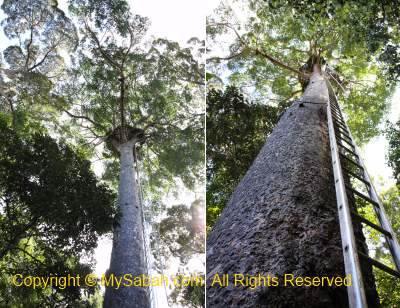
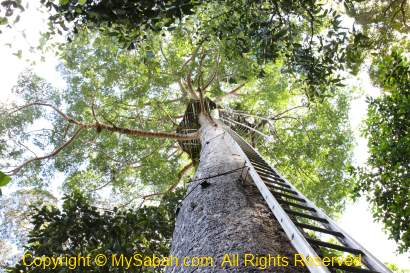
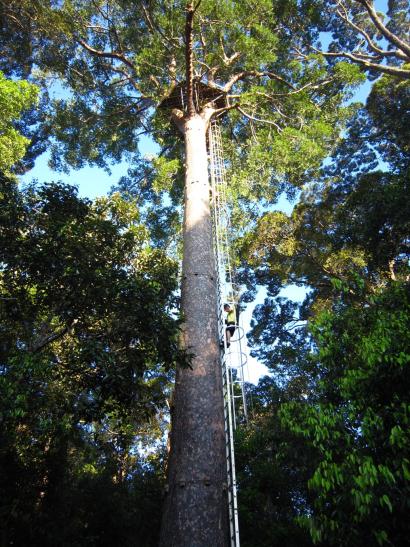
I wake up early at 5am in day 5, when others are still in their dream. Next to the Nepenthes Camp is an observation platform on top of a 33-Meter Agathis borneensis tree. I want to climb up there early to see the sunrise.
Observation Tower and Nepenthes Camp
Observation Tower
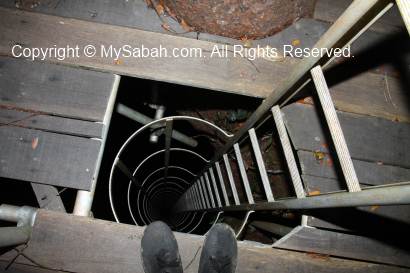
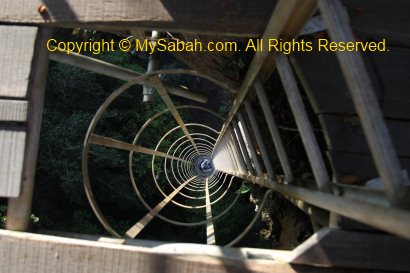
Soon Mr. J and Mr. T also wake up to join me. Ms. S doesn’t join coz she has issue with the height and says there is no way she will do it. It is already frightening just looking at this tall tree. Anyway, adventure is doing something that scares you. At 5:15am, one by one, we climb up to the tree top with aluminum ladder that fixed to the tree body.
Observation Tower
Imagine you climb a ladder to the top of a building over 10 floors high in the dark (about same height as the Karamunsing Complex in Kota Kinabalu). This is the second scariest climb that I attempt so far (the first is Batu Punggul). A misstep and you will be a free falling object for hundred feet.on top of the platform
waiting for sunrise
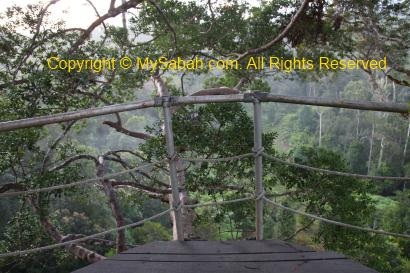
the view and fence on top of the platform
One good thing to climb in the dark is, you can’t see anything under your feet, so it is not that terrifying. Mr. T and J got up there first. I hang the camera and tripod over my shoulder and move up carefully. After a few days of holding camera to take thousand of photos, my fingers are really painful. The extra camera weight also makes my legs tired and shivers. I have to stop a few times to rest. Finally, I reach the top within 10 minutes.
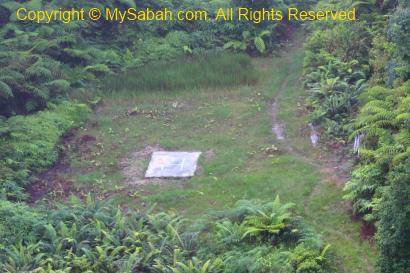
Helipad
Above: a helipad not far away from Nepenthes Camp
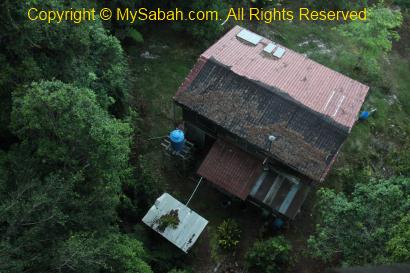
Nepenthes Camp looks so small from top
Above: Nepenthes Camp looks so small from top. You can see the solar panel on the roof.
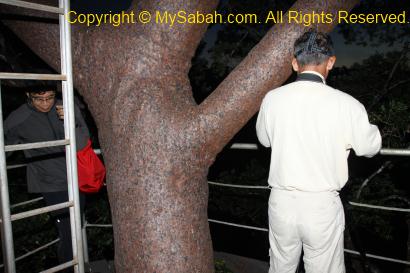
Strictly speaking, the observation tower is only a wooden platform on top of a tall tree. It is not really a tower. The structure is fenced and solid enough to take 5 to 6 persons. It is 5:40am. We look out from this platform and see that our house is so small under our feet. We also admire and appreciate the pretty Agathis borneensis tree that house the structure.
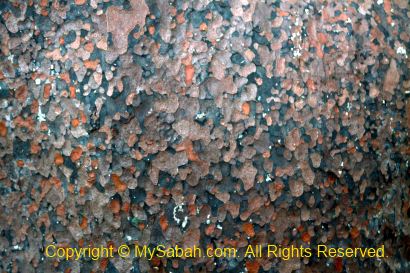
beautiful skin of Agathis borneensis tree
Above: the beautiful skin of Agathis borneensis tree, note the pocked-marked, greyish-reddish bark.
waiting for sunrise
Above: Mr. J waits to video sunrise
The sunrise comes at 6:10am. The surrounding and the trees are painted with golden hue of colors. The birds also start their days. Many colourful birds such as Iora and Scarlet Minivet gather around the canopy of this tree. This platform is quite a nice bird watching spot. We climb down at 6:40am for breakfast, when the sunrise show is over. Damn it! I find a crack on the LCD protector. Luckily it helps to block the damage to LCD which would cost hundreds to fix.
sunrise of Maliau Basin
forest in sunrise
climbing down
Above: Mr. T climbing down
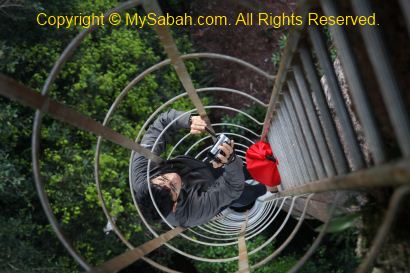
me climbing down
Above: it’s me climbing down the tree

Back to Maliau Basin Studies Centre (MBSC)

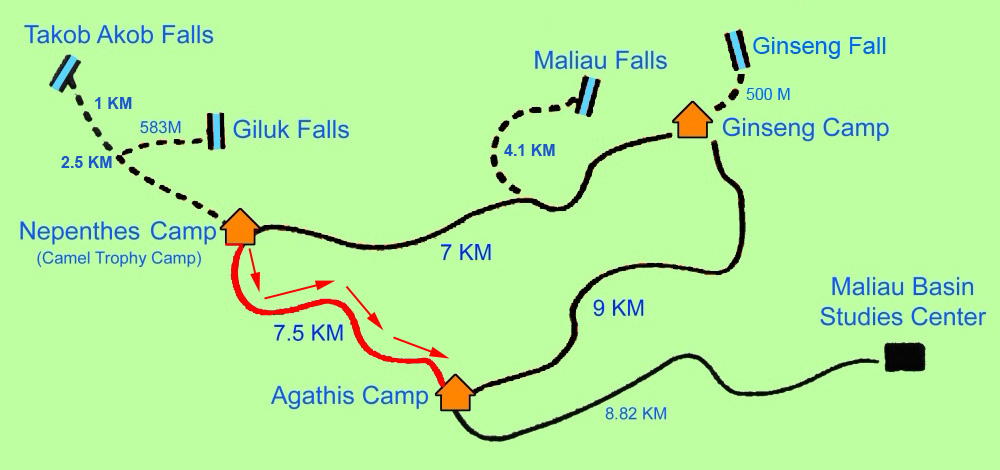
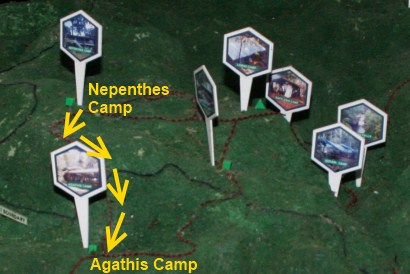
We are very relaxing today, coz we will leave the total wilderness of Maliau Basin and the trail is mostly descending (easy) path. Even though I am cut off from civilisation for many days, I don’t really feel homesick, it’s a sad day for me actually. After we have our breakfast, we depart at 8:30am to Agathis Camp, which is 7.5 KM away and a move from 1,005 to 421 Meters above sea level.
trail map to Agathis Camp
Above: trail in red is our path to Agathis Camp today
the trail in 3D model
Above: the trail in 3D model
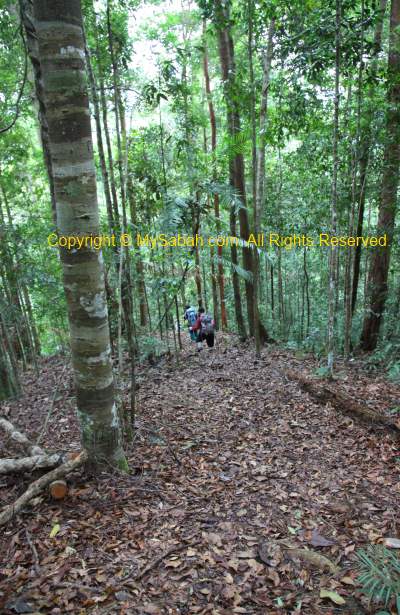
The guides warn us about the steep downhill trail and we should “brake” always and don’t run too fast. And they are right. The descending trail is not easy and it does not make us move faster, and it poses another challenge. There is no way you can tell if the soil is soft or solid until you step on it. The slope area is dangerous coz the soil is soft and slippery. The slippery “trap” is so evil coz the mud layer is just thin enough to make you slip, but not deep enough to hold your foot. I have to make sure both of my hands are supported by a rope or tree before I take the next step. I can survive a fall but my camera might not. Just be careful of the precipitous hills…
trail on slope
Over the days, I discover a special ability of women. They just can’t stop talking, during trekking, eating and sleeping, ALL the time. I am already out of breath trekking and they still talk to me. At the end, I just pretend I don’t hear them. Sorry, I am just too tired.
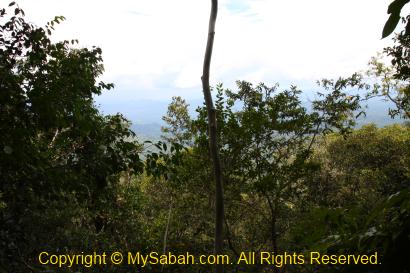
look out point
Above: lookout point, where you can see Maliau rim through gap between the trees.
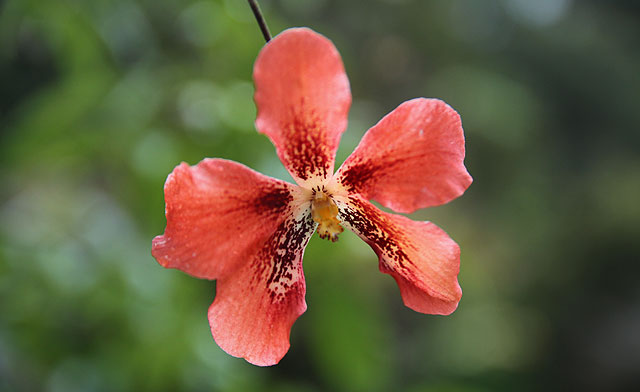
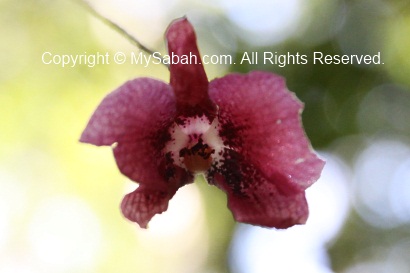
Since this is the last jungle trekking of our trip, we just walk slowly, open all our senses and enjoy the surrounding view. We saw a family of 3 Bornean gibbons swings on tree branches. Red & Hose’s Leaf Monkeys (langurs) and Bornean gibbons are very common primates in Maliau. We also hear the distinct calls of Black & Yellow Broadbill and Bornean Bristlehead, and also the loud pecking noise of a woodpecker. Then Mr. T is very excited and shows me a flower of Dendrobium cinnabarinum. He says this flower is very rare, the two (all) varieties are found in Maliau Basin only.
Dendrobium cinnabarinum
Above: flower of Dendrobium cinnabarinum.
signage to Agathis Camp
Finally at 12:30pm, we arrive Agathis Camp, where we have our pack-lunch. We are asked to take a shower and put on clean clothing, before we are allowed to sit in the beloved 4-wheel of the guide. Then we leave Agathis Camp and go to the hostel of MBSC, where we will spend the last night in Maliau Basin. After staying 3 days in jungle camp, the hostel is really a 5-star accommodation to us now. The guides and porters are very happy too coz now they can watch World Cup 2010 in MBSC.
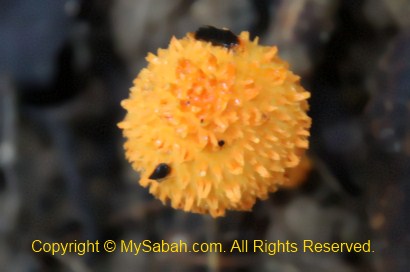
orange fungi
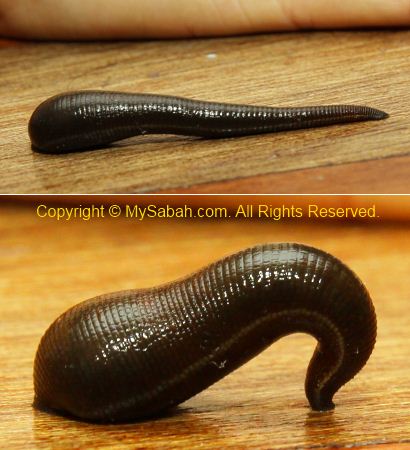
fat leech
Above: don’t know who brings this tiger leech back to the hostel. It is fully fed with 1 year worth of meal, so fat… lol

Skybridge (Canopy Walk)

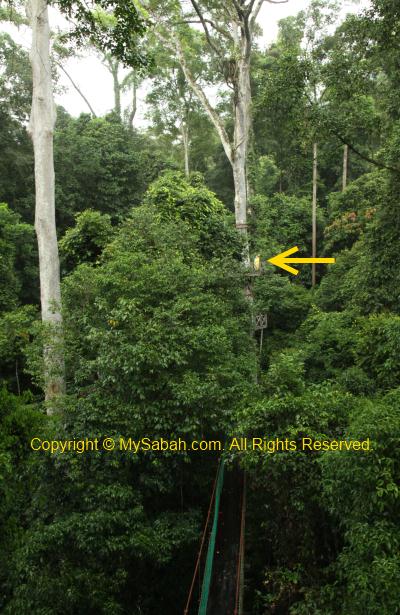
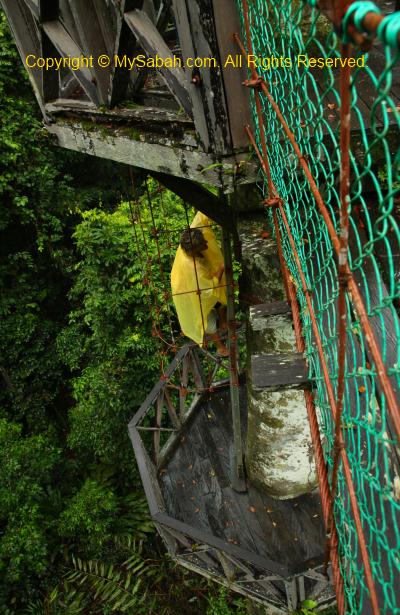
You are wrong if you think we are holidayers who can sit still for day doing nothing. After we unpack our bags in hostel, we start to get restless and want to go to Skybridge (suspension bridges built between tall trees high above the ground). It rains heavily in the afternoon so we go around 4PM.
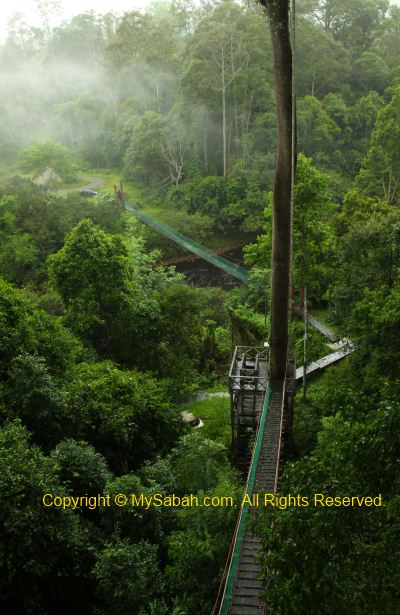
canopy walk
The Skybridge is only a 10-minute drive from MBSC. Constructed in April 2007 and linked up with about 8 super tall trees (UratmataSepatirMerbau and Seraya), Skybridge is the second longest canopy walk of Sabah, with a length of 293.8 Meters (Highest Point: 21.35 Meters).
sky bridge
Above: can you see them? They look so small…
canopy walk
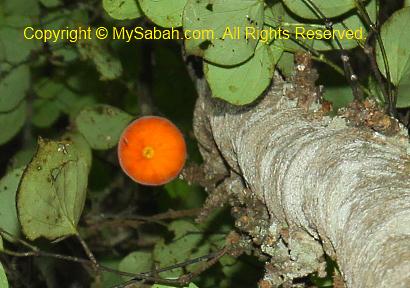
Maliau Basin is an Important Birding Area. More than 290 bird species are found here, with more than 20 are endemic to Borneo, and 26% are listed as threaten or near-threaten by IUCN. Here you can find all 8 species of hornbill of Borneo, 6 species of kingfishers and all 9 species of Bornean barbets. We see fruits of fig species (Ficus), which is the favourite of hornbills, who visit as many as 240 species of fruit trees. We spend an hour here and back to hostel later.
fig fruit
Above: fruit of Ficus tree
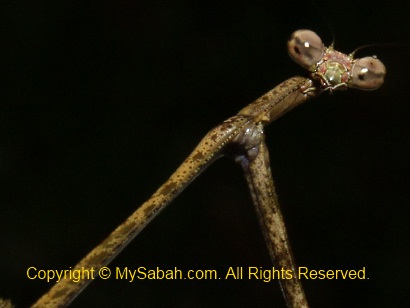
praying mantis
Above: a weird praying mantis looking at us

Night Safari

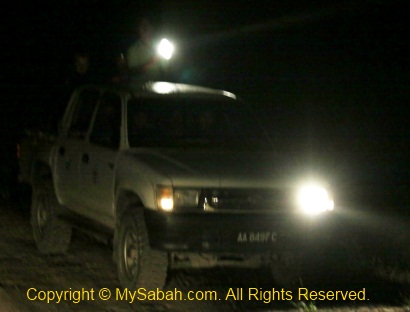
Tonight we have a night safari at 8pm. We just sit on the jeep and let the guide scans for wildlife by using a spotlight. If the guide spots anything, the car will stop and he will show and tell us what we see. This is highly depends on luck. In bad day, you would see nothing.
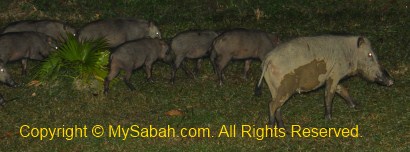
wild boar and babies
Above: this wild boar (Sus barbatus) always comes to MBSC. She got 8 babies.
night safari
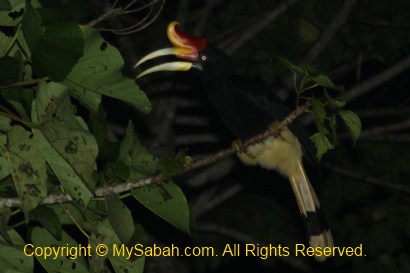
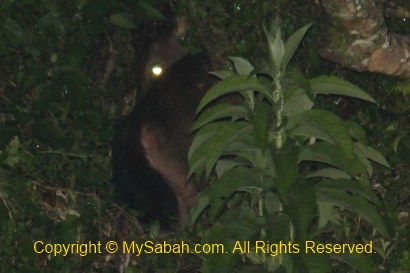
During an hour of fun drive, we see Malay Civet cat, Sambar Deer (cervus unicolor), Flying Squirrel, Rhinoceros Hornbill and Buffy Fish Owl.
Rhinoceros hornbill
Sambar Deer
Buffy fish owl
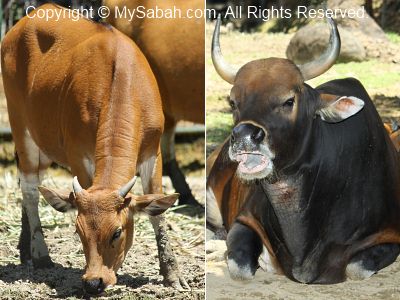
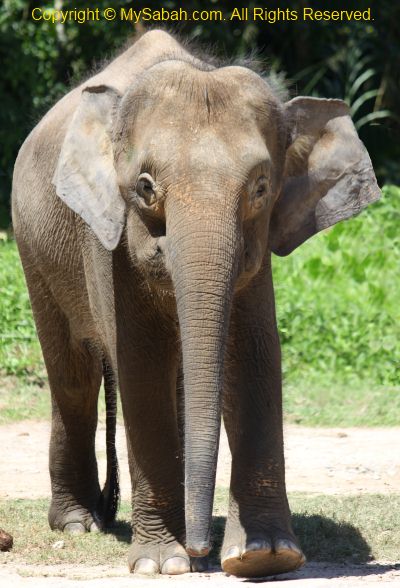
We have been seeing the fresh dung of Banteng and elephants and hope to see them tonight, but too bad none of them turn up. Anyway, below are their photos for you to know how they look like.
Banteng
Above: Banteng (Bos javanicus), Asian Wild Cattle or Bornean Wild Ox, known as Tembadau locally. Left is the female and right is male Banteng. Banteng is extinct in West Malaysia (since 1950) and Sarawak (since 1980). It was used to be the favourite game species of hunters but now it is endangered and protected in Sabah. The domesticated Banteng becomes Bali cattle. Note the white “stockings” on the legs. About 15 to 20 Banteng are recorded in Maliau.
elephant
Above: Pygmy elephant of Borneo is the smallest elephant species in the world.
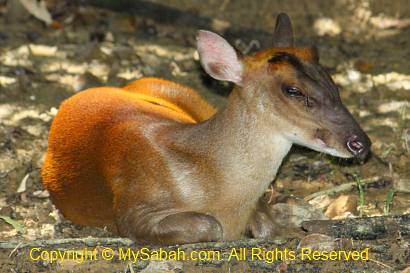
barking deer
Above: Common barking deer (Red Muntjac), known as Kijang locally. It can grow in length up to 98 to 111 cm, a height of 50 cm and a weight of 15 to 35 Kg. You can buy its meat as it is still the game species.
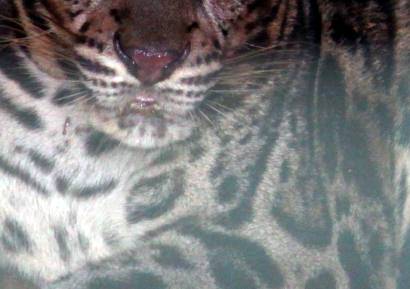
FYI, all 5 cat species (i.e. flat-headed cat, marbled cat, bay cat, leopard cat, clouded leopard) of Sabah are found around Maliau Basin. They are very elusive and secretive animals active at night, so they are very hard to spot.
clouded leopard
Finally, we have joined all the programme In Maliau Basin and will go back to Kota Kinabalu tomorrow. But there is still one more unplanned programme waits for us tomorrow.
For further information log on website :
http://www.mysabah.com/wordpress/part-6-of-8-trip-to-maliau-basin-day-5/
Advantages and Disadvantages of Fasting for Runners

Author BY   ANDREA CESPEDES  Food is fuel, especially for serious runners who need a lot of energy. It may seem counterintuiti...