Blog List

Saturday, 5 March 2016

How to Bake Tortilla Shells

You can bake tortilla shells to make home-made tortilla chips, taco shells and tostadas. By baking the tortillas, you cut down on the amount of fat and calories normally found in the deep-friend variety. Baking your own also saves money because plain corn tortillas are cheaper than the pre-made chips and shells. You can find plain corn tortillas in the ethnic food section of your grocery store or in stores that specialize in Latin foods.
How to Bake Tortilla Shells

Tortilla shells are a versatile food. Photo Credit gkrphoto/iStock/Getty Images

Make Tostadas

Step 1

Preheat your oven to 300 degrees Fahrenheit.

Step 2

Spray the baking sheet with non-stick cooking spray. Put one layer of corn tortillas on the baking sheet.

Step 3

Spray the tops of the tortillas with the non-stick cooking spray. Sprinkle with sea salt.

Step 4

Put the baking sheet in the oven for 15 minutes or until crisp. Turn the tortillas over with a spatula halfway through.

Make Tortilla Chips

Step 1

Preheat your oven to 300 degrees Fahrenheit. Cut the tortillas into wedges.

Step 2

Spray the baking sheet with non-stick cooking spray. Put one layer of the tortilla wedges on the baking sheet.

Step 3

Spray the tops of the tortillas with the non-stick cooking spray. Sprinkle with sea salt.

Step 4

Bake in the oven for 15 minutes, or until crisp. Turn the tortilla chips over at the halfway point.

Make Taco Shells

Step 1

Preheat your oven to 300 degrees Fahrenheit. Loosely fold the tortillas in half and use a toothpick to hold the edges in place.

Step 2

Spray non-stick spray on the baking sheet. Put the folded tortillas on the baking sheet and spray the tops. Sprinkle the tortillas with sea salt.

Step 3

Bake for 15 minutes, or until crisp, and turn them over half way through baking.

Pineapple Stomach Pain

Stomach pain from eating pineapples is most likely related to an allergy. Pineapple is a common food that can cause an allergic reaction, according to the University of Maryland Medical Center. Stomach pain from an allergic reaction typically occurs within the first hour of ingesting the pineapple. If the pain becomes severe, you need to call your doctor immediately. Stop eating pineapple until you can be seen by your doctor and receive a clinical diagnosis.

Pineapple Stomach Pain

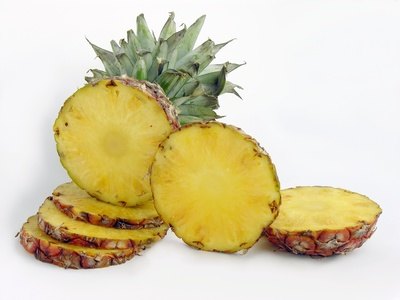
Stomach pain from pineapple may be from an allergy. Photo Credit pineapple image by Maria Brzostowska from Fotolia.com

Cause of Stomach Pain

Stomach pain from an allergy to pineapple is due to inflammation in your gastrointestinal system. The lining of your stomach and intestines can become swollen, placing pressure on surrounding areas of the stomach. The inflammation in the digestive system is the result of increased levels of histamine produced by mast cells in the soft tissue of the stomach and intestines. Histamine is a chemical in the body that protects it from infection, but during an allergic reaction, excessive amounts of histamine are created because of an overreaction of the immune system.

Immunoglobulin E Antibodies

Immunoglobulin E, or IgE, antibodies are created during an allergic reaction. Antibodies are disease-fighting agents in the body that fight off dangerous substances, such as viruses and bacteria that could harm the body. When you eat pineapple, your immune system accidentally reacts to the proteins in pineapple as if they are harmful and unleashes IgE antibodies. This type of antibody is what triggers a chemical reaction in the body that causes the production of histamine and other chemicals.

Testing and Treatment

Allergy testing is used to diagnose and confirm that you are in fact allergic to pineapple. Proteins from pineapple are injected under your skin to see if you develop inflammation and irritation where the injection was made. A sample of your blood may be sent to a lab where pineapple proteins are introduced into your blood. If your blood creates IgE antibodies, you are allergic to pineapple. If diagnosed with a pineapple allergy, the most effective treatment is to avoid consuming pineapple.

Consideration

A pineapple will cause more than just stomach pain as a reaction. You should develop other symptoms, such as hives, skin rashes, asthma, sinus congestion, eye irritation and other digestive symptoms. If you only develop stomach pain, you may have an intolerance to pineapples. A food intolerance is different from a food allergy in that it does not involve the immune system, but rather is the inability to digest certain sugars and proteins in foods.
www.livestrong.com

Pineapple and a Numb Mouth

A sweet, tangy pineapple snack may result in some unpleasant numbness in your mouth, specifically the tongue and lips. Although this feeling can be alarming, it doesn't necessarily signal a pineapple allergy, and may be preventable by properly preparing and ripening the pineapple before eating it.
Pineapple and a Numb Mouth

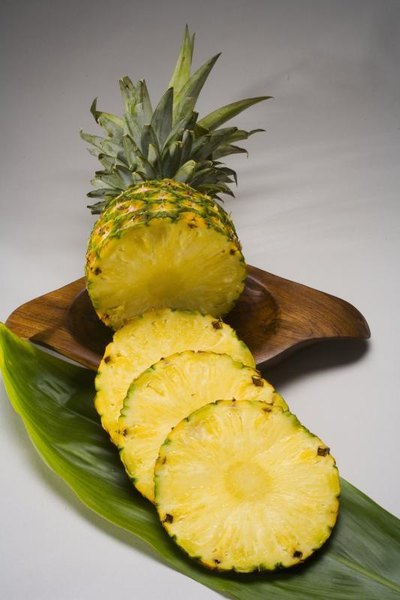
The enzyme bromelain found in pineapple can result in mouth numbness. Photo Credit PhotoObjects.net/PhotoObjects.net/Getty Images

Description

After consuming pineapple, you may experience unpleasant feelings in your mouth, including burning, rawness, numbness, stinging or even bleeding on your lips, tongue or cheeks. These symptoms occur immediately after eating fresh pineapple flesh or pineapple core, and will generally subside without the need for medication or other treatments.

Causes

Pineapple contains a group of enzymes called bromelain, which breaks down the proteins in meat and flesh -- including your own mouth. Bromelain works by removing the molecules on the surface of cells, essentially digesting them. Although this makes bromelain useful for tenderizing meat, it can also cause pineapple to leave your mouth feeling raw and numb. Bromelain begins to break down the proteins on the surface of your lips, tongue and cheeks when it makes contact with these areas.

Solution

Although fresh pineapple always contains the bromelain responsible for mouth numbness, you can reduce unpleasant effects by ensuring your pineapple is fully ripened before eating it. Look for pineapples with a strong aroma and golden color. If the pineapple still has green coloration on its peel, stand it upside-down with the leafy end on the counter for several days until it turns yellow or golden, indicating ripeness. Because the canning process deactivates the bromelain enzyme, eating canned pineapple is less likely to cause mouth problems than fresh pineapple. In addition, consuming fresh pineapple in moderation rather than eating large amounts in one sitting may help prevent mouth numbness.

Considerations

Although pineapple allergies are rare, they do exist. If you experience a numb mouth accompanied by other adverse symptoms such as rashes, hives, fainting, diarrhea, nausea, dizziness, shortness of breath, swollen tongue, itching or wheezing, seek medical attention immediately. You may be at higher risk of a pineapple allergy if you're also sensitive to latex, because the proteins in certain fruits like pineapple, melons and bananas can trigger cross reactions in latex-allergic individuals.
www.livestrong.com

Pineapple and Tongue Pain

Pineapple can often cause minor skin irritations because it’s highly acidic. The fruit -- or the juice -- can cause your tongue to feel gritty, itchy and mildly painful shortly after eating. If you develop severe pain, itching, burning or swelling in your tongue from eating pineapple, you should talk with your doctor. Common conditions that might be related to tongue pain after you eat pineapple include burning mouth syndrome and oral allergy syndrome. Both of these conditions might cause similar symptoms after eating pineapple and need to be evaluated by your doctor.

Pineapple and Tongue Pain
Young girl with tongue sticking out. Photo Credit OxanaD/iStock/Getty Images

Burning Mouth Syndrome

Burning mouth syndrome is a condition that is not fully understood. Some people are highly sensitive to the foods they consume, which can lead to mild to severe pain in the tongue and mouth. The condition mostly affects post-menopausal women and might be related to damage to the nerves in the tongue. The burning pain sensation might remain consistent throughout the day, or eating certain foods might trigger symptoms. Sometimes though, the burning stems from acid coming into contact with oral mouth sores, like canker sores.

Oral Allergy Syndrome

Oral allergy syndrome is a condition that’s related to hay fever, which is an allergic reaction to airborne particles such as pollen, mold and dust. In some cases, your immune system might mistake the proteins in pineapple for pollen or other allergen. If you’re allergic to some pollen, you might experience a localized allergic reaction in your mouth, tongue and lips. This condition typically causes minor irritation for a few minutes or up to an hour after eating pineapple. If the symptoms persist or worsen, you'll need to get to the emergency room.

Treatment

If you’re diagnosed with oral allergy syndrome, you don’t have to avoid pineapple for the rest of your life. The most common treatment is to consume the pineapple cooked, according to Oprah.com. Cooking the pineapple will modify the protein structure, so your immune system probably won't detect it. If cooking the fruit doesn’t produce any improvement, you can participate in sublingual immunotherapy with the guidance of a health care professional. This treatment slowly sensitizes your body to the proteins in pineapple by placing small amounts under your tongue.

Warning

If your tongue pain includes tongue swelling, you might be having an emergency. Tongue swelling that occurs shortly after you eat pineapple might be a sign of anaphylaxis, a severe allergic reaction that causes your throat to swell, resulting in shortness of breath and wheezing. Other symptoms include stomach pain, skin irritation, facial swelling, dizziness, flushing of the skin, a drop in blood pressure and a racing heartbeat. It can lead to death if left untreated.
www.livestrong.com

Pineapple Juice & Mouth Problems

Pineapple is a nutritious food, providing 131 percent of the daily value for vitamin C and 77 percent of the DV for manganese in each cup of fresh cubed pineapple. The juice isn't quite as nutritious, as it doesn't provide fiber and only has 42 percent of the DV for vitamin C per cup. Some people may want to avoid pineapple, or at least fresh pineapple and pineapple juice, however, due to an unpleasant reaction they experience when eating this fruit.
Pineapple Juice & Mouth Problems
Some people experience an uncomfortable reaction to raw pineapple. Photo Credit Design Pics/Tomas del Amo/Design Pics/Getty Images

Pineapple Allergies and Cross-Reactions

Although it isn't common, some people are allergic to pineapple and experience an allergic reaction with symptoms that may include hives, shortness of breath, dizziness, stomach cramps or swelling of the mouth, throat and tongue. If you're allergic to carrot, grass pollen, fennel, celery or wheat, you may be more likely to be allergic to pineapple as well.
When eating pineapple, people with allergies to honeybees, celery, papain, cypress pollen and olive tree pollen may experience a cross-reaction that causes their mouth and lips to itch temporarily. It's best to avoid pineapple entirely if you experience these types of reactions.

Effects of Bromelain

Pineapple contains a substance called bromelain that actually breaks down proteins, which is why it's sometimes used as a meat tenderizer. If your mouth gets sore after eating pineapple or drinking fresh pineapple juice, it may be because the bromelain started breaking down the proteins that make up your mouth. The enzymes in your stomach break down the bromelain, which is why your mouth is usually the only part of your digestive tract affected this way. Your mouth and cheeks may even swell if you eat too much pineapple.

Minimizing the Effects

If it's just the bromelain in the pineapple that's causing your mouth problems, you can minimize the risk of this occurring in the future by only eating cooked or canned pineapple. Heat inactivates the bromelain so it no longer breaks down the proteins in your mouth. This means pasteurized pineapple juice, like most brands sold in the grocery store, shouldn't cause a reaction.

Other Potential Considerations

The bromelain in pineapple can interact with certain medications, including blood thinners, tetracycline antibiotics, sedatives, anti-seizure medications, antidepressants and insomnia medications. Bromelain can also cause diarrhea, nausea and vomiting when consumed in large amounts. Don't drink the juice from pineapples that aren't fully ripe, as this can cause severe vomiting.
www.livestrong.com

Gluten Free Vegetarian Diet Plans

With well-planned meals, vegetarians who eat eggs and dairy, and vegans who stay away from all animal products, can enjoy a nutritionally balanced diet. Many vegetarians rely on grains, particularly wheat, for energy, B vitamins and protein. If you are unable to eat the protein in wheat, barley and rye, known as gluten, because of celiac disease or an intolerance, you can still live a vegetarian lifestyle. Create meal plans that revolve around naturally gluten-free foods such as fruits, vegetables, beans, nuts, seeds and alternative grains.

Gluten Free Vegetarian Diet Plans
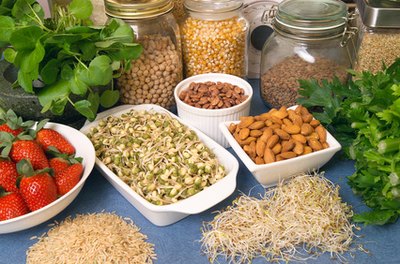
Fruits, greens, nuts, sprouts and rice are staples on a vegetarian gluten-free plan. Photo Credit healthy foods image by Steve Lovegrove from Fotolia.com

Ovo-Lacto Plan

Ovo-lacto vegetarians consume eggs and dairy, but no meat, fish or poultry. Start with a breakfast of scrambled eggs, for vitamin B-12 and protein, along with a glass of calcium-enriched orange juice. Have two slices of toast made with buckwheat bread and 1 tbsp. of fruit spread on the side. At lunch, top brown rice with canned refried beans, salsa, sliced avocado and low-fat sour cream. For dinner, boil rice pasta and top it with low-sodium marinara sauce and shredded mozzarella cheese. Snacks during the day might include rice crackers with cheese, nuts, fresh or dried fruit and cut-up veggies with hummus.

Lacto-Plan

A lacto-vegetarian consumes dairy, but no eggs or meat. Make pancakes with a gluten-free baking mix, water, olive oil and 1 tbsp. of flax seed meal soaked in 3 tbsp. of water in lieu of the egg. Top with fresh fruit and agave nectar. At lunch, make a salad of cottage cheese, chopped cucumber, chopped tomato and chopped bell peppers. Have with a bowl of tomato soup. For dinner, make black bean tacos topped with shredded cheddar cheese and salsa on corn tortillas. Snacks include yogurt, nuts and puffed millet cereal with low-fat milk.

Vegan Plan

A vegan plan is the most restrictive vegetarian plan as it includes no milk products, eggs or meat. A smoothie is a good way to fit in extra nutrition without gluten. Blend together a frozen banana, calcium-enriched soy milk, almond butter and frozen peaches. For lunch, have a bowl of lentil soup with a salad of cooked quinoa, white beans, lemon juice, olive oil, cilantro and chopped tomatoes. At dinner, broil portabella mushrooms and serve them over a salad of baby spinach, roasted red peppers, grilled red onion and toasted pecans. Have this with white rice and tapioca flour rolls. Snacks might include fresh fruit, soy yogurt, popcorn with nutritional yeast and nut butter on celery or apples.

Considerations

Consult with your physician or dietitian to make sure your day-to-day gluten-free, vegetarian meals supply sufficient nutrition. Vegetarians are sometimes deficient in zinc and vitamin B-12. Many enriched-wheat products, such as cereals and bread, are important sources of these nutrients for vegetarians and vegans. Because a gluten-free diet does not include these foods, you may need a supplement. Common vegetarian foods, specifically tofu, seitan, textured vegetable protein and processed veggie burgers and sausages often include wheat in the ingredients. If you choose to include these foods as part of your diet, be sure to read the ingredient lists carefully.
www.livestrong.com

Are Tortillas Healthy?

Tacos, enchiladas, burritos, wraps and chips are commonly known foods made with tortillas. Corn and flour tortillas can be healthy to eat on a daily basis, depending on how they are prepared. Tortillas can be made at home or purchased at a grocery store. Nutrient content varies among brands, so read nutrition labels before making a purchase.

Are Tortillas Healthy?
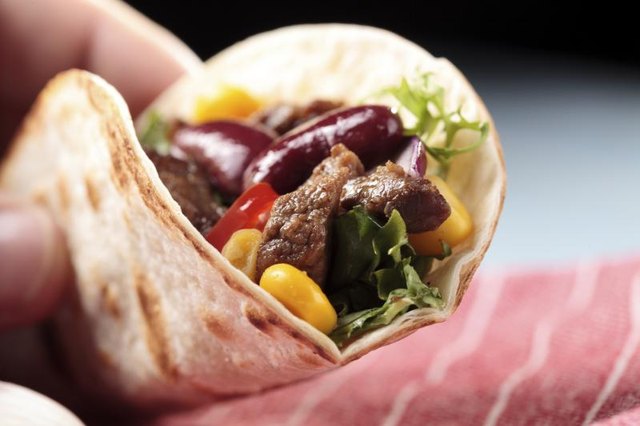
A taco with beef and beans in a flour tortilla. Photo Credit gkrphoto/iStock/Getty Images

Flour Tortillas

Flour tortillas are a low-fat food that make up a serving from the grain group. Eating a whole wheat tortilla increases your fiber intake, which helps you feel full longer. A fajita-sized Mission tortilla contains 110 calories and 2.5 g of fat. Fill a tortilla with cold cuts, low-fat cheese and sliced vegetables for a twist on the classic sandwich.

Corn Tortillas

The USDA recommends eating whole grains, making gluten-free corn tortillas an ideal choice. Two La Favorita brand corn tortillas, for example, contain 125 calories and 1 g of fat, making two corn tortillas lower in fat per serving than one flour tortilla. Mexican dishes, such as tacos, burritos and quesadillas, can be prepared with corn tortillas to reduce fat and calories.

Tortilla Chips

Deep frying in oil makes tortilla chips high in calorie. One ounce of Tostitos bite-size tortilla chips, about 24 chips, contains 140 calories and 7 g of fat. Fried taco and tostada shells also contain more fat and are higher in calories than flour and corn tortillas. Although you don't have to completely eliminate tortilla chips from your diet, eating more than one serving on a regular basis could increase your risk of weight gain and high cholesterol.

Health Benefits

Whole grain tortillas are high in complex carbohydrates and fiber, which provide energy and support healthy digestion. Adequate fiber intake also helps control cholesterol levels and reduces your risk of heart disease. Tortillas are a good source of B vitamins, which support a healthy nervous system. Folate, found in whole grain tortillas, supports women's health during childbearing years and can prevent neural tube birth defects such as spina bifida. The iron in tortillas helps blood move oxygen throughout your body.
www.livestrong.com

PARQUETRY

Parquetry is a geometric mosaic of wood pieces used for decorative effect.
The two main uses of parquetry are as wood veneer patterns on furniture and block patterns for flooring. Parquet patterns are entirely geometrical and angular—squares, triangles, lozenges. The most popular parquet flooring pattern is herringbone. (The use of curved and natural shapes constitutes marquetry rather than parquetry.)
Intricate parquet flooring in entry hall.
History

The word derives from the Old French parchet (the diminutive of parc), literally meaning "a small enclosed space". Large diagonal squares known as parquet de Versailles were introduced in 1684 as parquet de menuiserie ("woodwork parquet") to replace the marble flooring that required constant washing, which tended to rot the joists beneath the floors. Such parquets en lozangewere noted by the Swedish architect Daniel Cronström at Versailles and at the Grand Trianon in 1693.


Parquet Versailles
Materials
Timber contrasting in color and grain, such as oak, walnut,  cherry, lime, pine, maple, etc. are sometimes employed, and in the more expensive kinds the richly coloured mahogany and sometimes other tropical hardwoods are also used. While not technically a wood, bamboo is also a popular material for modern floors.
Parquet flooring, 18th century.
Parquet floors were formerly usually adhered with hot bitumen. Today modern cold adhesives are usually used.
Cleaning

Wood floors may be brushed clean, and mopped when necessary. Upright vacuum cleaners can scratch and wear the surface, as grit particles become embedded in the spinning brushes.

Repair

Parquet floors are usually long lasting and require little or no maintenance. Unstuck blocks are re-glued. Bitumen-glued blocks require use of either hot bitumen or a cold bitumen emulsion, as other glue types do not adhere to bitumen.

Domestic Uses

Parquet floors are often found in bedrooms and hallways. They are considered better than regular floor tiles since they feel warmer underfoot. However they do little to absorb sounds such as walking, vacuum cleaning and television, which can cause problems in multi-occupancy dwellings.

Basketball Court

One of the most famous parquet floors is the one used by the Boston Celtics of the NBA. The original floor, which was installed at the Celtics' original home of Boston Arena in, 1946, was moved intact to Boston Garden in 1952 and used there until the team moved to what was then known as FleetCenter in 1995, now known as TD Garden. The floor remained intact and in use until it was cut up and sold as souvenirs in 1999, after the 1998 demolition of Boston Garden. The Celtics today play on a parquet floor inside TD Garden that combines old and new sections.


The iconic parquet floor used by the Boston Celtics at TD Garden
Similar parquet-designed floors were made for the Orlando Magic, Minnesota Timberwolves, Denver Nuggets and New Jersey Nets. Of the four, only the Magic continue to use a parquet floor (The Magic transferred theirs to the Amway Center from the Amway Arena) ; the Nets were the first of those teams to switch to a regular hardwood court (although their old parquet floor continued to be used by the Seton Hall basketball team until 2007), with the Nuggets using their parquet from the 1990–91 to 1992–93 seasons and the Timberwolves installing a new floor at the Target Center for the 2008–09 season. The herringbone parquet was first used by the Toronto Raptors during their SkyDome years, and was revived by the renamed Brooklyn Nets upon moving to the Barclays Center in 2012.
While the Charlotte Hornets unveiled a parquet-like floor at the Time Warner Cable Arena for the 2014–15 season, it is not considered a true parquet floor. Instead, it simulated the pattern of the parquet by alternately painting light and dark trapezoid sections through the use of varnish, forming a beehive pattern that is synonymous with the franchise.

Notes and References

  1. ^ Fiske Kimball, The Creation of the Rococo 1943, p 47, noting the original accounts.
  2. ^ Great Floor Sanding (2015). "Parquet Floor Sanding . Retrieved 2015-03-26.
  3. ^ "Boston Garden History . TD Garden. Retrieved March 8, 2007.

External Links 
Australian Parquet Industries http://parquet.com.au/products-timber-flooring/technical-info/technical-catalog

- Wikipedia 

THERMALLY MODIFIED WOOD

Thermally modified wood is wood that has been modified by a controlled pyrolysis process of wood being heated (> 180 °C) in absence of oxygen inducing some chemical changes to the chemical structures of cell wall components (lignin, cellulose and hemicellulose) in the wood in order to increase its durability. Low oxygen content prevents the wood from burning at these high temperatures. Several different technologies are introduced using different media including nitrogen gas, steam and hot oil.


Beechwood processed at different temperatures, 200 °C, 190 °C, not treated

Modifications of The Proceses

The first technological approach of thermal modification processes of wood is the paper of Burmester. There are 5 different thermal modification processes : Thermowood (or Premium wood) in Finland, Retification process (Retiwood, New Option Wood) and Le -Bois Perdure in France, Plato process in Netherlands, Oil-heat treatment in Germany (OHT-Process)
Description of the Process

Three of the processes are performed in one step, using oil (oil-heat treatment), nitrogen (Reti wood) and steam (Le-Bois Perdure). The Thermo wood process consists of drying, heat treatment and finally cooling/conditioning, and takes up to 72 hours. The Plato process consists of hydrothermolysis, dry curing and conditioning, and can take up to 7 days. The required time depends on wood species, width and initial moisture content.


comparison European Ash,  left= untreated, right= thermally modified

Characteristics of Thermally Modified Wood
The main advantage is that softwood can be used for applications that require high durability, which is environmentally friendly. Durability class 1–3, according European Standard EN 350-2, can be obtained out of non durable (class 5) softwood species. 
The main disadvantage is that the strength is decreased as a result of the high temperatures. In general the bending strength is reduced up to 30% with more reduction at higher temperatures. 
The biological resistance against some (not all) micro-organisms and insects is improved. Shrinking and swelling is reduced up to 50–90%. The treated wood is somewhat darkened in colour. As a principle the heat treatment process can be done on all wood species.


wood surface, thermally modified European Ash wood
Matureness of the Technology
Thermally modified wood is not just an academic topic these days. Thermal wood treatment has already been penetrating the market for a number of years. There is also some industrial input in the research and development. The Natural Resources Research Institute at the University of Minnesota Duluth has a pilot-scale kiln to research the effectiveness of thermal modification on underutilized Minnesota tree species to expand the wood markets.
In the guitar-making industry, this process is called "Thermo Curing", "Baked" and "Roasted", among other names. Some guitar manufacturers have begun using acoustic sound boards and electric guitar fretboards that are thermally cured in order to help prevent the typical warping and cracking that often occurs from seasonal humidity swings. As a secondary benefit, acoustic guitars tend to sound like well-broken-in aged instruments much sooner than do non-thermally modified guitars.
Ongoing Research

There is ongoing research to optimize the industrial processes and the various parameters to produce it and to develop the applications for this wood. There is also research in order to find new wood heat treatment processes, even trying to combine different wood modification processes. Last but not least there is ongoing research trying to clarify the chemical changes of wood during the thermal treatment process.

References

  1. ^ Burmester, A. (1973): Einfluß einer Wärme-Druck Behandlung halbtrockenen Holzes auf seine Formbeständigkeit. Holz als Roh- und Werkstoff 31, pp. 237–243
  2. ^ European Standard EN 350-2 (1994); Durability of Wood and Wood-based Products – Natural Durability of Solid Wood: Guide to natural durability and treatability of selected wood species of importance in Europe
  3. ^ "Recent Development of Thermal Wood Treatments". (PDF). International Association of Wood Products Societies (IAWPS). Retrieved January 24, 2016.
  4. ^ "Wood modification developments.  (PDF).HERON. Retrieved January 24, 2016.
  5. ^ "8th European Conference on Wood Modification October 2015 Helsinki". ECWM 2015. Retrieved January 24, 2016.

- Wikipedia 

TINDER

Tinder is easily combustible material used to ignite fire by rudimentary methods. A small fire consisting of tinder is then used to ignite kindling. Anything that can be ignited by a match an be considered tinder; or by more rigorous definition, anything that begins to glow under a shower of sparks. The more restrictive definition is important in the study of survival skills, which redefines kindling as material requiring a match to ignite it.

Technique
Whichever material is used, the thinner it is and the more surface there is, and especially edges, the more easily it will ignite. With wood, this can be achieved by shaving slivers off it. One method to keep these together is to make a feather stick. The best wood from a tree is dead branches that have not fallen to the ground yet.
If a fire is to be lit by sparks rather than matches, char cloth, punk wood, fungus or down are commonly used to catch the sparks. However, fungi should be selected with care as some release toxic fumes on combustion. Char cloth can be made by placing plant-based fabric (usually cotton) in a tin box into a campfire; like charcoal, it is the product of anhydrous pyrolysis. It is very fragile, and should usually be prepared only in small quantities.
Pitchwood can be found in the temperate rainforests of the Pacific Northwest of the United States. Fir trees, especially the Douglas fir, will leave stumps in the ground when they die. These stumps contain spires of resin-impregnated wood which can easily be lighted using only a single match or lighter. By shaving the pitchwood into small splinters, it will readily ignite. Pitchwood does not absorb water, and so will ignite in any weather when sheltered from rain and wind. In the southeastern United States it is formed from the heartwood of Longleaf pine trees and is called "fat lighter" or "lighter'd" (a shortening of lighter-wood). 
Embers of burned paper, leaves and other sheetlike materials are easily carried off by air currents, where they can alight upon other objects and ignite them. In outdoor campfires, paper can be wadded up to reduce this hazard; wadded paper also burns more quickly.
Magnesium is sold in stores in shaved or bar form. Shavings burn white-hot, are impossible to smother with carbon dioxide or sand, and can ignite even wet kindling. Solid bars are impossible to ignite under normal conditions (and difficult even with a welding torch),  and are thus very safe to carry. Magnesium powder and shavings are pyrophoric (they oxidise rapidly when exposed to the air). It is dangerous to carry pre-shaved magnesium — at best, it loses potency, at worst, it can spontaneously ignite and is then nearly unquenchable. Magnesium bars are sometimes sold with a length of ferrocerium cast into one edge.
The gathering of tinder, and perhaps more importantly, its dry storage is one of the most critical aspects of many survival situations.
Common Materials

  • Dry pine needles leaves or grass 
  • Birch bark
  • Dead, standing (usually one season old) goldenrod
  • Cloth, lint or frayed rope (if made from plant fibers and not treated with fire retardant)
  • Char cloth
  • Cotton swabs, tampons
  • Paper, paper towels, toilet paper etc.
  • Dry bread or knäckebröd and shoe polish
  • Punk wood (in the process of rotting) or charred wood
  • Some types of fungus, such as chaga and amadou (or horse's hoof fungus)
  • Bird down
  • Small twigs (poor tinder but commonly available)
  • Fatwood, also known as rich pine or pine knot.
  • Fine-grade soap-coated steel wool.
  • Shaved magnesium or other alkaline earth metals.

References

  1. "Wild Wood Survival", Retrieved 2009-04-14.
  2. ^ Uploaded on September 30, 2008 (2008-09-30). "Test Your Fire-Building IQ | Field & Stream", Fieldandstream.com. Retrieved 2011-06-23.
  3. ^ Ratliff, Donald E., Sr., Map, Compass and Campfire, Binford & Mort, Publishers, 1964, page 45.
  4. a b Cooper, Donald C. (2005). Fundamentals of search and rescue, National Association for Search and Rescue (U.S.) (illustrated ed.). Jones & Bartlett Publishers. p. 341. ISBN, 0-7637-4807-2, Retrieved 14 Apr 2009.
  5. ^ "Whipperleys", Retrieved 2009-04-14.
  6. ^ "Billy Goat Mountain Adventures", (PDF). Retrieved 2009-04-14.

- Wikipedia 

Advantages and Disadvantages of Fasting for Runners

Author BY   ANDREA CESPEDES  Food is fuel, especially for serious runners who need a lot of energy. It may seem counterintuiti...