Blog List

Thursday, 9 June 2016

The Benefits of Drinking Water Just After Waking Up

The Benefits of Drinking Water Just After Waking Up
Woman drinking a glass of water. Photo Credit Stockbyte/Stockbyte/Getty Images
Staying hydrated is important. When it comes to time of day and form of hydration, you probably have your preferences. You might enjoy coffee or soda, but as far is your health is concerned, no beverage beats a refreshing glass of plain old water. While drinking water at any time is beneficial to your health, consuming a big glass first thing in the morning brings unique rewards.

Water Benefits

Water is a nutrient essential for life. Your body depends on water for every chemical reaction that takes place. In fact, you are made up mainly of water, as much as 75 percent by weight, according to Clemson University. Water is inexpensive (or free), widely available and naturally low in sodium and caffeine-free, making it preferable as a primary source of meeting your hydration needs.

Convenience

Life can get so busy that we can simply forget to stop and drink, even when thirsty. And drinking with meals might not be the best time, as it can dilute digestive juices and upset your stomach, according to Don Colbert, M.D., and author of “Eat This and Live.” This is why drinking water first thing in the morning is so ideal. Your stomach is empty, so water won’t hinder digestion, and if you keep a glass by your bed, it is easy and convenient to reach for it while still in bed.

Water Can Help Reduce Stomach Acidity

You might be one of the millions of Americans who experience heartburn, a condition commonly due to high levels of acid in the stomach, according to “The Family Medicine Handbook.” Your stomach is the primary source of hydrochloric acid in your body, secreting it all night long. Without the benefit of food to dilute the acid, heartburn is more likely in the morning hours. Drinking water shortly after you awaken can reduce the level of acidity in your stomach and help relieve the symptoms of heartburn.

Water Helps Keep You Regular

Water helps prevent constipation, and drinking it in the morning might help stimulate bowel movements. Your body depends on rhythmic contractions that occur in your colon to help move food along. These contractions depend on what is known as a gastrocolic reflex, according to the textbook “Physiology.” Simply, when you fill your stomach with food or drink, your body, sensing a new arrival, sends signals to your intestines to evacuate, increasing the likelihood of a bowel movement. To achieve this, water is a good choice, as it is refreshing and calorie-free.
www.livestrong.com

Basic Yoga Morning Routines

Basic Yoga Morning Routines
Greet the morning sun with yoga. Photo Credit Jupiterimages/Stockbyte/Getty Images
Practicing yoga in the morning can help steer the course of your day. All you have to decide is whether you want to leave the house composed and grounded, or energized and with a twinkle in your eyes. Your choices for what kind of yoga you want to practice are almost limitless. Listen to your inner wisdom and choose what's best for you.

Old School

Greet the rising sun with one of the oldest sequences of yoga poses: the Sun Salutations. Also known as Surya Namaskar in Sanskrit, these 11 poses flow into and out of each other in almost seamless fashion. Start in Mountain, a pose that requires you to pull and adjust your body into perfect alignment. From Mountain you fold forward to touch the ground, then sweep into poses like Four-Limbed Staff, Upward Dog and Downward Dog, and wind up the sequence back in Mountain. Each pose, except Downward Dog, is held for the space of a breath, and the entire cycle can be repeated as many times as you like

Grow Your Roots

Staying grounded is more desirable than being swept up and tossed and turned by a hectic day. Find a sliver of sun in the morning to perform powerful standing poses that will keep you in touch with your inner strength. Warriors I and II, Triangle, Wide-Legged Standing Forward Bend, Chair and Crescent all help you find that perfect blend of strength and flexibility. Even in Tree, that wobbly, one-legged balancing pose -- when you find that sweet spot that allows you to sway and adjust without losing your balance or composure, you'll drive your roots deep.

Your Inner Child

Kundalini yoga is a blend of athleticism and fun. You could find yourself standing with your feet spread wide apart while swinging from side to side, arms and hair flying. For the few moments you're tapping into your inner kid, you're also creating a flexible spine and torso and improving your lungs' capacity. Frog pose begins in a crouch with your heels touching, your feet splayed outward and your fingertips poised on the floor. Like all Kundalini poses, there's a purpose and a side effect to Frog. The purpose is to build tremendous strength in your legs, and the side effect is the pure, child-like glee of moving in wacky ways.

Building Your Sequence

You may decide to expend your repertoire of yoga poses during a morning practice or stick to the tried and true. It's up to you. Besides relying on experience, DVDs or books, there are online tools to help you direct or expand your practice. Yoga Journal online has a free sequence builder that allows you to enter poses into a matrix, name the sequence and save it for future use. My Yoga Online requires a paid subscription, but offers a staggering array of videos of yoga practices, from beginner level to advanced, in every style
www.livestrong.com

Symptoms: Wake Up Craving Sugar

Symptoms: Wake Up Craving Sugar
Lump sugar on a table. Photo Credit nkrivko/iStock/Getty Images
If your first thought when you wake up in the morning is that you need some sugar, you might have trouble maintaining stable blood sugar levels. Whether your have diabetes or not, craving sugar could indicate your body is running low on energy and wants you to eat something sweet as soon as possible to get its sugar fix and function better. Stabilizing your blood sugar levels can help you get rid of these sugar cravings so that getting doughnuts and sugary coffees won't be your first priority of the day.

Diabetes as Hypoglycemia

If you have diabetes and crave sugar when you wake up, it is important that you check your blood sugar levels to see if they have dropped too low, or below 70 mg/dL, especially if you have other symptoms, such as sweating, dizziness, shakiness, confusion and weakness. Hypoglycemia, or low blood sugar levels, can be the result of waking up later than usual and not eating breakfast at your regular time, drinking alcohol the previous evening, exercising more than usual the previous day or taking more medications than necessary. A hypoglycemic episode requires your immediate attention and should be treated with either 4 oz. of juice or soda; 1 tbsp. of honey, maple syrup or sugar dissolved in water; or dextrose tablets. Consult your doctor if you experience a blood sugar low more than twice a week

Fasting Hypoglycemia

Fasting hypoglycemia is another form of low blood sugar, which can occur in people without diabetes. Fasting hypoglycemia is defined as a blood sugar level below 50 mg/dL when waking up in the morning and can be caused by medications, alcohol, hormonal deficiencies, tumors or other critical illnesses. Obtain a blood glucose meter at your drugstore to check your blood sugar levels whenever you experience a sugar craving in the morning to determine whether you might be experiencing fasting hypoglycemia. Consult your doctor if you suspect this is a problem for you.

Dietary Habit

If you experience strong sugar cravings when you wake up in the morning despite having normal blood sugar levels, your desire for something sweet might simply be the result of your dietary habits. If you usually choose a carb-heavy or sugar-rich breakfast, your body might simply be looking forward to its daily sugar fix. A diet high in sugar and quickly digested carbs is associated with more cravings for sweets and other carbs.

Managing Your Symptom

The only way to manage your symptom of waking up with sugar cravings is to find the cause. Testing your blood sugar levels will help you determine whether you experience a low blood sugar level in the morning, and you should consult your doctor if this is the case. If your blood sugar levels are not the culprit, try following a low-sugar diet based on slowly digested carbs to lessen your dependence on sugar. For example, replace sweets, desserts, sugar, candies, syrups, soft drinks, juices, white potatoes and refined starches with plain yogurt, whole fruits, whole grain sourdough bread, whole grain pasta, steel-cut oatmeal and sweet potatoes. These carbs will help you maintain better energy levels throughout the day and prevent cravings.
www.livestrong.com

Problems From Sleeping With Contact Lenses

Problems From Sleeping With Contact Lenses
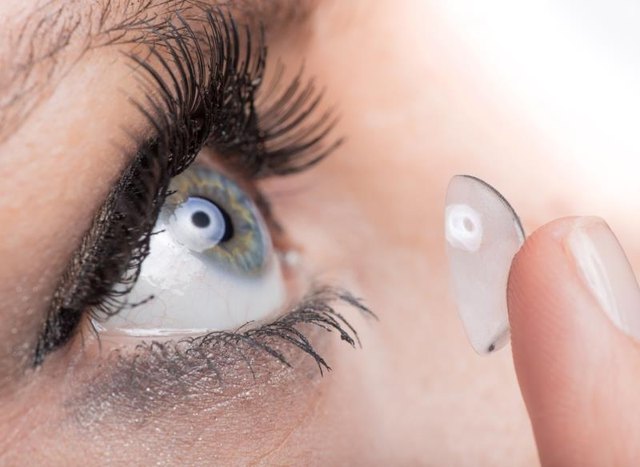
Successful contact wear makes for a healthy eye. Photo Credit Kesu01/iStock/Getty Images
It eventually happens to almost all contact lens wearers: You fall asleep while still wearing your contacts. With approximately 10 percent of Americans wearing contact lenses regularly, according to the American Academy of Ophthalmology, concerns about sleeping with contact lenses are common. The potential for problems depends on the type of lenses you wear, how you care for them and your overall eye health.

Potential Corneal Problems

When you fall asleep wearing your contacts, your eyelid is closed over the contact that covers the cornea. Oxygen normally diffuses into corneal cells directly from the air. But with a closed eye, the cornea has less exposure to oxygen. In addition, nourishment and protection from germs come from the natural tears of the eye. A closed eye with a contact in place impedes fresh tear flow to the corneal cells. Lack of oxygen and tears may lead to short-term problems ranging from feeling like something is in the eye, blurred vision, red eye, burning, itching or a scratched cornea. More serious problems that may develop over time include abnormal blood vessel growth into the cornea, giant papillary conjunctivitis, or bumps on the underside of the lids causing mucus discharge and irritation. Corneal infection, which can lead to scarring and poor vision, is another possible outcome.

More Oxygen, Less Stress

In the quest for better oxygen permeability, the greatest breakthrough in contact lens material came with the introduction of soft silicone hydrogel lenses. Silicone has a high permeability for oxygen and allows for 6 to 7 times more oxygen passage than standard hydrogel lenses. For this reason, silicone hydrogel lenses are approved for extended, overnight wear. More oxygen flow to the cornea means less stress to the corneal cells and less likelihood of corneal problems.

Beware Biofilm Buildup

Changing to a fresh contact lens pair often -- as indicated on the package insert -- and keeping your current pair clean with a multipurpose solution are important to decreasing a lens’ biofilm -- the layer of bacteria and debris that adhere to the contact surface and must be removed to decrease the risk of corneal infection. Changing lens cases regularly also helps to reduce biofilm buildup. However, people who sleep in their contacts -- even extended-wear lenses -- have an increased risk of corneal infection due to biofilm.

Tears Increase Tolerance

People with eye conditions that affect the normal tear film, such as dry eye syndrome or blepharitis, are predisposed to problems related to contact wear. These include the constant sensation of the contact lens on the eye, difficulty inserting and removing the contact, red eye and possibly pain. Such symptoms lead to reduced contact lens tolerability over time. Wearing contacts while sleeping increases the likelihood of problems occurring in people with dry eye or blepharitis. Therefore, any underlying eye conditions should be treated before contact use. This involves regular visits with an eye care professional to evaluate eye health and fitness for contact wear. It may also involve the regular use of lubricating artificial tears.
www.livestrong.com

Adoption and continued participation in a public Good Agricultural Practices program: The case of rice farmers in the Central Plains of Thailand

Published Date
July 2015, Vol.96:242253, doi:10.1016/j.techfore.2015.03.016

Title 
Adoption and continued participation in a public Good Agricultural Practices program: The case of rice farmers in the Central Plains of Thailand
  • Author 
  • Saengabha Srisopaporn a,
  • Damien Jourdain a,b,,
  • Sylvain R. Perret a,b,
  • Ganesh Shivakoti a,
  • aAsian Institute of Technology, SERD, P.O. Box 4, Klong Luang, Pathumthani, 12120, Thailand
  • bCentre de Coopération Internationale en Recherche Agronomique pour le Développement, UMR G-EAU, 73, rue J.-F. Breton, Montpellier 34398, France

Farmers’ perception of precision technology: The case of autosteer adoption by cotton farmers

Published Date
September 2012, Vol.87:121128, doi:10.1016/j.compag.2012.05.017

Title 
Farmers’ perception of precision technology: The case of autosteer adoption by cotton farmers
  • Author 
  • Jeremy M. D’Antoni a,
  • Ashok K. Mishra b,,
  • Hyunjeong Joo c,
  • aDepartment of Agricultural Economics and Agribusiness, Louisiana State University, 215 Martin D. Woodin Hall, Baton Rouge, LA 70803, United States
  • bDepartment of Agricultural Economics and Agribusiness, Louisiana State University AgCenter and Louisiana State University, 128 Martin D. Woodin Hall, Baton Rouge, LA 70803, United States
  • cDepartment of Agricultural Economics and Agribusiness, Louisiana State University, 11 Martin D. Woodin Hall, Baton Rouge, LA 70803, United States

Advantages and Disadvantages of Fasting for Runners

Author BY   ANDREA CESPEDES  Food is fuel, especially for serious runners who need a lot of energy. It may seem counterintuiti...