Blog List

Sunday, 14 January 2018

Cooking Tips and Recipes for Your EcoZoom Rocket Stove

Author
By STEPHANIE WOOD

Cook delicious meals anywhere with these portable and fuel-efficient stoves.
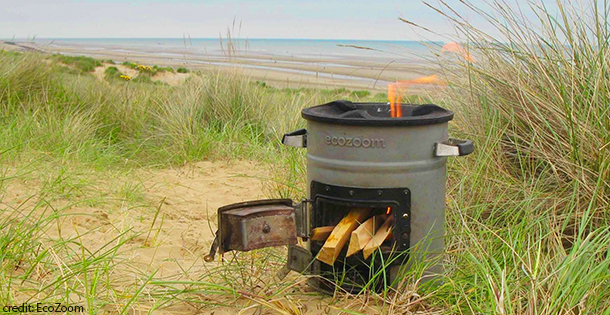
Ecozoom rocket stove on beach

What is a Rocket Stove?

Modern rocket stoves as we know them today developed in the 1980s as fuel-efficient, safe stoves primarily used for outdoor cooking. However, the basic technology behind rocket stoves has been around for centuries. Throughout history, people around the world have used oil lamps, chimneys, and wood-burning stoves with the same convection and combustion cooking methods employed in rocket stoves.
Today’s designs provide a unique alternative to open fires for outdoor cooking. Rocket stoves funnel incoming air through the flames and up through a combustion chamber. This efficient design traps heat and reduces emissions, meaning less fuel is needed to maintain a fire and people inhale less smoke when cooking. The small, contained fire in a rocket stove is also protected from wind, meaning a longer, steadier burn with less flames and charcoal whipped up by unpredictable breezes. As well, for campsites where open fires are not permitted, rocket stoves can be a handy alternative. The easier clean-up, fuel-efficiency, and compactness make rocket stoves extremely useful for camping, backyard cooking, living remotely, and emergency preparedness.
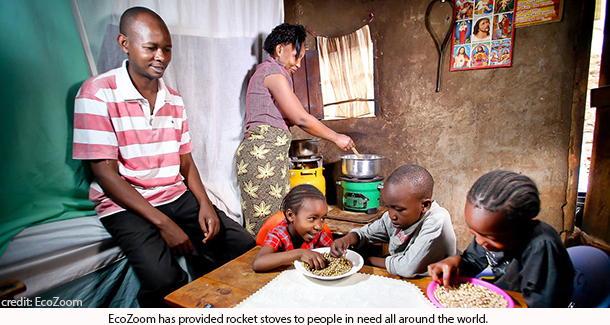
The compact and clean design of rocket stoves has also been put to humanitarian use by organizations such as EcoZoom, a producer of these fuel-efficient stoves. In many countries people still rely on open fires to cook meals, which has resulted in widespread illness and death due to excessive smoke inhalation. EcoZoom has worked with non-government organizations and local governments to provide stoves in countries such as Kenya, Somalia, Mexico and Haiti as a safer, cleaner means of preparing meals for families.
family enjoying food cooked on EcoZoom rocket stove
EcoZoom stoves benefit people by decreasing the amount of fuel they need to collect or purchase, saving them money, and preserving trees. According to EcoZoom, one stove “can save 30 to 40 trees and 12 to 15 tons of carbon dioxide” over its lifetime. Each purchase of an EcoZoom stove also helps support a worldwide initiative to reduce harmful emissions and make cooking an easier and cleaner task for people in both developed and developing nations.

Tips for Cooking with an EcoZoom Rocket Stove

Dura EcoZoom rocket stove alight while cookingThe smallest EcoZoom stove is the Dura Rocket Stove, which can burn wood and solid biomass. The Dura works for all the recipes listed below. There is also the Versa stove, which has a chamber for burning charcoal, allowing for more controlled heating. The Plancha stove is a larger model with two burners.
When using a wood-burning stove, make sure you have dry sticks and kindling to begin the fire. Check if your sticks are green on the inside – if so, they will smoke lots and burn little. The EcoZoom Rocket Stove is extremely efficient, so only a few sticks are needed, and they do not need to be big in diameter. EcoZoom recommends only using three sticks at a time. Start with less for more efficient cooking, especially if simmering – you may be surprised at how quickly the flames gain height!
Cast iron cookware is best for evenly conducting heat, especially over a fire. Cast iron cookware will ensure your food cooks more consistently, and is also extremely durable. EcoZoom sells a cast iron Dutch oven, frying pan, and grill pan that will perfectly fit your EcoZoom Rocket Stove.

Simple and Delicious Recipes for your Rocket Stove

Whether you’re camping or in your backyard, the rocket stove makes for easy and enjoyable cooking. The recipes below use overlapping ingredients for easy packing and preparation, and are single-pot as often as possible. Preparing some of your food ahead of time – for example, marinating chicken, chopping vegetables, dividing spices, and sorting everything into jars and containers – can save you a lot of time when you’re hungry for a hot meal.

Quick Berry Pancakes

Dry Ingredients:
1 cup flour
1 tsp baking powder
1 tsp salt
Fresh Ingredients:
1 large egg
1 cup milk
seasonal berries
optional sweetener (1 tsp cinnamon or vanilla)
Instructions:
  1. Prepare dry ingredients in a jar at home in advance, if camping. Make sure there is room to add the rest of the ingredients later.
  2. Add the egg, milk, and optional vanilla. Shake the jar until the batter is smooth. Add more milk if necessary.
  3. Pour batter onto a greased cast iron frying pan over your rocket stove, or use a ¼ cup to scoop. Cook until the bottom is golden brown, then flip to the other side.
  4. Serve on a plate and sprinkle with seasonal berries. Other toppings can include chopped nuts, granola, chocolate chips, honey, nut butter, and maple syrup.
Alternative: You can also add the berries directly to the mix and by shaking them up in the jar with your other ingredients.

Avocado Smash Breakfast Toast

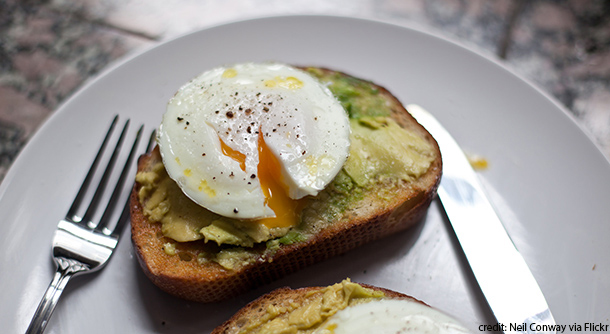
Smashed avocadoes topped with over-easy eggs on toast
Ingredients:
1 tbsp olive oil
1 full avocado
2 large eggs
2 pieces of whole wheat toast (or an English muffin)
salt and pepper
Instructions:
  1. Cut your avocado in half, remove the pit. Scoop out the flesh and smash with a fork on a cutting board.
  2. Heat up your rocket stove. While your frying pan is dry, quickly toast your two pieces of bread to your desired crispness.
  3. Remove the toast and add oil to your frying pan. Crack the two eggs onto the pan. This recipe recommends doing your eggs over easy, but other methods, such as scrambled and over hard, will also be fine. Try to keep the flame low especially if you’re doing your eggs over easy.
  4. To make over easy eggs, crack the eggs into the pan and leave the yolk whole. Once the bottom is cooked and the edges begin to brown, carefully flip each egg, keeping the yolk intact. Only cook this side lightly to ensure the yolk stays runny.
  5. While your eggs cook, spread your avocado smash onto your toast. Sprinkle with salt and pepper.
  6. Transfer your eggs on top of your avocado toast. Add salsa, Siracha sauce, bacon, cheese, or any other of your favourite breakfast food.
Gluten-free Alternative: Cut the avocado in half and take out the pit. Crack one egg into a bowl. Carefully spoon out the yolk and put into the hollow in one avocado half. Top the yolk with the egg white. Crack a second egg and do the same to the other half. Bake the two halves in a Dutch oven until the tops are cooked. Add toppings to your stuffed avocados.
If you don’t have a Dutch oven, hard boil one egg over your rocket stove. Cut the egg in half to fit into each hollow part of the avocado. Add toppings.

Baked Brussels Sprouts with Spicy Nut Sauce

Ingredients:
1 pound of Brussels sprouts, halved
1 tbsp olive oil
salt and pepper
1 tbsp maple syrup
1 tbsp Siracha sauce
1 tbsp peanut or almond butter
Instructions:
  1. Toss the Brussels sprout halves in the olive oil and salt and pepper. Lightly grease the bottom of a cast iron Dutch oven.
  2. Spread Brussels sprouts across the bottom of the oven and cover. Let bake until soft and lightly browning.
  3. Meanwhile, mix Siracha, maple syrup and nut butter in a small bowl. Add ½ tablespoon of a nut-sourced milk, if available, to thin the sauce. If not, water will do fine. This sauce can also be prepared at home ahead of time.
  4. Transfer brussels sprouts into a bowl and toss with the spicy nut sauce. Add your favourite toppings. Recommendations: shaved parmesan, dried cranberries, and spliced almonds or other chopped nuts.
Alternative: If you don’t have a Dutch oven, Brussels sprouts can also be roasted on a frying pan with olive oil until soft.

Salmon and Berry Salad

Ingredients:
1 large salmon fillet
1/3 cup blueberries
1/3 cup cut strawberries
¼ cup pecan pieces
¼ cup shaved parmesan
½ package spinach
2 sprigs of rosemary
1 tbsp olive oil
1 lemon, ½ sliced
salt and pepper
Instructions:
  1. Organize your ingredients at home into easy containers so you can quickly throw most of the salad together.
  2. Over a low flame, pour oil onto a cast iron frying pan. Squeeze lemon over salmon fillet and top with rosemary, salt, and pepper. Place the salmon on the frying pan with your slices of lemon. Try to keep the heat lower with less fuel, to ensure the salmon cooks properly all the way through. If you have a Dutch oven, you can also bake your salmon.
  3. Meanwhile, combine spinach and berries. Squeeze other half of lemon over top and toss. You can also add some olive oil if you find it too dry. Top with parmesan and pecans.
  4. Once salmon is flaky, place on top of the rest of the salad with roasted lemon.

Baked Cinnamon Apples

Sliced red apples caramelizing in a Dutch oven
Ingredients:
1 tablespoon olive oil
2 large apples (or pears, if preferred)
1 tablespoon melted butter
½ tablespoon cinnamon
½ tablespoon brown sugar
Pinch of nutmeg
Instructions:
  1. Combine spices and sugar at home and secure in a container.
  2. Melt butter in frying pan over your rocket stove.
  3. Cut your apples in half and cut out the core. Spread out the melted butter over the two halves and top with the sugar mixture. Lightly grease the bottom of a cast-iron Dutch oven. Insert the apples and cover. Bake the apples until they are soft. You can also add chocolate pieces or chopped nuts, or use them as an alternative to sugar.
  4. If you do not have a Dutch oven, cut your apples into thin slices. Pour oil onto a frying pan. Add the apple slices and sugar and spices mixture. Coat the slices evenly. Pan fry the apples slices until soft and brown. Add any other toppings.

Bonus Quick Treats

Popcorn

Pour two tablespoons of olive oil into your Dutch oven. Add few popping corn kernels to start. Once the oven is hot enough and they begin popping, add another 1/3 cup of kernels and shake or stir so all the kernels are coated in oil. As soon as the popping stops, pour your popcorn into a bowl. Melt some butter and drizzle over top.

Apple Cider or Mulled Wine

Pour apple juice in a saucepan with apple slices, one teaspoon of cinnamon, and a half a teaspoon each of nutmeg and cloves. Alternatively, combine red wine with the spices, as well as a few shots of sherry and some orange and lemon slices for a simple mulled wine.

S’more Pie

Add a bit of oil or butter to your Dutch oven. Crumble graham crackers in your hands and create at least a one inch layer. Next, add a layer of dark chocolate broken into pieces. Top with marshmallows and cover. Cook until the top of the marshmallows begins to brown. A fun twist on a camping classic! Feel free to add nuts or dried fruit in the middle with the chocolate.

Pan Fried Pizza

Super simple and easy to prepare at home ahead of time: start with a whole grain pita and add your favourite toppings. Keep in a sealed container in your cooler. To prevent it getting soggy, it’s best to have early on in your camping trip. Simply throw the pizza into a frying pan over your rocket stove until the bread gets a little crispy and the cheese melts. Go for something a little different by doing pesto instead of tomato sauce, and feta instead of cheddar.

Other Ideas

Use your frying pan to make a quick stir-fry or to roast some skewers. Potatoes, peppers, onions, chicken, shrimp – the options are endless. Dutch ovens are also perfect for homemade soups, chilis, and stews. For ambitious cooks, they are ideal for making bread and pastries. You could even bake pizza dough from scratch.
With a rocket stove and a few quality appliances, you don’t have to feel limited while cooking in the outdoors. So, make these recipes your own, pack up your rocket stove, head outdoors and start cooking!
Pin for later:
Cooking Tips and Recipes for Your EcoZoom Rocket Stove
Author photo
~~
Stephanie Wood is a freelance writer from North Vancouver, BC, with a special interest in environmental journalism. She enjoys hiking trails, finding thrift and antique treasures, and traveling abroad.
~
For further information log on website :
http://learn.eartheasy.com/2017/05/cooking-tips-and-recipes-for-your-ecozoom-rocket-stove/

7 Life Lessons Your Garden Can Teach You

Author
By NICOLE FAIRES

Dig a little deeper and you’ll find unexpected insight right in your garden.

Water droplet on leaf
I say, if your knees aren’t green by the end of the day, you ought to seriously re-examine your life.
– Bill Watterson, Calvin & Hobbes
A garden delights every sense – the bees humming amongst the flowers, the soft dirt between our fingers, the bright colors of ripening fruits amidst the greens, the taste of a freshly picked tomato. But true garden lovers know that the benefits of gardening aren’t just physical. As the years pass season to season, gardens teach us things about life that change who we are.

1. Learning to look at things from a different perspective can save you a lot of heartache

My green thumb came only as a result of the mistakes I made while learning to see things from the plant’s point of view.
– H. Fred Dale
There are gardeners who battle against the elements, fighting to put a specific plant in a specific place, only to find that the same pests return year after year to destroy their best-laid plans. ‘Why don’t the chemicals work?’ they cry, and, ‘What am I doing wrong?’ When you’re beating your head against the wall because the same old thing isn’t working any more, maybe it’s time to reevaluate and try something new. Change is good, especially being able to see something with new eyes.
Lady bug on moss

2. Optimism is important

Gardening is a matter of your enthusiasm holding you up until your back gets used to it.
– Author Unknown
Seed catalogs arrive when snow is still on the ground in most places, and garden planning is really just an act of imagination. The failures of the previous year and the hard knots in your lower back have faded away just long enough to dream of an even better garden this year. Trusting that the future holds the possibility of better things, new growth, and sunshine (as well as much-needed rain) is the first step to making good things happen.

3. The most beautiful things in life are sandwiched between a rock and a hard place

In gardens, beauty is a by-product. The main business is sex and death.
– Sam Llewelyn
One of everyone’s least favorite gardening jobs is thinning seedlings (or at least mine is). I feel guilty every time I pinch away the tiny little plant which has just sprung from the soil. Plants die, either through their natural cycle, or because something killed them. They rely on the nitty-gritty business of bees and wind to produce seeds, and they struggle through the soil around rocks and tiny creatures just waiting to devour them. The garden is a battleground of survival, but through it all is this miraculous and beautiful life, which is not only thriving, it’s exuberant in its existence. Life needs that struggle and the reality of sex and death to create the beauty within it.Terra cotta pots

4. It’s okay to be alone sometimes

It is good to be alone in a garden at dawn or dark so that all its shy presences may haunt you and possess you in a reverie of suspended thought.
– James Douglas, Down Shoe Lane
There are a few people who revel in aloneness, but there are many more of us who find it insufferable to be alone, in the quiet, with our own thoughts. The magic of the garden is that it somehow always feels okay to be out amidst the plants, sweating and pulling weeds, feeling the satisfaction and pride of a well-tended garden, absolutely alone. If you must choose between the meditation of sitting in a quiet room and the meditation of gardening, it’s far easier to empty your mind in the physical exertion of a garden than it is in the dark, sitting on the floor. And then, in the quiet of your mind surrounded by the noisy chaos of wind, bees, birds and crawly things, you will find that being alone is often good.

5. Every good thing requires hard work

Our England is a garden, and such gardens are not made
by singing, “Oh, how beautiful!” and sitting in the shade…
– Rudyard Kipling, ‘The Glory of the Garden’
First-time gardeners are surprised by the time it takes to make a good garden. There are anthropologists who argue that one of humanity’s biggest mistakes was to switch from hunter-gatherers to farmers, because it took up so much more of our day and our energy. We chose the life of agriculturalists because it produced a surplus – a way of creating some insurance for the future. Hard work is the secret ingredient for every good thing in life, especially really hard work. The harder you work at something, the better it will be.

6. Failure is the necessary stepping stone to success

A garden is always a series of losses set against a few triumphs, like life itself.
– May Sarton
Every year in the garden is a circle of successes, and even more failures. Which variety of lettuce will do better in the heat? Why did I have so many cutworms? Why didn’t my carrots sprout? It’s an experiment that takes place over and over again to find the right formula, and often there isn’t one. What worked one year might not work the next.
A ‘successful’ garden is a misnomer: there is no such thing as 100% success in gardening. When you are dealing with nature, there are no guarantees. There is also not a single successful person who does not have a long story to tell about the extreme failures they experienced on the road to that success. If you were only able to take one skill to a deserted island, being able to fail well and learn from failure will be the secret to finding your way out.
Wildflowers

7. The unexpected can often be beautiful and magnificent

You can plan ahead but the unexpected will happen and it’s not always a bad thing. Many things grow in the garden that were never sown there.
– Thomas Fuller, Gnomologia
Just like our gardens, life is short, fraught with the unexpected, filled with failure and adversity, and never seems to go as we planned. It’s also magnificent in its beauty as we experience love and laughter, adventures, and the small joys that can fill us with sublime happiness.
Almost none of the happiest moments in life are planned – instead, it’s the spontaneity of life that is the most delightful part. Let us revel in the little things and find joy in the dirt!
Pin for later:7 Life Lessons your Garden can Teach You
Author photo
~~
Nicole Faires is an urban farmer and best-selling author of books on sustainable agriculture and food policy. Originally from Montana, she now lives with her family on the West Coast. Find out more at http://deliberatelife.ca or connect with her on LinkedIn. 
For further information log on website :
http://learn.eartheasy.com/2017/06/7-life-lessons-garden-can-teach/

Germany is Proving Renewable Energy Can Power a Country

Author
By YANIV VARDI

With its ambitious transition to wind and solar electricity, Germany is cutting carbon while growing its economy.


wind power
In a world facing pressing challenges from climate change and rising carbon emissions, entire countries are becoming laboratories to test potential solutions. Nowhere is this truer than in Germany, where their aggressive plans to address climate change, encoded in the ambitious Energiewende, call to phase out nuclear and carbon-based energy sources and invest in renewable energy sources– such as solar and wind.
The Energiewende plan envisions a non-nuclear Germany that cuts its carbon emissions by 80% by 2050. As lofty a goal as this may be, the plan is on pace to meet and even exceed benchmarks. Even though not everyone is on board, and some claim the Energiewende is overzealous and could strangle business in favor of pushing an unrealistic energy policy, progress is well underway.

What is the Energiewende, and what has it done so far?

The Energiewende is a sweeping plan to transform Germany’s society and its economy using renewable energy. Passed in 2010 in its most recent form – but with social and political roots that stretch back 20 years prior – the Energiewende schedules a complete phase-out of nuclear-generated energy by 2022, an 80% cut in carbon emissions by 2050, and supports additional investment in renewable technologies such as wind and solar.
The Energiewende has three main components: proliferation of renewable energies, reduction or complete phase-out of nuclear- and carbon-based energy sources, and increased energy efficiency. Germany is well on its way to completing these goals successfully and in a timely fashion. Currently, the first two components are well underway, while early progress has been made toward heightened efficiency. By 2014, 27% of German electricity was generated by renewable sources. Since 2011, Germany has halved its consumption of nuclear energy and shut down nine of its 17 nuclear reactors.
On its surface, the Energiewende appears to be working. It doesn’t mean, however, that the policy isn’t free of critics. Some have vocalized sharp critique, casting doubt on the viability of the energy plan. But do these arguments hold water?

The continuing renewable energy debate

Not everyone is sold on the promises of the Energiewende. Some, like economist Heiner Flassbeck, argue that an energy system primarily supported by wind and solar, without any aid from nuclear sources or fossil fuels, is ultimately not tenable.
Flassbeck’s critique is related to what critics call “the intermittency problem,” that wind and solar don’t always generate electricity at reliable levels. If the renewable sources fail to produce enough energy to meet the nation’s demand, and Germany successfully phases out all nuclear- and carbon-based energy sources, there would be no fallback to generate the additional energy needed. Critics say removing that backup would be a crucial mistake.
However, proponents argue that intermittency can be solved with greater grid connectivity – geographical diversity, they suggest, should often balance out any shortages – and the development of better storage technologies. At present, wind energy must be used as it is generated; if cost-effective storage methods emerge, the intermittency of wind power becomes less of a concern.
In addition, alternative sources have proven themselves to be sufficient. Just last year, German solar power providers generated so much electricity that they actually had to pay to offload it. And while naysayers may declare this the product of a ham-fisted public policy that actually dims the long-term viability of commercial energy production, the fact that there’s enough clean energy production to bring this hypothetical conflict to life, is itself encouraging.
Energiewende critics also raise concern about inflated electricity costs. In Germany, utilities are required by law to pay energy producers that sell back to the grid. Those payments are set at fixed, above-market prices, which utilities pass on to consumers in the form of a surcharge on their electric bill. As a result, German consumers experience higher than average energy costs. In 2016, the surcharge amounted to 22.1%.
In the U.S., consumers pay less per kilowatt hour, a fact favored by critics of Germany’s energy policy. Despite the heightened electricity rates, German consumers are still widely in favor of the Energiewende. More than 80% of respondents of public opinion polls said they were in favor of a low-carbon and nuclear-free economy. Higher energy costs, it seems, do not deter the Germans in their bid for a cleaner energy system.

Toward a viable, national energy management model

Despite critics’ appeals to hold tight – at least for the time being – to the nuclear- and carbon-based status quo, Germany’s energy efficiency policy is making a compelling case study for a more sustainable model.
The methods may be bold, but they seem to be working. Germany reduced greenhouse gas emissions by 27% and produced 27.4% of its electricity from renewable sources. Renewable energy made up 13.5% of the market as well – all while shuttering nuclear facilities and growing the overall economy by 1.9% (the fastest rate in the G7).
While Germany is phasing out non-renewable energy sources like coal at a slower pace than nuclear energy, the Energiewende is setting the stage for a new system founded on renewable energy technologies. As storage methods improve and proliferate, and distribution networks become more connected, the problem of intermittency should become less and less burdensome – in other words, high-producing regions will be able to support low-producing regions.
While the Energiewende is aggressive bordering on single-minded, it has already demonstrated its viability as an energy system capable of supporting an advanced, forward-thinking economy. Even as the German policy has implemented drastic changes in a relatively short amount of time, the German economy has continued to grow unabated. If the world is serious about combating climate change and meeting the targets of the Paris climate accord, Germany’s Energiewende is a model to emulate, not dismantle.
Pin for later:Germany is Proving Renewable Energy can Power a Country

Sources:

Steve Hanley, “Germany Breaks a Solar Record—gets 85% of electricity from renewables,” Cleantechnica.com (May 8, 2017)
Paul Hockenos, “Energiewende—the first four decades,” cleanenergywire.org (June 22, 2015)
Robert Kunzig, “Germany could be a model for how we’ll get power in the future,” National Geographic (November 2015)
World Nuclear Association update, “Germany’s Energiewende,” world-nuclear.org (April 2017)
Heiner Flassbeck, “The End of the Energiewende?” energypost.eu (January 10, 2017)
Christine Sturm, “Germany’s Energiewende: The intermittency problem remains,” The Bulletin of the Atomic Scientists, thebulletin.org, (May 20, 2016)
Jon Rabinowitz, “German Innovation in CleanTech and Legislation,” panpwr.com, (March 20, 2017)
Richard Martin, “Germany Runs Up Against the Limits of Renewables,” MIT Technology Review, technologyreview.com, (May 24, 2016)
“What has gone wrong with Germany’s energy policy?” economist.com (December 14, 2015)
Soren Amelang and Julian Wettengel, “Polls reveal citizens’ support for Energiewende,” fact sheet, cleanenergywire.org (May 19, 2017)
Angela Monaghan and Graeme Wearden, “Germany overtakes UK as fastest growing G7 economy,” theguardian.com (February 23, 2017)

Author photo

~~
Yaniv Vardi is the CEO of Panoramic Power, a leader in device level energy monitoring and performance optimization.
~
For further information log on website :
http://learn.eartheasy.com/2017/06/germany-proving-renewable-energy-can-power-country/

Wednesday, 10 January 2018

4 Ways the STRONGER Challenge Will Make 2018 Your Fittest Year Yet

Author
by 
If you want to lose weight and get fit this year, you might be wondering "How do I get started? Where is my motivation? What do I need to do?"

VIDEO OF THE DAY

 
A crucial component that's been integral to my weight loss and overall fitness over the past several years has been being a part of a fitness challenge group.
The encouragement, support, friendly competition (and let’s be honest — the kick in the butt) that a fitness challenge group provides is what I need to kick-start and stick with my diet and fitness resolutions.
I know this from experience.
I've been lucky enough to participate in two different Beachbody test groups. In 2011, I participated in the RevAbs test group and lost 15 pounds in three months.
In the summer of 2012, I was a member of the Les Mills Combat test group, and I lost 20 pounds in 60 days. (See my BEFORE and AFTER photos.) And in 2014, I lost eight pounds doing the 8-week STRONGER Challenge with the LIVESTRONG.COM team.
We’re starting an 8-week STRONGER Fitness Challenge for the new year on Monday, January 8, and we’re inviting you and all of our readers to join us. We made it our resolution to try to help as many other people as possible get fit.
That's why we made our STRONGER premium fitness program COMPLETELY FREE for everyone. Plus, you can join our LIVESTRONG.COM Challenge Group on Facebook.
We'll be sharing our experiences there, and we'd love to have our audience along for the wild ride. You can also tweet at us @LIVESTRONG_COM using the hashtag #Stronger2018.
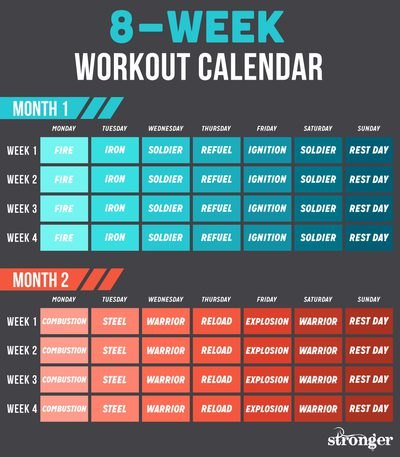
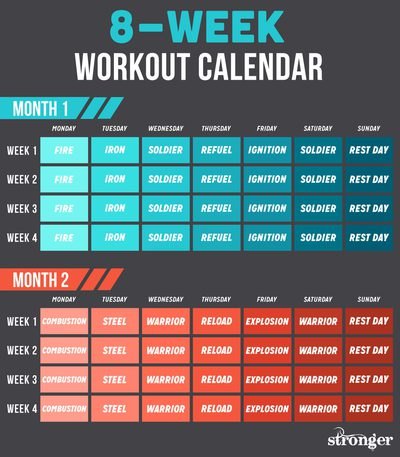
We created the STRONGER workout program with celebrity trainer and former professional soccer player, Nicky Holender. The daily workouts are all about 30 minutes long and require no equipment at all. That way, you can do the STRONGER workouts in your living room, bedroom, office, hotel room or anywhere you have a Wi-Fi connection. So, there are no excuses! Here’s the full calendar of STRONGER workouts.
Here's your workout roadmap.

4 Things That Helped Me Lose Weight and Stay Committed

1. Daily words of motivation from top trainers

Most of us find it too expensive to hire a personal trainer — never mind a celebrity trainer — to provide support and those words of wisdom. I realize that I have been lucky to work with top trainers in my past challenge groups.
In the RevAbs test group, Brett Hoebel gave us in-person pep talks and video updates to keep us motivated. In the Les Mills Combat test group, we received video updates from Dan Cohen, Rachael Newsham and our in-person trainers.
During the 8-week STRONGER Challenge, you'll get daily video motivation from Nicky Holender. Nicky is an expert trainer and motivator with celebrity and athlete clients, including Gordon Ramsay, Robbie Williams, Mel B, Gerard Butler, Salomon Kalou and more.
What does a daily motivational video from Nicky look like? Here's your day 1 motivation to get you fired up to do your first 30-minute HIIT workout:

2. Daily exercise routines prescribed by a professional trainer

Left to my own devices, I would just do a yoga class or head to the gym and jump on the elliptical and watch TV. But those types of self-guided workouts — even when I did them five or six times a week — NEVER got me to lose 15 or 20 pounds. In fact, choosing my own daily workout routine never even got me to lose five pounds.
This is how I understand and know from experience that fitness challenge groups offer something that is truly an advantage over regular old self-directed gym routines.
The fitness challenge groups that helped me lose weight consisted of different daily workouts programmed for the group by professional trainers that involved high intensity interval training (HIIT), strength training, plyometrics and core work. The workouts don't need to be long, they simply need to challenge you and provide variety that keeps you coming back for more.
Want to see an example of a daily workout video from STRONGER? Press “play” to check out the FIRE high intensity interval training HIIT workout:

3. A simple daily meal plan created by a professional dietitian

Most of us can’t afford consultation with a nutritionist or dietitian to come up with a meal plan that supports our diet and fitness goals.
As I mentioned again and again, I’ve achieved my best success as a part of fitness challenge groups. In those groups an essential component was the meal plan and sticking to it.
In creating STRONGER, we decided to work with nationally-recognized nutritionist, author and LIVESTRONG contributor Keri Glassman to develop daily meal plans for omnivores, vegetarians, vegans, and a gluten-free option as well. These are all included in the STRONGER program.
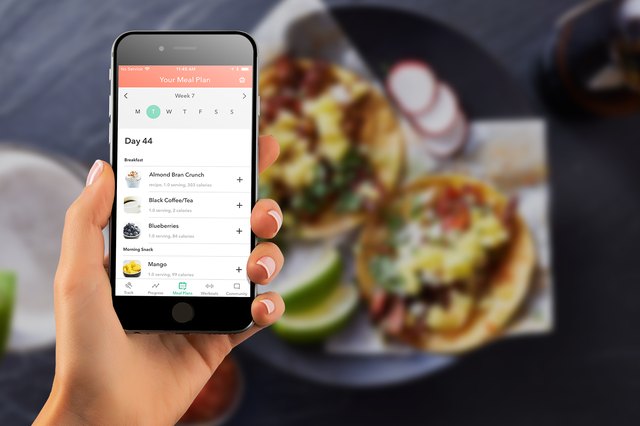
The best part: If you decide to eat something different (say a burrito at Chipotle), it’s quick and easy to track because the STRONGER meal plan is built on top of the LIVESTRONG.COM MyPlate Calorie Tracker platform, which already contains over one million popular foods that are in your grocery store and restaurants nationwide.
Getting a flexible easy-to-prepare daily meal plan complete with recipes and grocery shopping lists emailed to me is yet another reason why I’m looking forward to starting the STRONGER Challenge.

4. Support and friendly competition from a great group of people

During the two challenge groups I participated in, getting through day 1, day 15, day 30, day 45 and so on, was not always easy. Some days were particularly harder than others. Whenever I needed motivation, I turned to my online group of fellow test group participants who started with me on day one.
You can join our LIVESTRONG.COM Challenge Facebook group to get this kind of motivation and support. We share our accomplishments with each other via social media and we also share our challenges, such as going to birthday parties and not being able to eat any cake.
That way we can offer each other the inspiration needed to keep going and make it through the next day’s workout. It makes it tougher to quit when you have online peers checking in on you. Also, friendly competition can be a great motivator.
Trying to lose the most weight or get the best BEFORE and AFTER photo transformation of the group can help some people to strive to greater success for themselves. (By the way, here's how to take your BEFORE and AFTER photos.)
STRONGER offers a vibrant online community complete with conversations about the STRONGER workouts and a Facebook group to share progress and questions with the other STRONGER Challenge participants and the LIVESTRONG team.

How to Sign Up for the STRONGER Challenge

1. Download the MyPlate app for iOS and create your account. If you're on Android or don't have a smartphone, you can also use the desktop version. Make sure you set January 8 as your start date so you can be on the same page as the rest of the LIVESTRONG.COM community!
2. On your start date (we're launching our next challenge January 8th), you'll be able to log into your account and click on “Meal Plan” in the bottom navigation bar of the app. There, you'll have access to each day's meals as well as each week's shopping list.
Tracking is easy with MyPlate.
3. For each meal and snack, track your calories by clicking the check mark next to each food or recipe. If you need to deviate from the meal plan, you can also enter foods manually from the “Track” tab on the bottom navigation. Just search for your food and click the “I Ate This” button. Also be sure to track your water intake from the “Track” tab.
4. Print out the STRONGER Challenge workout calendar and and follow along with each day's free workout video.
Here's your workout roadmap.
5. Track the STRONGER workouts in MyPlate. On the app's main page, click Exercise then search STRONGER. All of the workouts will be listed below. Select the one you performed that day.
6. Join our LIVESTRONG.COM Challenge Facebook Group to get daily tips, encouragement and motivation! You can also join the conversation in our community boards in the app ("Community" on the bottom navigation) and on desktop.
7. Do the workouts with us, cross them off the calendar and post about it in the Facebook group. We're cheering for you!
Readers — Are you joining us for the 8-week STRONGER Challenge? What do you think of the STRONGER workouts? What do you think of the meal plan? Are you having any trouble accessing and using either the workouts or the meal plan? Have you ever done a fitness challenge group before? How did it go for you? Have you joined our LIVESTRONG.COM Challenge Group on Facebook? Leave a comment below and let us know!
For further information log on website :
https://www.livestrong.com/article/1012122-4-ways-stronger-challenge-make-summer-2016-fittest-yet/

Advantages and Disadvantages of Fasting for Runners

Author BY   ANDREA CESPEDES  Food is fuel, especially for serious runners who need a lot of energy. It may seem counterintuiti...