Author
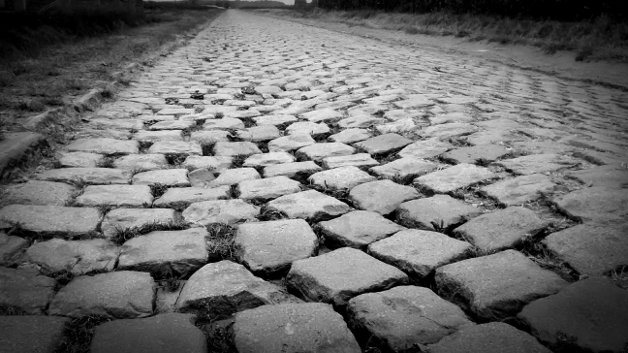 Let’s talk cobbles. Why oh why would anyone think riding over gap strewn paving would be fun? It’s pure evil I tell you!
I went cycling in Flanders recently, heading to Belgium to ride the famous climbs and routes from the Tour of Flanders, or Ronde van Vlaanderen, as it’s known to the cycling mad locals, or simply The Ronde. Here’s my routes, along with an insight into cycling in Belgium, riding the cobbles, bergs (hills), and wind, plus a certain type of cyclist.
Cycling in Belgium
Belgium, or at least this western corner of the country, is cycling mad. Bike wheels form shop logos, not for a bike shop, for women’s clothing. The window display of the local book shop is proudly arranged with bike books and nothing else. Hell, there’s a museum not to cycling in general, but to a specific cycling race. Welcome to Flanders, land of bike and beer.
Belgian cobbles

Progress?
I was in two minds about riding cobbles or the pavé, as the locals call it. Whilst I wanted to ride the roads I’d watched the pros endure each Spring for the past few years, I also know I’m no hard man. I like smooth roads, that feeling of floating. I’d ride on crushed velvet given the chance. Not the buckaroo, jarring yet also numbing experience of riding cobbles.
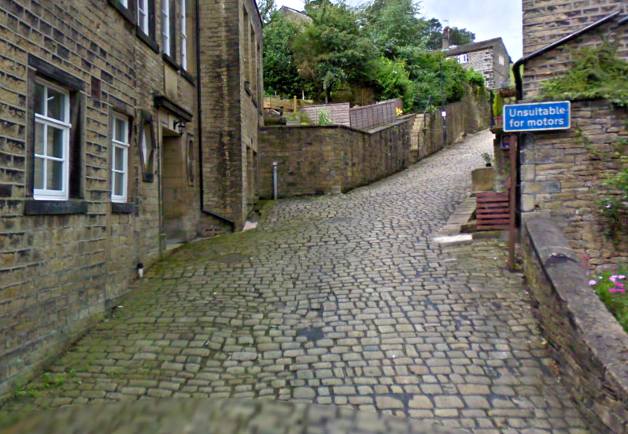
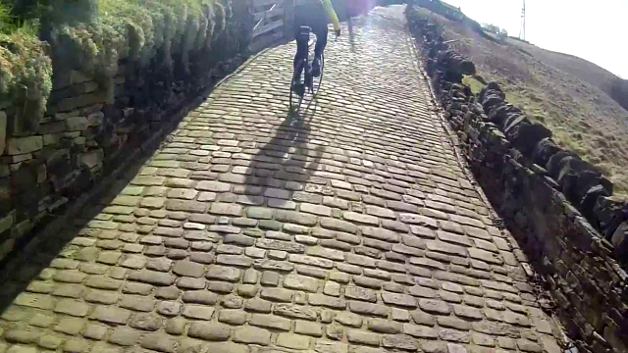
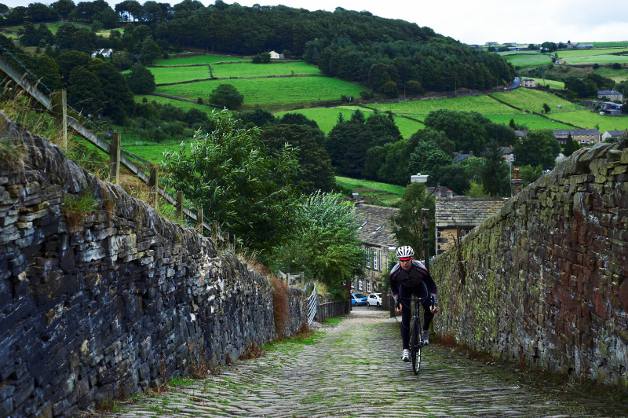
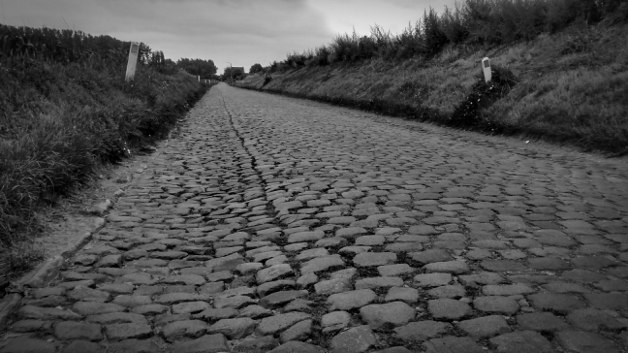
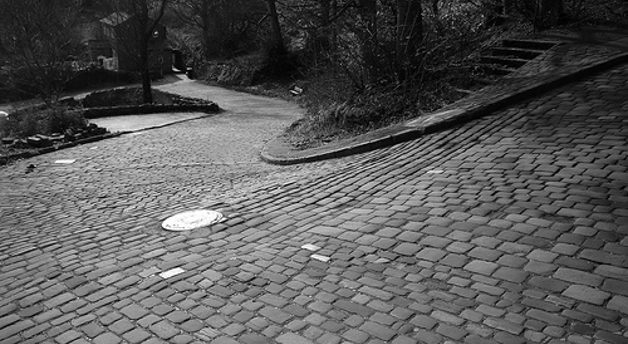
I’d ridden the cobbled Ronde van Calderdale route in Halifax in preparation, yet UK cobbles are like riding glass in comparison to the Belgian gap-toothed monsters. The roads, nay, I’m not even sure these are roads, these are graveyards, tombstones of yesteryear, so many dead.
In the Americas folk jump on bucking bronco for fun, in Belgium it’s cobbles. Lycra does not instill confidence at such times. It’s hard to describe the constant, incessant ass kicking cobbles dish out.
Body tightens and a contorted cobble face strikes, a Rocky Balboa grimace that makes Fabio Aru’s painface seem angelic. Scary. So too the ‘that can’t be healthy’ noises from my poor bike. Crunch, clang, clatter, crack.
Belgian hills
Belgium is flat right? Mostly, but for small clusters of hills, or hellingen as the locals call them, in the Flemish Ardennes. Emphsais on the first four letters! Hell. My congratulations to the course designers of the routes I rode. They seem to have found every small lump and bump in the region, somehow creating routes that climb each and every bump from as many sides as possible.
“What seems like a million corners, combined with twenty to thirty steep pitches and narrow roads, none of which go the same direction for more than a mile”George Hincapie, cyclist, describing the Tour of Flanders route
This constant twisting and turning is great if you love technical courses or want to practice your cornering or like an even sun tan! Not so great if you just like to power along and get in the zone.
Truth is, the climbs are not too difficult. Cobbled climbs in Belgium are worshipped and mythologised because of the races they feature in, not because of their severity. There’s far tougher climbs in the UK.
The cobbles add a degree of difficulty, and novelty, especially when poorly ‘maintained’, but don’t come here expecting leg breakers. I spent most of my time climbing in the big ring. I know, I’m a hero.
Belgian wind
The Belgian landscape is all big skies and distant horizons, little to shelter you from the wind. The cycling God’s have banned bushes, hedgerows, densely packed houses, stonewalls, hell even the trees are pruned so that branches begin many metres in the air.
This is the Belgian cycling federation at work. Oh yes. They want their riders to be strong, expose them to the wind when you have so few hills. Tactics.
Weather forecasts in Belgium don’t give you an average wind speed, they show you the speed of the gusts. It is always gusting.
Belgian cyclists
Many cyclists seemed to fit a certain persona. Middle aged and heavy set yet trim, fit, their skin sun darkened, tight muscular brown calves like giant walnuts. Machines.
They don’t bother with the hellos and polite nods as we do in the UK. Perhaps because seeing a cyclist in Belgium is less of a novelty than in the UK. This lot are organised too. On Sunday rides the vast pelotons are stalked by a mini-bus, their very own service course or broom wagons when they get sick of the wind.
Flanders Blue Route | Day 1
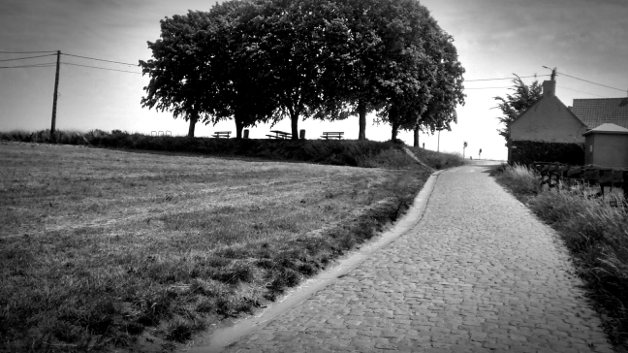
Top of the Paterberg
I arrived in Oudenaarde hot and tired. Having awoke in the cool air of a 4:45 am early rise, I was not quite ready for the heatwave, which would later peak at 37 degrees. Tired, I was grouchy and in no mood to be thrown around the bike by cobbles. It would be a long day.
My Flanders route was the Blue Route, one of three routes designed to cover the famous roads of East Flanders and so named because that’s the colour of language come each bloody climb. This was the shortest route at 50 miles but included a series of famous climbs such as Paterberg, Oude Kwaremont and the Koppenberg.
A missed lunch meant I was hungry. Mistake number 1. Riding at the hottest part of the day? Mistake number two. Underestimating Belgian wind? Yup, mistake number three. There would be many more.
The wind whipped up as if to push me back to my hotel and bed. On I pushed. Before long I hit famous climb #1, the Oude de Kwaremont, the longest cobbled climb at 2.1km peaking with a 11% gradient. What the Kwaremont lacks in steepness it make up for in badly maintained cobbles. Less paving, more stepping stones.
The road wants to throw you off your bike, no question. These would be the worst cobbles of the trip and one of the longest stretches. My oh my, what a shock to the system. I can’t think of this experience without my teeth chattering together. A beast. Or “not so bad” as the locals would later say to me, pity in their eyes.
The summit eventually arrived and I was empty. From the effort, from the shaking. I checked my bike, my body for lost bits. You know loose bottles, saddle bags, limbs.
A word about cobble climbing technique. Or how not to climb cobbles. Whilst I’d remembered to lower my tyre pressure, the minute I hit the cobbles everything else I’d read was lost to the pneumatic thunder of the road. In fact I barely noticed the gradient so focused was I on staying on my bike.
I gripped the hoods, nay, clung on for life. Many shaken climbs later I remembered this was the worse place to grip the bars, the feedback from the road doing its best to rip the skin from my gloved hands.
Get the wrong gloves here and you will endure pain as your skin is slowly peeled from the bone. Grip the top of the bars, grip loose, thumb on top if climbing, thumb beneath if descending. You may feel more likely to fall off with such a flimsy grip but the comfort makes a big difference.
When pain kicks in you must remain seated, or else it’s wheels spin ahoy. Even seated you’ll wheel spin if in the wrong gear. Sorry Chris Froomes of the world, this is mash and grind time. It is certainly easier to push a harder gear, giving you more traction and less movement on the bike.
Beyond the physical challenge is the mental ardure of riding cobbles, particularly uphill. Huffing and puffing, your head quickly goes down but this isn’t possible on cobbles, you can’t afford to take your eyes off the road and your best line.
Admittedly come the latter climbs I’d been shaken so much I’d given up picking the best line and just decided to power my way over the cobbles as best I could. Being a lighter rider, I was thrown all over the road.
After surviving the Oude Kwaremont I began to fear the names of famous roads flashing up on my Garmin. Some of the cobbled sections shook me so much my legs and feet were struck with pins and needles.
Steeper hills followed almost immediately, the Paterberg and Koppenberg peaking out at 20% and 22% respectively. Not that I cared too much about these hallowed roads. My awe had long since been lost. I barely noticed how steep the climbs were and they’re nothing like those you find in the UK. Yet the rutted cobbles, even this slightly smoother variety, suck the life from you.
I was well and truly done. Just another three days riding cobbles then yeah?
Flanders Red Route | Day 2
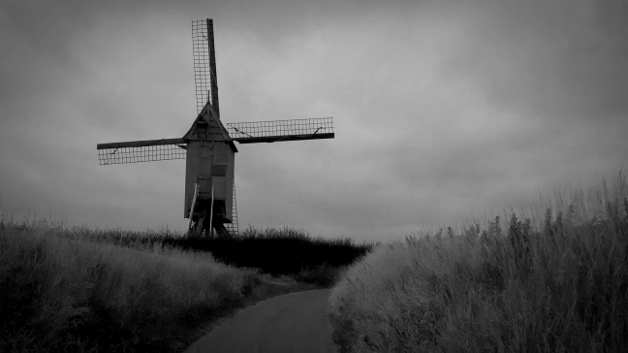 A big sleep later and I was ready for another bone shaking, bike cracking day. I set off, the weather cooler, fuelled by caffeine and the classic continental ham-cheese-yoghurt breakfast combo (can’t think why this hasn’t caught on in the UK!). I made a yogurt bomb just to a be sure – aka I dropped a big dollop of honey in my mini yoghurt pot. Boom!
Today was the Red Route, a longer, hillier but smoother ride, only a few cobbled sections to rattle my brain and unsettle my teeth. What a ride. Swooping up and down rolling and twisting single track roads, smooth as silk, bike and body negotiating the 100s of corners as if they’re not there.
I eased off the pace as the caffeine quietened. Much to my surprise I was not greeted by cobbles at every turn unlike the Blue Route. With the roads narrow and twisty it’s a good job there’s little traffic yet you must always be wary, for neither you nor the driver of a speeding car want to be surprised.
In spite of the wind gusting yet again, the first half of the ride passed in bliss. The landscape changed constantly as I twisted and turned towards the Muur van Geraardsbergen, the infamous climb from the Flanders Classic race.
The route to the top of the famous climb is of course cobbled, what else, yet this wasn’t my concern. Ensuring I took the right turns was more difficult as I snaked up the hill with 20% gradients and many turns. Before I knew it, the hill was over.
After such a fear inducing reputation I was somewhat deflated. Disappointed with the Muur, I had another bash on my return to the town 10 miles later after a climb over the Bosberg, powering my way over the cobbles, technique already much improved over yesterday. Grip loose on the bars, bum seated back, hovering slightly, big ring mashing, power unleashed through my core and thighs.
The top arrived, where some Strava protester, aka workman, had parked his van blocking the entire road and the remaining few metres to the top. My heroics were in vain. I had to stop, lift my bike up the high kerb and cross the grass before sprinting to the finish.
Even so my second attempt was the quickest! Once you know a climb, even if you’ve only climbed it once, it gives you a big advantage to know your pacing. Note to self, always pre-ride upcoming hill climb races.

Where legends are made
The ride back continued through glorious rolling countryside. The inevitable cobbles struck, this time a long up and down section. Cobbles up steep hills? Difficult. Cobbles on the flat? Annoying. Cobbles downhill? Terrifying.
I hit the downhill with speed, too scared to brake and determined to ‘float’ over the bumps using my pace. A convoy of touring Citroen 2CVs headed my way, forcing me on to the lumpiest cobbles near the gutter, my speed hitting 30mph. Geez. My body tightened and I felt my contorted cobble face strike. Scary.
On I pushed, invincible! A Belgian rider ahead, spotted me and did his best to drop me, continually checking over his shoulder to see if was still there. I was, much to his bemusement and my amusement.
Next up the Eikenberg, a long haul over yet more cobbles, yet there’s a cop out, half way up the sides of the cobbles is a thin line of smooth tarmac. Could I resist this heavenly temptation? No. If it’s good enough for the pros, it’s good enough for me. Sure I was here to ride the cobbles, but, well, I’d done my bit.
A great route and ride, highly recommended.
Flanders Yellow Route | Day 3
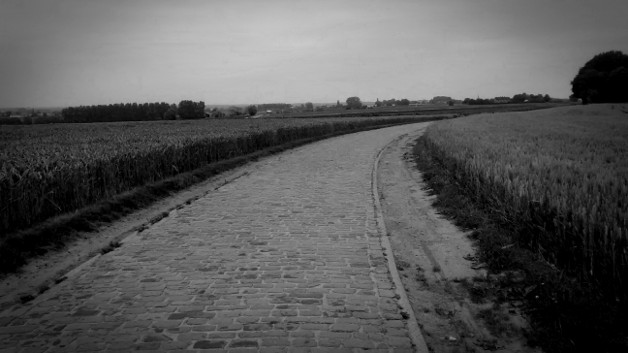
Flat and smooth(ish) cobbles. Bliss
A flat route for Flanders but oh so bumpy. Long stretches of cobbles aplenty, I was looking forward to this ride as a rest day of sorts. The wind had other ideas.
The route began with more lovely rolling countryside, the single track lanes peppered with cyclists. Skies thick with worringly dark clouds. Wet cobbles was not something I wanted to experience. Long stretches of cobbles soon followed, no gradient, just the technical challenge of gliding over these rockeries.
A strange thing happend. I began to enjoy it! Technique improving with each stretch of pavé, I was learning to float atop these buck toothed monsters, gone were my fears of braking, of crashing, I was just focussed on my line and grinding out a slow but powerful cadence. Whoosh!
I began relishing the sight of cobbles, each seemingly longer than the last. Whoosh! This was easy! Pushing from my core, leg muscles I’ve not used before began to ache. If you’re planning of a trip to Flanders I’d recommend some sit ups to improve your core strength, mine was lacking and my lumber was aching the next day.
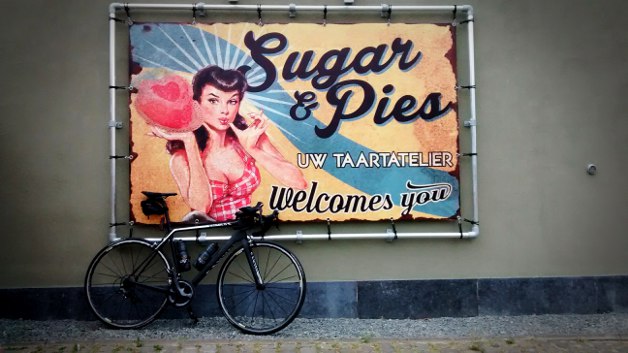
The perfect pit stop. If it was open…
After a dull, somewhat pointless middle third of the route traipsing through depressing industrial estates, I hit the Molenberg climb, the only famous segment on the Yellow Route saved for the near end of the ride. A sharp 120 degree turns mugs you of momentum and you hit the climb slowly but so short is the nasty gradient that you can almost sprint over the top.
Not done with cobbles just yet. Another stretch waited. My mindset with cobbles was to hit them as fast as I could, no matter how much energy I did or did not have left. A big mistake. This cobbled road went on and on and on. A slight gradient and I was blowing hard but refused to relent, mashing the pedals, harder, pushing from my core, almost there, I think, shit will this never end? It was a glorious stretch of cobbles (Kerkgate-Karel Martelstraat), I needed only loud Belgian fans flying Flandrian flags and drinking strong lager as they cheered me on. Roar!
Rain began falling moments later. Phew. East Flanders done. Three fun routes. Now time to head west.
Hellingenroute | Day 4
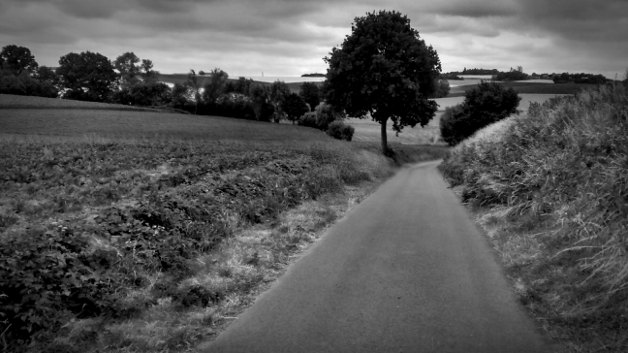 A short drive to West Flanders on my way home. I was a little weary with over 200 miles and 4,000 metres of climbing in my cobble jarred legs. This route is a rouleur’s paradise, plenty of hills nothing too severe, momentum your friend.
The only cobbled stretch is up the Kemmelberg, another famous climb whose reputation precedes it. The reality is a little less severe. I decided to cheat a little and hit the famous climb at the beginning of my route, as well as at the end as designed. The fresher my legs the better. The short 0.5 mile climb with a max 22% gradient could easily be sprinted over. Not today though.
Half way up and my cold legs were screaming at me to stop. On I pushed. The top arriving a lot sooner than I expected. Interestingly there was just 3 seconds between my two climb times at the beginning and end of my ride.
The rest of the route was brilliant rolling countryside. It being Sunday, flocks of Belgian club riders swarmed the road, large pelotons followed by their support vans / broom wagons. Impressive.
It was great to see the local clubs out with all their weird and wonderful jerseys. I noticed that whenever the road went up, the pelotons went backwards. These powerful beasts are built for powering along not up.
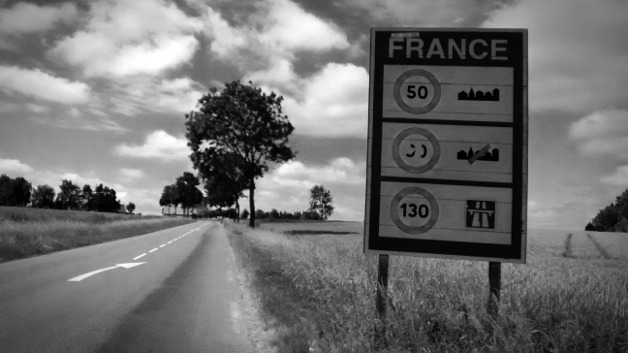
The route snaked this way and that, writhing through the Belgian and French countryside, constantly crossing the border. Needless to say the wind was blowing hard again, with gusts up to 30 mph. Belgium is not the place for deep section rims. Fortunately the wriggling course means you’re never fighting a headwind for too long, before you know it a sidewind or blessed tailwind helps relieve the pain and keep things fresh.
Hellingenroute is a joy to ride with mostly super smooth roads, a great little detour on the way back to the UK from East Flanders. What are you waiting for? Get that Lycra packed and remember to leave space in the car boot to start your own Belgian beer importing business on the way home. Santé!
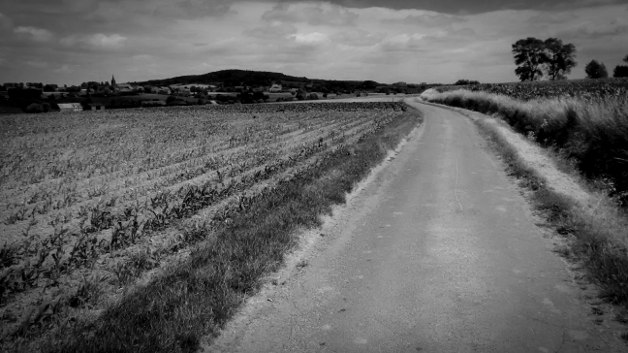
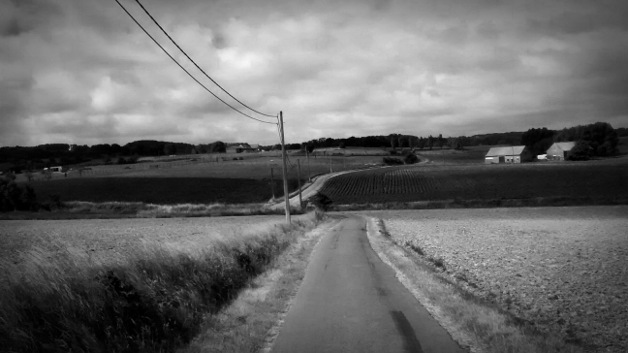
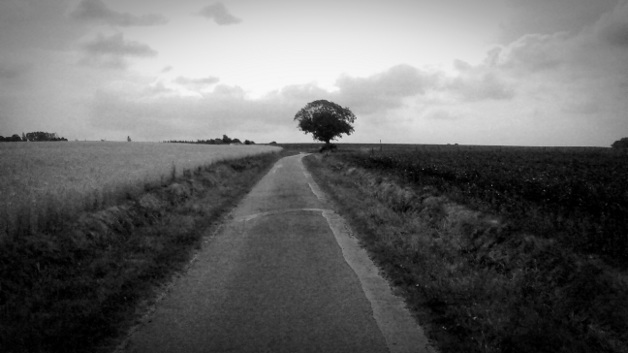
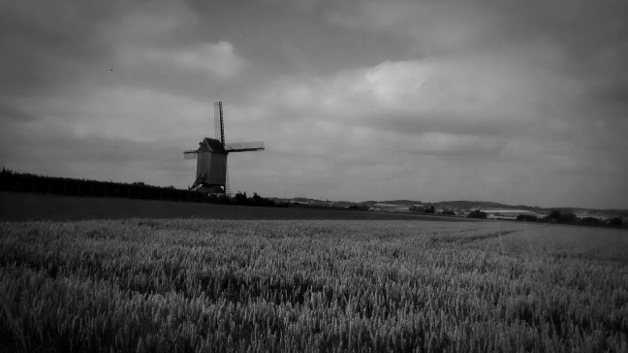
A few more moody, mostly black and white images along with the routes. What? I was in Europe, black and white are the only colours in European photography. Fact!
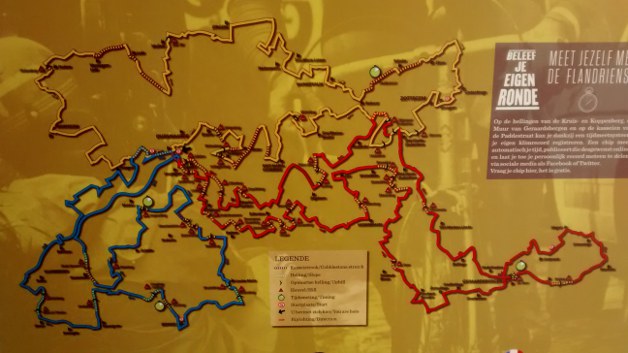
The blue, red and yellow routes. Twisty!
For further information log on website :
https://humancyclist.wordpress.com/2017/07/02/cycling-flanders/
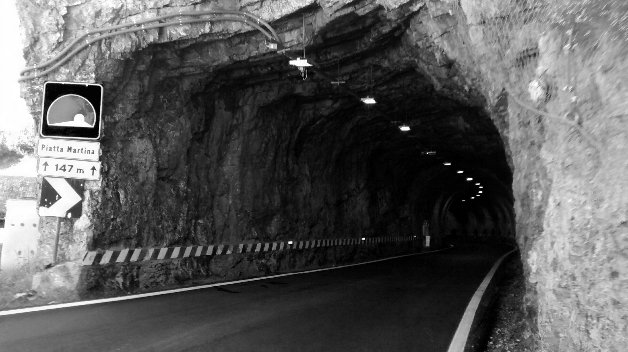
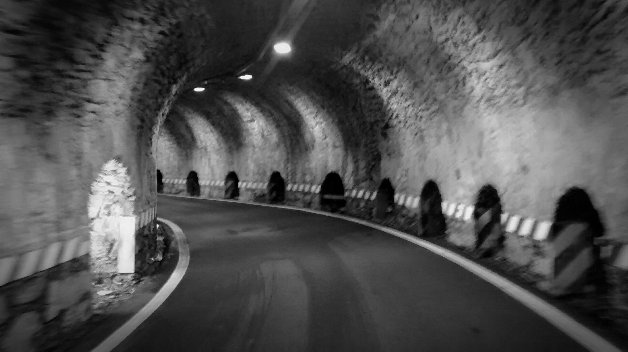
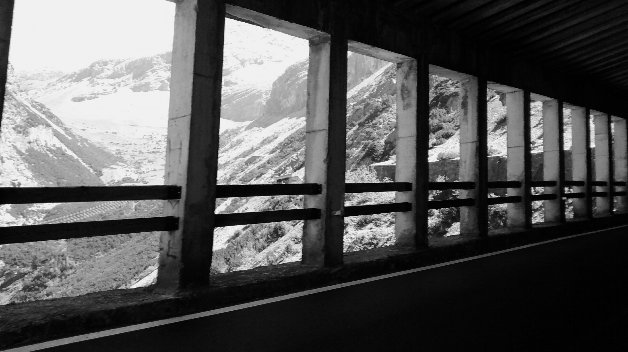
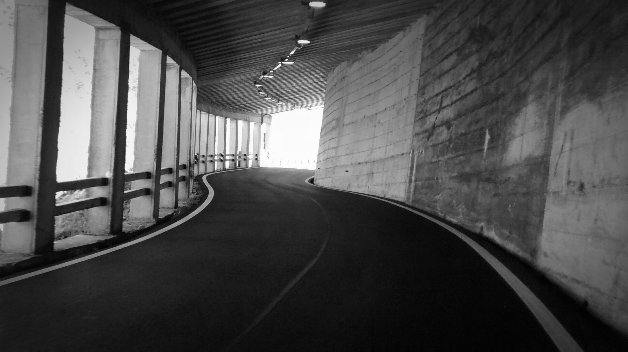
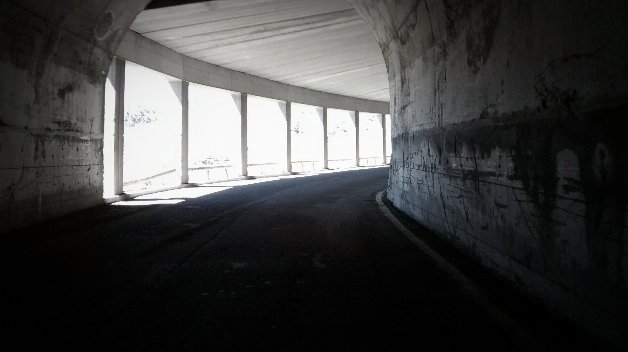
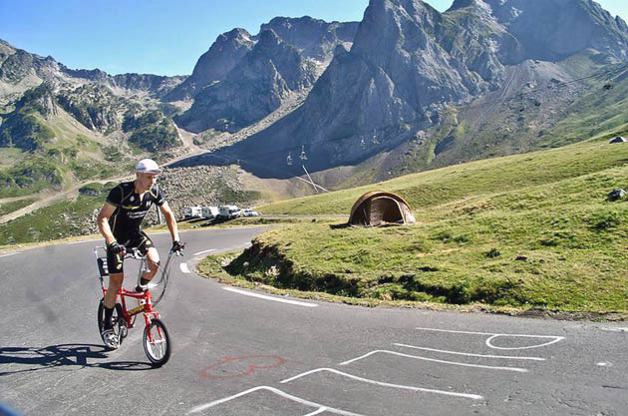
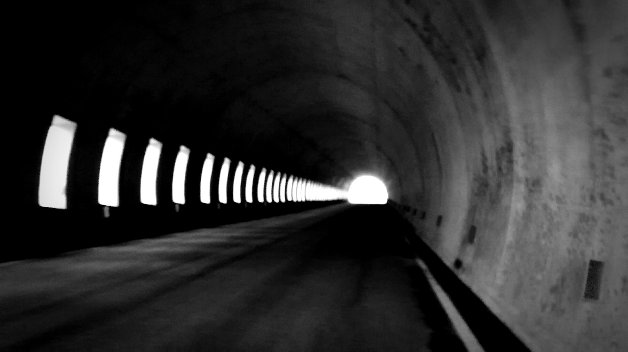 A tunnel. Cold and dark, scary yet soothing, entry to another world. A rewarding moment of quiet and calm, the cool relief much welcome after climbing a mountain for mile upon mile, toasted beneath the mid-summer sun.


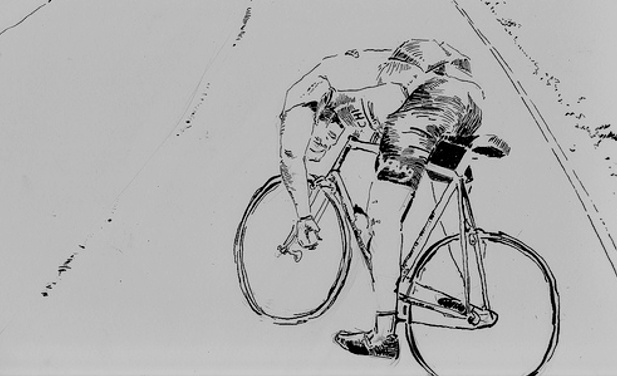 Tan lines fading. Motivation too. Mornings cooler, darker. Days shortening.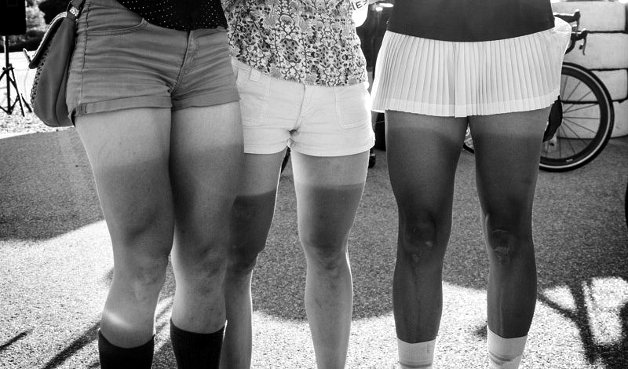
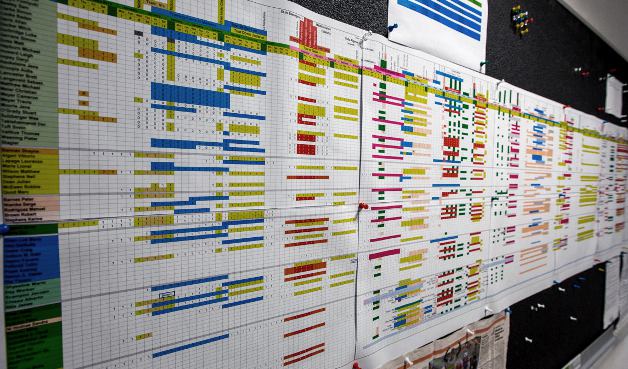

 Cobbles and cycling. Belgium right? The Classics of the early season calendar. Moules et frites. Passionate fans, grim weather, steep climbs.