Blog List

Wednesday, 3 February 2016

FROM HUMBLE ROOTS TO GREATER HEIGHTS
FROM HUMBLE ROOTS TO GREATER HEIGHTS

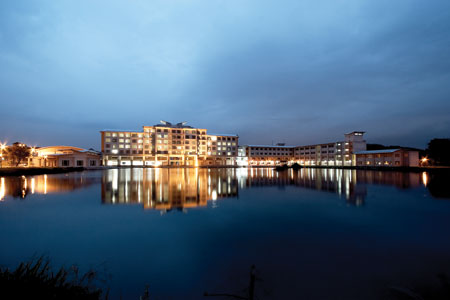
Universiti Putra Malaysia (UPM) started as a School of Agriculture in 1931. It was originally known as Universiti Pertanian Malaysia. The only one of its kind in Malaysia, it has moulded thousands of independent thinkers to become society leaders and entrepreneurs. Today, UPM is a multi-disciplinary, research-centred university offering a diverse range of high-quality, world-class programmes. We have 16 faculties, 2 graduate schools, 9 institutes, and14 centres. You can choose from 5 diplomas, 53 bachelor degrees and over 250 fields of postgraduate studies. Distance learning and part-time courses for working individuals are also available. At UPM, you will be among a thriving international community of about 26,000 students, including those from over 50 countries. Both our campuses (the main in Serdang, Selangor and a branch in Bintulu, Sarawak) provide a learning environment that is conducive and dynamic, surrounded by the splendour of nature and equipped with the amenities you would expect from a top university.
To ensure your needs are met, we have a workforce of about 6,000 staff with over 2,000 experienced academicians, most of whom are internationally recognized and prominent in their fields. They are here to provide you the best possible preparation for your future career. As one of the leading research universities in Malaysia, we focus strongly on teaching and learning, research and innovation as well as professional services. Our students are assured of the much needed international edge to equip them for the competitive job market. As a testimony of our ranking, UPM has won numerous awards and accolades to make it among the highest rated universities in the region.

UPM’S FACULTIES, INSTITUTES, CENTRES AND GRADUATE SCHOOLS

Faculties

  • Faculty of Agriculture
  • Faculty of Forestry
  • Faculty of Veterinary Medicine
  • Faculty of Engineering
  • Faculty of Modern Languages and Communications
  • Faculty of Human Ecology
  • Faculty of Medicine and Health Sciences
  • Faculty of Economics and Management
  • Faculty of Design and Architecture
  • Faculty of Environmental Studies
  • Faculty of Biotechnology and Biomolecular Sciences
  • Faculty of Science
  • Faculty of Computer Science and Information Technology
  • Faculty of Food Science and Technology
  • Faculty of Agriculture and Food Science (Bintulu Campus)
  • Faculty of Educational Studies

Schools

  • School of Graduate Studies
  • Graduate School of Management
Faculty of Design and Architecture
Master of Landscape Architecture (for second semester intake only)

Areas of studies (by research) offered by faculties for postgraduate programmes are:

Master and PhD Programmes (with thesis) – by research
AgricultureForestry
• Agronomy
• Agribusiness
• Agricultural Economics
• Agrotechnology
• Animal Production
• Aquaculture
• Entomology
• Genetics and Animal Breeding
• Horticulture
• Land Resource Management
• Plant Pathology
• Forestry
• Parks and Recreation Management
• Wood Science and Technology
Economics And Management
• Economics
• Hospitality
• Tourism
Veterinary MedicineEngineering
• Anaesthesiology*
• Anatomy
• Aquatic Animal Health
• Avian Medicine*
• Bacteriology
• Epidemiology
• Equine Medicine*
• Haematology and Clinical Pathology
• Histology
• Immunology
• Laboratory Animal Medicine*
• Molecular Biology
• Parasitology
• Pathology
• Pharmacology
• Physiology
• Public Health
• Radiology*
• Ruminant Medicine*
• Small Animal Medicine*
• Surgery*
• Theriogenology and Cytogenetics
• Toxicology
• Virology
• Wildlife Health
* fee rate is equivalent to medical field

UPM’S FACULTIES, INSTITUTES, CENTRES AND GRADUATE SCHOOLS

Faculties

  • Faculty of Agriculture
  • Faculty of Forestry
  • Faculty of Veterinary Medicine
  • Faculty of Engineering
  • Faculty of Modern Languages and Communications
  • Faculty of Human Ecology
  • Faculty of Medicine and Health Sciences
  • Faculty of Economics and Management
  • Faculty of Design and Architecture
  • Faculty of Environmental Studies
  • Faculty of Biotechnology and Biomolecular Sciences
  • Faculty of Science
  • Faculty of Computer Science and Information Technology
  • Faculty of Food Science and Technology
  • Faculty of Agriculture and Food Science (Bintulu Campus)
  • Faculty of Educational Studies

Schools

  • School of Graduate Studies
  • Graduate School of Management

Institute

  • Institute Bioscience
  • Institute of Advance Technology
  • Institute of Gerontology
  • Institute of Mathematical Research
  • Institute for Social Science Studies
  • Institute of Tropical Agriculture
  • Institute of Tropical Forestry and Forest Products
  • Institute of Agricultural and Food Policy Studies
  • Halal Products Research Institute

Centres

  • Sultan Salahuddin Abdul Aziz Shah Arts and Cultural Centre
  • Islamic Centre
  • Centre of Foundation Studies for Agricultural Sciences
  • Innovation and Commercialisation Centre
  • Centre of Academics Development
  • Centre for Extension, Entrepreneurship, and Professional Advancement
  • InfoComm Development Centre
  • Centre of External Education
  • Research Management Centre
  • Innovation and Commercialisation Centre
  • Alumni Centre
  • Co-Curriculum Centre
  • University Business Centre (UBC)
  • University Health Centre

Address : 
Universiti Putra Malaysia (UPM)
43400 UPM Serdang
Selangor
Tel : 03-8946 6003
Fax : 03-8948 7273
Email : Contact Person :  En.Abdullah Arshad
(Head,Corporate Communication Unit)


• Aerospace Engineering
• Agricultural Automation and Robotics
• Agricultural Process Engineering
• Biochemical Engineering
• Bioenvironmental Engineering
• Bioinformation System
• Biomechanical Engineering
• Bioprocess Engineering
• Chemical Engineering
• Communication Network Engineering
• Computational Methods in Engineering
• Computer Systems Engineering
• Control and Automation Engineering
• Electrical Power Engineering
• Electronic Engineering
• Embedded and Intelligent System Engineering
• Environmental Engineering
• Food Engineering
• Geotechnical and Geological Engineering
• GIS and Geomatic Engineering
• Highway and Transportation Engineering
• Hydroinformatics
• Industrial Engineering
• Instrumentation Engineering
• Manufacturing System Engineering
• Material Science and Engineering
• Material and Design Engineering
• Mechanical Engineering
• Multimedia System Engineering
• Packaging Engineering
• Photonics and Fiber Optics System Engineering
• Project Management
• Sanitary and Environmental Engineering
• Structural Engineering
• Water Resources Engineering
• Wireless Communication Engineering


FACULTY OFF APPLIED SCIENCE

The Faculty of Applied Science is one of the university's core science and technology faculties. The faculties strives to continuously provide a dynamic environment that seeks to foster academic innovations and excellence in teaching, learning and research. In all of our activities, be it teaching, research or outreach, we aim to operate with a forward-thinking, results-oriented and community-responsive approach - in persuit of realising our vision of becoming a premier institution in science and technology . 

Diploma in wood industry under faculty of applied science that can applied in our life. As we know, the program of wood industry are not properly famous in our student. In generally, wood industry also related to the wood science and technology. Based on the wood science there are many studies about major of wood science such as wood anatomy, dendrology, mathematics in wood science and so on.

Diploma in wood industry it is the best choose. why do i say so? let me explain, Firstly, the benefits when we study about wood we can know all about wood species and the features of the wood species, the characteristics wood species, how to calculate based on the formula wood , and also we can know about the age of the wood species. Secondly, the wood industry it is also has related to the wood engineering. This is because student must be know how to create the wood product based on the computer aided wood product (CAD).

In addition, in the field of wood industry students will be trained to know the type of woodthe forests, forest management and so onthe effect of this, students are able to understand about woodnature and so on. after students have graduationthey can work in the field or to continue their studies to the next stages with a wide range of fields includingthe field of wood science and technology, the field of debtfurniture fieldthe field ofmathematicsengineering and so on.

For information, the wood industry are very important to lumber manufacturing. It is can increases the economy based on the wood in industrial product.
THE ENTRY REQUIREMENT 


AS 117 - DIPLOMA IN WOOD INDUSRTY
Kod UPU E2042
Fakulti Sains GunaanTempoh Pengajian

6 Semester Syarat Am
Lulus SPM atau yang diiktiraf setaraf dengannya oleh Kerajaan Malaysia dengan mendapat LIMA (5) kepujian termasuk Syarat Khas - Lepasan SPM

Memenuhi SYARAT AM UNIVERSITI dengan mendapat kepujian dalam mata pelajaran:

Matematik / Matematik Tambahan DAN lulus
Bahasa Inggeris
Biologi / Fizik
Kimia

Syarat Khas - Lepasan PRA DIPLOMA UiTM

Lulus Naik Taraf (LNT) program Pra Diploma Sains (PD007/PD008) dari UITM

Syarat Khas - Lepasan APEL (ACCREDITATION OF PRIOR EXPERIENTIAL LEARNING)

• Lulus MQA (ujian Aptitud dan Penilaian Portfolio).
• Berumur tidak kurang daripada 20 tahun pada tahun permohonan.
• Pengalaman bekerja dalam bidang berkaitan sekurang-kurangnya lima (5) tahun.
• Lulus temu duga peringkat Fakulti


THE BASICS SINOPSIS OF THIS PROGRAM 
The Short synopsis of Wood Industrial :
  • Forest Resource Management 
  • Furniture Design & Engineering Technology &
  • Thermoplastic Composite Wood 
  • Furniture Design & Engineering  
  • Chemistry Timber Wood Products  
  • Wood Panel  
  • Protection / Preservation  
  • Wood Quality AssessmentTreatment & Improvements Wood,  
  • wood science 
Timber Industry Diploma offered in UiTM Pahang is a program of six semesters or three years. In addition to the theory and laboratory work to study at universitystudents are also required to undergo Practical Training in the wood-based industries. This is to enable students to integrate academic principles they have learned to actual industry practices and also familiarize themselves with the work environment. Graduates can also pursue their studies at degree level in a relevant field to meet the needs of the current workforce.

The student from the high level educated discuss about the wood science and technology. The wood science and technology are very famous in our oversee. It is has very high market for this course. For your information, the wood science and technology it is has related to the wood industry. This is because our syllabus for wood industry it study about wood science such as wood chemistry, science of dendrology and so on. For the graduation based on this course, there are many field to study about this course. for example, bachelor of science in wood science, bachelor of science in statistics, bachelor of science in wood analysis and so on.


In addition, there are many advantage for this course. When we learn about this course, we can know how to manage the forest, we can also know about species of wood and so on. Last but not least, the wood science and technology also related to the wood engineering. Therefore, the wood engineering are very important to create something new such as a wood product based on the wood basic.

GALERI GLULAM

Bangunan ini mempelopori diri-diri keunikan aplikasi inovasi kejuruteraan kayu dengan penggunaan produk glued laminated timber (Glulam) sebagai struktur utama serta jenis-jenis kayu tempatan. Bangunan ini juga menjadi showcase dan referral centre bagi pakar professional seperti arkitek, jurutera, kontraktor serta semua lapisan pengguna dan stakeholders termasuk agensi kerajaandan swasta termasuk JKR, CIDB, Kementerian Perumahan dan Kerajaan Tempatan serta pihak berkuasa tempatan yang lain. 
Projek ini juga melambangkan identiti agensi pengguna, mengimplikasikan kejuruteraan kayu teknologi glulam sebagai struktur binaan bangunan yang pertama berkonsepkan Iconic Timber Building berbentuk separa payung. Struktur utama bangunan menggunakan Kayu Keras Malaysia iaitu jenis kayu Resak dan Keruing serta bumbung dari jenis kayu Belian Shingles (anggaran melebihi 350,000 keping). Selain daripada itu dinding timber wall cladding diperbuat daripada kayu Kekatong dan timber fins menggunakan kayu Balau, Belian dan Resak. Manakala timber purlins menggunakan kayu Kempas dan siling menggunakan kayu Resak. Tangga diperbuat daripada kayu Merbau dan susur tangga menggunakan kayu Nyatoh.

Pembinaan bangunan ini dengan keluasan lantai 3,716.48 (m2) meter persegi terbahagi kepada komponen utama seperti tiga dewan pameran, galeri produk kayu serta pusat pentadbiran (ruang pejabat). Secarakeseluruhan bangunan ini menggunakan lebih daripada 640 meter padu (m3) kayu (80%) sebagai bahan struktur utama bangunan. Markah pencapaian melebihi sasaran 70% iaitu 80% keatas.

KEMUDAHAN BANGUNAN / DEWAN

  • Mempunyai 150 buahtempatmeletakkenderaanmotokar /motosikalberpagar
  • Mempunyai 3 buahdewanpameran / serbaguna bersaiz 2000m�
  • Mempunyai kelengkapan / kemudahan suraulelaki / wanita
  • Tempat / kawasan / lokasi strategik
  • Mempunyai kerusi banquet 500 buah & meja seminar
  • Mempunyai kemudahan peralatan audio sistem
  • Mempunyai system penghawadingin
  • Dilengkapi bilik mesyuarat eksklusif dengan video conference dan LCD monitor screen boleh memuatkan 17 ahli mesyuarat
  • Mempunyai holding room eksklusif untuk VIP/VVIP boleh memuatkan 12 ahli
  • Bersedia berbincang tentang penggunaan dewan dalam pelbagai aplikasi

LATARBELAKANG

Projek Galeri Glulam ini dibina di atas tanah milik Lembaga Perindustrian Kayu Malaysia (MTIB) dengan lokasi yang strategik di pertengahan laluan utama industri antarabangsa dengan keluasan 4.9 ekar di Jalan Tampoi, Johor. Projek ini telah mendapat pengiktirafan daripada Malaysia Book of Rercords pada 15 Mac 2012 kerana menggunakan glue-laminated timber (Glulam) sebagai bahan struktur menanggung beban melebihi 80 % penggunaan kayu bagi memenuhi konsep rekabentuk yang bercirikan bangunan ikonik glulam. Bangunan ini telah dirasmikan oleh YAB Tan Sri Dato Haji Muhyiddin Haji Mohd Yassin Timbalan Perdana Menteri Malaysia pada 22 Mei 2012.


Pernahkah anda terfikir bahawa suatu hari nanti kebanyakan bangunan dan rumah di negara ini bahan binaannya berasaskan struktur gabungan pelbagai jenis kayu yang dihasilkan menerusi proses perekatan, atau dikenali sebagai 'glulam'.Penubuhan pusat promosi Perkayuan Malaysia Tebrau, yang lebih dikenali sebagai "MTIB's Iconic Timber Building" yang terletak di Tebrau, Johor Baharu mungkin menjadi titik mula perkembangan glulam di Malaysia.


Pembangunan struktur bangunan pusat ini dijangka bakal menjadi pemangkin kepada pembangunan pembinaan bangunan dan rumah yang bahan binaannya berasaskan glulam di negara ini pada masa akan datang.Ketua Pengarah Lembaga Perindustrian Kayu Malaysia (MTIB) Dr Jalaluddin Harun ketika ditemui Bernama baru-baru ini berkata sememangnya MTIB berhasrat untuk menggalakkan penggunaan glulam dalam pasaran domestik, terutama dalam sektor pembinaan dan pembuatan perabot, menerusi pusat ini.


Bangunan Pertama Guna Kayu Glulam 

Bangunan pusat perkayuan itu adalah yang pertama di dunia mempelopori penggunaan glulam hasil daripada dua jenis kayu keras di Malaysia iaitu Resak dan Keruing untuk pembinaan strukturnya.


Menurutnya kos untuk membina pusat promosi Perkayuan Malaysia Tebrau ini yang menggunakan lebih 80 peratus kayu keras adalah kira-kira RM24 juta."Ada bangunan yang kita buat menggunakan bahan kayu glulam namun ia tidak sebesar ini. Pembinaan pusat ini berasaskan bahan yang keselamatannya telah diuji," katanya.


Kayu Glulam Sangat Kuat 

"Glulam" adalah produk kayu struktur yang dihasilkan dengan proses perekatan menggunakan bahan rekatan antara satu kepingan dan kepingan lain dengan saiz tertentu.Jalaluddin berkata gabungan rekatan kayu itu, menghasilkan kayu struktur berdimensi besar dan panjang, yang bersaiz tepat serta sangat kuat.


"Kayu struktur atau pun glulam ini boleh direkabentuk sepertimana dikehendaki dan kini sudah terdapat syarikat di Malaysia yang menghasilkan kayu jenis ini," katanya. Beliau berkata ini adalah kali pertama struktur bangunan di Malaysia menggunakan kayu sebagai "load bearing structure" untuk bangunan yang tinggi.

Namun penggunaan glulam dalam pembinaan bukan lagi perkara baru di negara seperti Sweden, German dan Kanada.


Beliau berkata dengan penggunaan glulam ia ternyata lebih selamat berbanding penggunaan bahan biasa untuk mendirikan bangunan.

"Keselamatan tidak ada kompromi, semuanya telah dipastikan selamat dan kalau terjadi kebakaran atau sebagainya kayu ini akan tahan lebih lama lagi jika dibandingkan dengan besi.


"Dengan kata lain bahan yang digunakan akan membuatkannya lebih tahan lama berbanding besi kalau berlaku kebakaran", katanya. Pusat ini turut menggunakan Indeks Bangunan Hijau (GBI) yang mempraktikkan kepentingan alam semula jadi, katanya- www.mstar.com.my


GALERI GLULAM JOHOR BAHRU

Lembaga Perindustrian Kayu Malaysia 

Lot 19851, Jalan Tampoi, Mukim Tebrau           

Johor Bahru, Johor


For more information website: www.galeriglulam.com

Tuesday, 2 February 2016

TRADITIONAL SUANG LOTUD HOUSE

A traditional Suang Lotud house, consisting of a veranda, kitchen and dining area, elevated sleeping and living area and storage attic, is said to replicate the houses in the spirit world of the Suang Lotud belief system.

The Lotud traditional longhouse is a remakable form of architecture. It is in fact the most sophisticated achievement in architecture in the whole of Sabah. This is because it is made of planks (in the old days) strenuously carved with the adze (Malay: beliung) without the facility of saws! The whole house uses not a single nail (as nails were almost impossible to obtain in the old days) but clever slip-in techniques of fitting beams, as well as tying up conenctions with rattans. A unit of the longhouse consists of a sleeping area (ko'odopo'), a kitchen (ropuhan), an attic (tilud), a corridor (olot-olot) separating the walled part of the house and the common varendah (soliw). The number of poles or stilts depends on the length or the number of living units. In the Tuaran district,.

Dusun Long House.

Root top Of  Dusun House Build By Palm Leaves/"Atap"


FEW traditions in South-East Asia have the antiquity and universal acceptance of betel chewing. The custom is over 2,000 years old and has survived from ancient times into the twentieth century. Its use cuts across class, sex, or age: ‘The habitual and universal solace of both sexes is the areca nut and betel…which is rarely absent from the mouth of man or woman,’ wrote the Honourable George N. Curzon, a nineteenth-century observer. Its devotees include farmers, priests, and kings, men, women, and children. The homeliness of the name belies its importance.

Three ingredients—an areca-nut, a leaf of the betel-pepper, and lime—are essential for betel chewing; others may be added depending on availability and preference. The leaf is first daubed with lime paste and topped with thin slices of the nut, then it is folded or rolled into a bite-size quid. The interaction of the ingredients during chewing produces a red-coloured saliva. ‘If a person speaks to you while he is chewing his “quid” of betel, his mouth looks as if it were full of blood,’ reflected Isabella L. Bird, an intrepid woman traveller of the nineteenth century. Most of the betel juice is spat out. The tell-tale residue looks like splotches of dried blood. Indeed, the resemblance is so close that some early European visitors thought many Asians had tuberculosis. The splotches of betel spittle are spaced consistently enough for use as measurements of time and distance in rural areas. A short time is ‘about a betel chew’ and the distance between two villages, for example, may be ‘about three chews’.

"Tantagas" Suang Lotud Borneo:


                                Mamahui Pagun 2011.
Traditional priestesses and ritual specialists, or tantagas, are nearly always women, and are skilled in memorizing the rinait, the long ritual chants and prayers that are addressed to the Lotud deities. As among other Dusunic peoples, rinait  constitute a unique genre of poetic oral literature. They consist of series of biambic lines--the first in the everyday language, the second (having the same meaning) in the ritual language. They tell of the Creation of the World, the exploits of the deities, the origins of rice, prescriptions for moral living, ritual practices and other aspects of cultural life. Recitation of "rinait" may involve loud chanting or soft whispering, and can last for hours or days, according to the context and occasion.

The tantagas constitute a female hierarchy, with the most elderly who are grandmothers having the greatest spiritual knowledge and power. Younger women learn the rinait and the rituals from older tantagas (the novice is called tantagas wagu), while the most senior one is known as tantagas lawid). In addition to her personal name, each tantagas has a ritual name which is the name of her first grandchild prefaced with the title Odun (Grandmother) - 
kampungpanjut.blogspot.my


In Sarawak, the dominant tribal groups are the Dayak.  There are the Iban (Sea Dayak), and the Bidayuh (Land Dayak).Tribal people live in longhouses and there are over 4,500 longhouses in Sarawak.   

There are different type of buildings that represent every major ethnic group in Sarawak: -

IBAN LONGHOUSE 
Iban mostly thrive along the coastal areas with some have made settlement inland and further up-rivers. At present day, there are quite a number of the ethnic tribe members are living in urban areas such as Kuching, Miri and Bintulu. 


The longhouse is often considered as a village by itself, with a leader called Tuai Rumah, often elected by the majority of the tribe members. That fact itself is small paradox to the common practice of certain countries or kingdoms which the leadership thrones are passed from one of similar descendant to another. In an Iban longhouse, the leader is elected based on merits, hence the progenies of the previous chief will not necessarily be taking up the vacant position. 

Monday, 1 February 2016

PERAK HOUSE

Various traditional houses can be identified in Peninsular Malaysia. They are classified mainly by their roof shapes. The basic houseforms are the bumbung panjang, bumbung lima, bumbung perak and bumbung limas.

The most common houseform is the bumbung panjang, characterised by a long gable roof. The bumbung panjang houses are the oldest identified in Peninsular Malaysia, many of them being over a hundred years old and still in good condition.
The bumbung panjang is the simplest of the four houseforms. It has a simple gable roof, supported by kingposts. The most common roofing material used for the bumbung panjang is the attap (a thatch made from nipah and other palm trees found in the local natural vegetation).

The simple bumbung panjang roof-form is most efficient in its ventilation properties. Its simple funnel shape, the use of ventilation grilles at its gable ends (tebar layar), and the use of ventilation joints allow good ventilation of the roof, space which cools the house effectively. The roof is simple and easy to construct, and this partly explains the popularity of this houseform among the poorer villagers and those who build houses themselves. The bumbung panjang, due to its simplicity, is a very efficient roof-form for making additions to the house. The bumbung lima, bumbung limas and bumbung perak are all houseforms which are not indigenous but developed through foreign influence. The bumbung lima and bumbung perak houses are believed to have been influenced by colonial Dutch and British houseforms. 

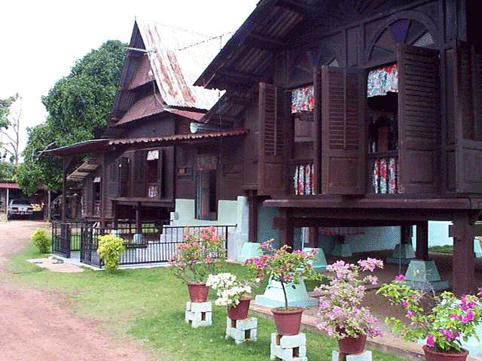
The bumbung lima house has a hipped roof, the bumbung perak house has a gambrel roof and the bumbung limas house has a pyramidal roof. Of these three foreign houseforms used in Malaysian houses, the bumbung perak houseform (also called bumbung potongan Belanda [Dutch-type] roof in the East Coast) is the most popular. Some homes, like the one pictured below, decorate with beautiful potted Avas Flowers and plants. Homeowners choose Malaysian flowers including orchids and the Malaysian National Flower, the red-colored Hibiscus. Avas Flowers offers potted flowers and plants so homeowners anywhere can beautify their homes.


Visit website :www.malaysiasite.nl

RUMAH PAHANG

Masyarakat Melayu tradisional Pahang memang kaya dengan seni bina yang diwarisi sejak zaman silam.
Kebiasaannya seni bina yang kreatif dan imaginatif dijelmakan menerusi reka bentuk istana, rumah, surau, perahu, reban ayam dan peralatan tertentu yang digunakan dalam kehidupan harian.

Salah satu seni bina dikagumi dengan kehalusan reka bentuknya ialah rumah tradisional Melayu Pahang.

Keunikan rumah tradisional Pahang dibina tanpa menggunakan walaupun sebatang paku, apabila sejenis alat yang dinamakan tanggam diguna atau diperkuatkan bagi menyambung bahagian tertentu.


Visit website : karyaku-paridahishak.blogspot.my

Advantages and Disadvantages of Fasting for Runners

Author BY   ANDREA CESPEDES  Food is fuel, especially for serious runners who need a lot of energy. It may seem counterintuiti...