Blog List

Monday, 15 February 2016

Rice Flour for Dumplings


How to Cook and Bake With Rice Flour
Photo Credit Laura Beth Drilling/Demand Media

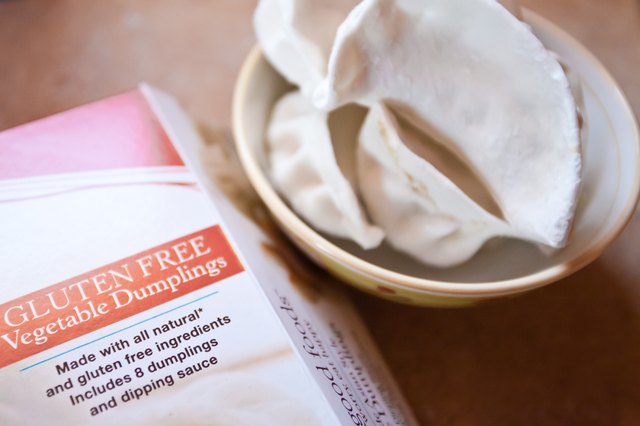
Rice flour is commonly used in Asia to create dumplings filled with both sweet and savory mixtures. To make a dough, mix rice flour, water and sometimes baking powder and sugar together to create a ball. After resting, roll out the dough into a long piece and divide it into the specified number of pieces. Flatten the balls, fill them with marinated pork, mixed vegetables or sweet bean paste. Seal the dumplings by bringing the sides together and pressing the edges together. Flip the dumplings over and steam in a paper-lined steamer for about 10 minutes or until cooked through.
For more information please visit website: www.lifestrong.com

Rice Flour for Thickening


How to Cook and Bake With Rice Flour
Photo Credit Laura Beth Drilling/Demand Media

Rice flour works in the same manner as wheat flour for thickening soups, sauces and gravies. To thicken a dish, create a roux from oil, onion and rice flour as a base before adding your liquid and simmering it. You can also use it at the end of a preparation by making a slurry. Add 1 part rice flour to 4 parts water, and mix thoroughly until it's smooth, with no clumps. Add 1 cup of liquid from your sauce or soup and mix well before adding the mixture back to the pot and stirring.
For more information please visit website: www.lifestrong.com

How to Cook and Bake with Rice Flour


How to Cook and Bake With Rice Flour
Photo Credit Laura Beth Drilling/Demand Media

Rice flour works in the same manner as wheat flour for thickening soups, sauces and gravies. To thicken a dish, create a roux from oil, onion and rice flour as a base before adding your liquid and simmering it. You can also use it at the end of a preparation by making a slurry. Add 1 part rice flour to 4 parts water, and mix thoroughly until it's smooth, with no clumps. Add 1 cup of liquid from your sauce or soup and mix well before adding the mixture back to the pot and stirring.
For more information please visit website: www.lifestrong.com

How to Bake a Cake with Rice Flour


How to Bake a Cake With Rice Flour
Baking ingredients in a glass bowl. Photo Credit VizzPhotography/iStock/Getty Images

Brown or white rice flour may be used as a gluten-free alternative to wheat flour. When baking a cake using rice flour, it is best to use white rice flour, according to Lisa Lewis, Ph.D. However, different brands of white rice flour vary in texture, with some being more grainy than others. You may need to experiment to find a brand of white rice flour that is similar in softness to the typical all-purpose flour.


Things You'll Need


  • Two 8-inch round cake pans
  • Non-stick baking spray with flour
  • Two bowls
  • Measuring cup
  • Electric mixer
  • 6 tbsp. margarine
  • 1 cup sugar
  • 2 eggs
  • 1 cup rice flour
  • 6 tbsp. potato starch flour
  • 2 tbsp. tapioca flour
  • 1 tsp. guar gum
  • 1/4 tsp. baking powder
  • 1/4 tsp. baking soda
  • 1/4 tsp. salt
  • 3/4 cup milk or casein-free milk substitute with 2 tsp. lemon juice

Step 1
Preheat  oven to 350 degrees Fahrenheit.

Step 2
Spay the two cake pans with a light coating of non-stick baking spray.
Step 3
Mix together the margarine, sugar and eggs in a bowl until well blended.

Step 4
Combine the rice flour, potato starch flour, tapioca flour, guar gum, baking powder, baking soda and salt in a separate bowl.

Step 5
Pour the milk into a measuring cup and mix the vanilla extract into it.

Step 6
Add the flour and milk mixtures to the egg mixture gradually, using a low speed on your mixer and alternating between flour and milk. Mix just until well combined.

Step 7
Spoon the batter equally into the prepared cake pans. Bake for about 30 minutes, or until the cake is light brown and springs back when lightly pressed in the center. Cool in the pan for 5 minutes then turn out onto wire rack until completely cool.
For more information please visit the website: www.lifestrong.com

Sunday, 14 February 2016

Rice Starch Composites

Abstract 
Poly(lactic acid) (PLA) composites consisting of PLA, rice starch (RS) (0–50 wt%) and epoxidised natural rubber (ENR50) were compounded by a twin-screw extruder and compression moulded into dumbbell specimens. Tensile tests were performed to characterize the mechanical properties of the PLA/RS composites. Morphological studies were done on the tensile fractured surface of the specimens by using scanning electron microscopy (SEM). Twenty weight percent of RS achieved a good balance of strength and stiffness. Beyond 20 wt% loading of RS, the tensile strength and elongation at break of PLA decreased drastically. This may be attributed to the agglomeration of RS, which could then act as stress concentrator. The incorporation of ENR50 increased the tensile strength and elongation at break of the PLA/RS composites remarkably, owing to the elastomeric behaviour and compatibilisation effects of ENR50. Interestingly, the morphology of PLA/RS composites transformed to a more ductile one with the addition of ENR. The kinetics of water absorption of the PLA/RS composites conforms to Fick's law. The Mm and D values are dependent on the RS and ENR concentrations. The tensile properties of the PLA/RS composites deteriorated after water absorption. The retention-ability and recoverability of the PLA/RS composites are relatively low, attributed to the hydrolysis of PLA, degradation of the PLA–RS interface and leaching of the RS particles. In addition, the tensile properties of PLA/RS composites decreased drastically upon exposure to enzymatic degradation. Extensive pinhole and surface erosion on the PLA/RS composites indicate high degree of hydrolysis. Whilst the addition of ENR leads to some improvements in tensile properties, nevertheless, it enhanced the biodegradability of the PLA/RS composites when exposed to water and α-amylase enzymatic treatments.

Yew, G. H., Yusof, A. M., Ishak, Z. M., & Ishiaku, U. S. (2005). Water absorption and enzymatic degradation of poly (lactic acid)/rice starch composites. Polymer Degradation and Stability90(3), 488-500.


Biotechnology

The high-yielding varieties are a group of crops created intentionally during the Green Revolution to increase global food production. This project enabled labor markets in Asia to shift away from agriculture, and into industrial sectors. The first "Rice Car", IR8 was produced in 1966 at the International Rice Research Institute which is based in the Philippines at the University of the Philippines " Los Baños site. IR8 was created through a cross between an Indonesian variety named "Peta" and a Chinese variety named "Dee Geo Woo Gen."

Scientists have identified and cloned many genes involved in the gibberellin signaling pathway, including GAI1 ( Gibberellin Insensitive) and SLR1 (Slender Rice). Disruption of gibberellins signaling can lead to significantly reduced stem growth leading to a dwarf phenotype. Photosynthetic investment in the stem is reduced dramatically as the shorter plants are inherently more stable mechanically. Assimilates become redirected to grain production, amplifying in particular the effect of chemical fertilizers on commercial yield. In the presence of nitrogen fertilizers, and intensive crop management, these varieties increase their yield two to three times.

Expressions of human protein 
Ventria Bioscience has genetically modified rice to express lactoferrin , lysozyme which are protein usually found in breast milk and human serum albumin .  These proteins have antiviral, antibacterial and anti fungal effects.
Rice containing these added proteins can be used as a component in oral rehydration solutions which are used to treat diarrheal diseases, thereby shortening their duration and reducing recurrence. Such supplements may also help reverse anemia . 
Environment-friendly rice
Producing rice in paddies is harmful for the environment due to the release of methane by methanogenic bacteria . These bacteria live in the anaerobic waterlogged soil, and live off nutrients released by rice roots. Researchers have recently reported in Nature that putting the barleys gene SUSIBA2 into rice creates a shift in biomass production from root to shoot (above ground tissue becomes larger, while below ground tissue is reduced), decreasing the methanogen population, and resulting in a reduction of methane emissions of up to 97%. Apart from this environmental benefit, the modification also increases the amount of rice grains by 43%, which makes it useful tool in feeding a growing world population - Wikipedia 


Ecotypes and Cultivars

While most rice is bred for crop quality and productivity, there are varieties selected for characteristics such as texture, smell, and firmness. There are four major categories of rice worldwide: indicajaponicaaromaticand glutinous. The different varieties of rice are not considered interchangeable, either in food preparation or agriculture, so as a result, each major variety is a completely separate market from other varieties. It is common for one variety of rice to rise in price while another one drops in price.

Rice cultivars also fall into groups according to environmental conditions, season of planting, and season of harvest, called ecotypes. Some major groups are the Japan-type (grown in Japan), "buly" and "tjereh" types (Indonesia); "aman" (main winter crop), "aus" ("aush", summer), and "boro" (spring) (Bengal and Assam). Cultivars exist that are adapted to deep flooding, and these are generally called "floating rice".


Rice seed collection from IRRI

The largest collection of rice cultivars is at the International Rice Research Institute in the Philippines, with over 100,000 rice accessions held in the International Rice Genebank. Rice cultivars are often classified by their grain shapes and texture. For example, Thai Jasmine rice is long-grain and relatively less sticky, as some long-grain rice contains less amylopectin than short-grain cultivars. 

Chinese restaurants often serve long-grain as plain unseasoned steamed rice though short-grain rice is common as well. Japanese mochi rice and Chinese sticky rice are short-grain. Chinese people use sticky rice which is properly known as "glutinous rice" (note: glutinous refer to the glue-like characteristic of rice; does not refer to "gluten") to make zongzi. The Japanese table rice is a sticky, short-grain rice. Japanese sake rice is another kind as well.

Aromatic rices have definite aromas and flavors; the most noted cultivars are Thai fragrant rice, Basmati, Patna rice, Vietnamese fragrant rice, and a hybrid cultivar from America, sold under the trade name Texmati. Both Basmati and Texmati have a mild popcorn-like aroma and flavor. In Indonesia, there are also red and black cultivars.

High-yield cultivars of rice suitable for cultivation in Africa and other dry ecosystems, called the new rice for Africa (NERICA) cultivars, have been developed. It is hoped that their cultivation will improve food security in West Africa - Wikipedia 


Rice - Environment Impacts

Rice cultivation on wetland rice fields is thought to be responsible for 11% of the anthropogenic methane emissions. Rice requires slightly more water to produce than other grains. Rice production uses almost a third of Earth’s fresh water. 

Long-term flooding of rice fields cuts the soil off from atmospheric oxygen and causes anaerobic fermentation of organic matter in the soil. Methane production from rice cultivation contributes ~1.5% of anthropogenic greenhouse gases. Methane is twenty times more potent a greenhouse gas than carbon dioxide


Work by the International Center for Tropical Agriculture to measure the greenhouse gas emissions of rice production.

A 2010 study found that, as a result of rising temperatures and decreasing solar radiation during the later years of the 20th century, the rice yield growth rate has decreased in many parts of Asia, compared to what would have been observed had the temperature and solar radiation trends not occurred. The yield growth rate had fallen 10–20% at some locations. The study was based on records from 227 farms in Thailand, Vietnam, Nepal, India, China, Bangladesh, and Pakistan. The mechanism of this falling yield was not clear, but might involve increased respiration during warm nights, which expends energy without being able to photosynthesize.

Nematodes
Several nematode species infect rice crops, causing diseases such as Ufra (Ditylenchus dipsaci), White tip disease (Aphelenchoide bessei), and root knot disease (Meloidogyne graminicola). Some nematode species such as Pratylenchus spp. are most dangerous in upland rice of all parts of the world. Rice root nematode (Hirschmanniella oryzae) is a migratory endoparasite which on higher inoculum levels will lead to complete destruction of a rice crop. Beyond being obligate parasites, they also decrease the vigor of plants and increase the plants' susceptibility to other pests and diseases.
-wikipedia.

Rice Production

Rice is a major food staple and a mainstay for the rural population and their food security. It is mainly cultivated by small farmers in holdings of less than 1 hectare. Rice is also a wage commodity for workers in the cash crop or non-agricultural sectors. Rice is vital for the nutrition of much of the population in Asia, as well as in Latin America and the Caribbean and in Africa; it is central to the food security of over half the world population. Developing countries account for 95% of the total production, with China and India alone responsible for nearly half of the world output.
World production of rice has risen steadily from about 200 million tonnes of paddy rice in 1960 to over 678 million tonnes in 2009. The three largest producers of rice in 2009 were China (197 million tonnes), India (131 Mt), and Indonesia (64 Mt). Among the six largest rice producers, the most productive farms for rice, in 2009, were in China producing 6.59 tonnes per hectare.
Rice bran, called nuka in Japan, is a valuable commodity in Asia and is used for many daily needs. It is a moist, oily inner layer which is heated to produce oil. It is also used as a pickling bed in making rice bran pickles and takuan.
Raw rice may be ground into flour for many uses, including making many kinds of beverages, such as amazakehorchatarice milk, and rice wine. Rice flour does not contain gluten, so is suitable for people on a gluten-free diet. Rice may also be made into various types of noodles. Raw, wild, or brown rice may also be consumed by raw-foodist or fruitarians if soaked and sprouted (usually a week to 30 days – gaba rice).
Rice, like other cereal grains, can be puffed (or popped). This process takes advantage of the grains' water content and typically involves heating grains in a special chamber. Further puffing is sometimes accomplished by processing puffed pellets in a low-pressure chamber. The ideal gas law means either lowering the local pressure or raising the water temperature results in an increase in volume prior to water evaporation, resulting in a puffy texture. Bulk raw rice density is about 0.9 g/cm³. It decreases to less than one-tenth that when puffed.

Trade 
Developing countries are the main players in the world rice trade, accounting for 83% of exports and 85% of imports. While there are numerous importers of rice, the exporters of rice are limited. Just five countries – Thailand, Vietnam, China, the United States and India – in decreasing order of exported quantities, accounted for about three-quarters of world rice exports in 2002. 

However, this ranking has been rapidly changing in recent years. In 2010, the three largest exporters of rice, in decreasing order of quantity exported were Thailand, Vietnam and India. By 2012, India became the largest exporter of rice with a 100% increase in its exports on year-to-year basis, and Thailand slipped to third position. Together, Thailand, Vietnam and India accounted for nearly 70% of the world rice exports  - Wikipedia 


Rice Processing

Rice is typically rinsed before cooking to remove excess starch. Rice produced in the US is usually fortified with vitamins and minerals, and rinsing will result in a loss of nutrients. Rice may be rinsed repeatedly until the rinse water is clear to improve the texture and taste.


Milled to unmilled rice, from left to right, white rice (Japanese rice), rice with germ, brown rice.

Rice may be soaked to decrease cooking time, conserve fuel, minimize exposure to high temperature, and reduce stickiness. For some varieties, soaking improves the texture of the cooked rice by increasing expansion of the grains. Rice may be soaked for 30 minutes up to several hours.

Processing 
Rice is cooked by boiling or steaming, and absorbs water during cooking. With the absorption method, rice may be cooked in a volume of water similar to the volume of rice. With the rapid-boil method, rice may be cooked in a large quantity of water which is drained before serving. Rapid-boil preparation is not desirable with enriched rice, as much of the enrichment additives are lost when the water is discarded. 
Electric rice cookers, popular in Asia and Latin America, simplify the process of cooking rice. Rice (or any other grain) is sometimes quickly fried in oil or fat before boiling (for example saffron rice or risotto); this makes the cooked rice less sticky, and is a cooking style commonly called pilaf in Iran and Afghanistan or biryani (Dam-pukhtak) in India and Pakistan.

In Arab cuisine, rice is an ingredient of many soups and dishes with fish, poultry, and other types of meat. It is also used to stuff vegetables or is wrapped in grape leaves (dolma). When combined with milk, sugar, and honey, it is used to make desserts. In some regions, such as Tabaristan, bread is made using rice flour. Medieval Islamic texts spoke of medical uses for the plant.[18] Rice may also be made into congee (also called rice porridge, fawrclaab, okayu, Xifan, jook, or rice gruel) by adding more water than usual, so that the cooked rice is saturated with water, usually to the point that it disintegrates. Rice porridge is commonly eaten as a breakfast food, and is also a traditional food for the sick - Wikipedia 

Advantages and Disadvantages of Fasting for Runners

Author BY   ANDREA CESPEDES  Food is fuel, especially for serious runners who need a lot of energy. It may seem counterintuiti...