The impact of soil transfer on fungal degradation of Scots pine was investigated using visual inspection, microscopy and DNA profiling. Two test fields in Simlångsdalen with similar soil characteristics were used. Soil has previous been used with the purpose to retain the beneficial original micro-organisms present to imitate field-trials during laboratory condition. We found that fungal degradation in mini-stakes exposed in transferred soil did not correspond to mini-stakes exposed in original soil. Moreover, the type of degradation in the mini-stakes exposed in transferred soil did not match mini-stakes exposed in the original soil. However, established degradation in areas neighbouring the transferred soil was comparable. The fungal community in mini-stakes also varied more between different years than within the field. This suggests that relocation of soil disrupts the original fungal community due to unavoidable mixing of the soil. Therefore, the beneficial micro-organism characteristics of soils is very difficult to transfer elsewhere.
Author affiliations
a Department of Forest ProductsSwedish University of Agricultural sciences, PO Box 7008,Uppsala, SE 750 07 Uppsala, Sweden
The use of wood is limited due to its susceptibility to wood destroying organisms. If wet for long periods, wood will be attacked by fungi and the strength properties will decrease dramatically. To overcome this disadvantage, non-durable wood can be treated with preserving chemicals. When testing durability, it is essential that wood be exposed to all kinds of wood degrading organisms that can be expected in the intended exposure environment.
The aim of this study was to evaluate the relevance of exposing test ttakes in terrestrial microcosms (TMC) as an alternative to existing test procedures to judge the durability of treated and untreated wood.
Small stakes of treated and untreated pine (Pinus sylvestris) sapwood were exposed in TMCs with different soils. Stakes were also exposed to pure cultures of brown and white rot fungi.
After exposure, mass losses were determined and stakes from the TMCs were analysed using light microscopy to determine the types of microbial attack.
The effect of the preservatives varied depending on the exposure environment.
It is concluded that testing the durability of untreated and treated wood with pure cultures of fungi is too limited a test to evaluate total effectiveness. Testing in TMCs represents a good complement to existing procedures and, after further development, an alternative to other laboratory and field tests.
Résumé
La vulnérabilité du bois aux micro-organismes est un facteur qui limite son usage. Lorsqu'il est mouillé pendant une période prolongée, le bois sera attaqué par des champignons, ce qui diminuera dramatiquement sa résistance. Pour pallier à ce désavantage, on peut traiter les bois les moins résistants avec des produits de préservation. Afin d'évaluer sa durabilité après traitement, il est alors essentiel d'exposer le bois à tous les types d'organismes destructeurs pouvant se trouver dans le milieu où il sera utilisé.
Le but de cette étude est d'évaluer l'exposition des piquets de bois dans des microcosmes terrestres, en tant qu'essai alternatif aux procédures existantes pour évaluer la résistance des bois traités et non traités.
Des petits piquets de pin sylvestre, Pinus sylvestris, traités et non traités, ont été exposés à des microcosmes terrestres, utilisant des sols différents. Les piquets ont également été exposés à des cultures pures de champignons de carie blanche et de carie brune.
Après l'essai, les pertes de masse ont été déterminées et les piquets ont été analysés au microscope photonique afin d'identifier le type d'attaque microbienne subie.
L'effet des produits de préservation a varié selon le milieu auquel les bois traités ont été exposés.
On a conclu que des essais de durabilité effectués sur des bois traités et non traités, uniquement en présence de cultures pures de champignons, sont trop limités pour prédire l'efficacité totale d'un produit de préservation. Les essais effectués dans des microcosmes terrestres peuvent être un bon complément aux procédures existantes. Ils peuvent même devenir, après des recherches supplémentaires, une alternative à d'autres essais sur le terrain et en laboratoire.
Title
Testing the durability of wood
Journal
Materials and Structures Volume 31, Issue 9 , pp 641-647
Natural durability of wood is determined by the European standard EN 252 for specimens in ground contact and EN 113 for basidiomycetes in the laboratory, but no test exists for above ground conditions. For above ground conditions, the European prestandard ENV 12037 and EN 330 are used to determine the durability of treated wood. The most important factors for fungal establishment on the surface and within wood are the moisture content, the surrounding temperature, and the relative humidity. Strength tests are the most sensitive for decay detection, but neither strength tests nor identification of fungi responsible for the decay are included in the standards of above ground durability in field tests. To detect decay, visual examination, pick or splinter tests, and mass loss determination are used. Identifying fungi with traditional methods, e.g., growth on solid medium, is time consuming and complicated. Molecular methods like polymerase chain reaction and sequencing do not require mycological skill for identification to species level, and furthermore the methods do not depend on the subjective judgement like most traditional methods, but are based on the objective information of the target organism (e.g., nucleotide sequences). The next generation of standard field tests will probably consider the drawbacks of standard tests today and be rapid and include both quality tests like molecular identification and nondestructive quantitative tests, e.g., acoustic tests. Laboratory tests can be improved by using fungi identified from field trials and by combining different fungi in the same test and thus simulate degradation in practice.
Key words
DecayFungiPCRStandardsWood testing
Title
Testing and evaluation of natural durability of wood in above ground conditions in Europe – an overview
woman examine her wrinklesPhoto Credit Goodluz/iStock/Getty Images
Overview
As you age your skin becomes drier, thinner and loses its firmness. The years can take a toll on the appearance of your skin in the form of sagging and deep wrinkles. Wrinkles can be especially pronounced around the mouth and eyes. Treatments available to smooth out deep wrinkles include fillers, peels, laser resurfacing, and conventional surgery.
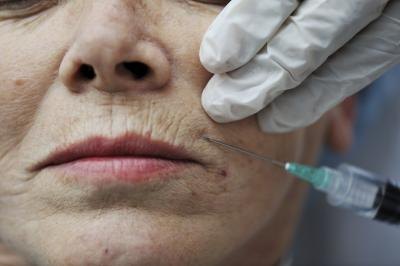
Injectable soft tissue fillers such as collagen, fat and hyaluronic acid can temporarily plump skin and smooth out deep wrinkles, according to the American Academy of Dermatology. Some fillers work by replacing collagen that diminishes as you age while others can encourage collagen production. Collagen is a protein that keeps skin smooth and taut. Soft tissue fillers are generally regarded as safe. They involve little if any recovery time and you are usually able to resume your normal activities immediately. Side effects are rare but may include minor bruising and swelling. Common injection sites include the cheek and eye area. The results typically last about six months.
Botox (botulinum toxin type A) is similar to fillers but works by blocking the chemical messengers that cause your muscles to contract. The National Institutes of Health says Botox is made from a toxin produced by the bacterium Clostridium botulinum. When your facial muscles are unable to tighten, your skin flattens which effectively smooths out deep wrinkles. Botox is frequently injected into the upper lip area, crows feet around the eyes, forehead lines and the frown lines between the eye brows. Results generally last up to 4 months. Botox is considered to be safe and effective. Temporary side effects include injection-site bleeding and swelling.
Dermabrasion involves sanding down the outer layer (epidermis) of your skin with a speedy rotating brush. The procedure may soften deep wrinkles by allowing a new layer of skin to replace old, damaged and wrinkled skin. Possible side effects are redness and swelling which typically subside within 2 weeks.
Chemical Peels
woman receiving chemical peel treatmentPhoto Credit Horsche/iStock/Getty Images
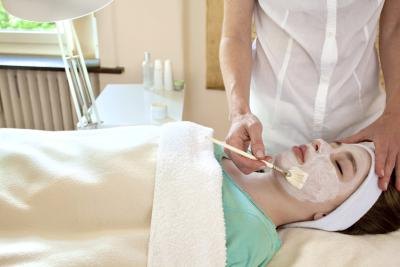
Chemical peel treatments may help soften deep wrinkles. Peels typically use glycolic or salicylic acid to essentially burn off the surface layer of your skin. This allows smoother, less wrinkled skin to surface. A series of peels may be required for desired results. Your skin may be red and sun-sensitive for several days following treatment.
Laser Resurfacing
woman having laser resurfacing on her handPhoto Credit visualspace/iStock/Getty Images
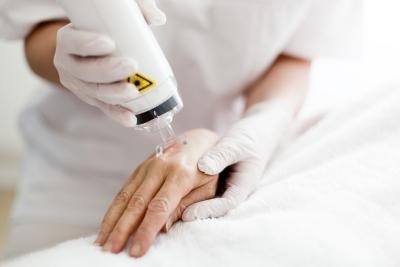
Ablative laser resurfacing uses a laser beam to damage the outer layer of skin while heating the deeper layer (dermis). This process encourages the production of collagen which leads to firmer, less wrinkled skin, according to the CNN Health website. Side effects may include redness and inflammation. It may take a few months for your skin to fully recover from laser resurfacing. Non-ablative lasers are less intense and don’t harm the outer layer of your skin. Several treatments may be required for deep wrinkles to soften but the recovery time is shorter.
Facelift
woman preparing for a faceliftPhoto Credit Wavebreakmedia Ltd/Wavebreak Media/Getty Images
The most invasive and longest lasting treatment for deep wrinkles is a face lift. This procedure consists of removing excess skin in your lower face and neck area. The underlying muscle and connective tissue is then pulled back for a tightening effective. Results of a face lift can last up to 10 years. You may experience bruising and swelling for a number of weeks following surgery.
Anxiety is a stress response everyone experiences from time to time, and is a normal reaction to situations viewed as potentially threatening or dangerous. Anxiety becomes problematic when it interferes with normal functioning on a day to day basis, or when one is experiencing anxiety without any perceivable stimulus. You can learn to deal with and control anxiety naturally by using meditation techniques, exercise, social support groups and herbal remedies.
Learn how to cope with anxiety using natural, safe methods.Photo Credit angst image by Yvonne Bogdanski from Fotolia.com
Step 1
Develop a daily meditation practice. Meditation can evoke feelings of peace and tranquility, and it can also help you to deal with stressful situations. A daily meditation practice helps to quiet the mental chatter and can neutralize the "fight or flight" stress response that people with anxiety problems commonly experience. The National Institute of Mental Health states that meditation is beneficial to those experiencing anxiety disorders and can produce calming effects.
Step 2
Exercise regularly. A Mayo Clinic article on depression discusses the link between getting regular exercise and reduction in levels of anxiety and depression. A reduction in stress levels, an increase in neurotransmitters that may help to combat anxiety, increased self-confidence and better physical health are just some of the benefits of developing a regular exercise routine. Exercise also gives you something else to focus on and helps to turn off the cycle of rumination that can create anxiety.
Step 3
Join a support group for people with anxiety disorders. Support groups can empower sufferers of anxiety disorders to take control of their lives. These groups provide a forum for shared experiences, and can offer an opportunity for normalization with others who also suffer from this often debilitating disorder. Many people who have intense anxiety problems also live in isolation, so joining a group can also provide socialization in a safe environment.
Step 4
Try an herbal supplement. The Mayo Clinic reports that several herbs have been found to reduce anxiety, including kava, passionflower and valerian. The theanine in green tea can increase the production of alpha waves in the brain, which tends to produce an alert but relaxed state. You should consult your doctor before using any herbal supplement, as some herbs can produce unwanted side effects.
THE WOODWORKING DESIGN COLLECTION - ONLY 69 LEFT !
By Roy Underhill
Format: DVD
For over 30 years, Roy Underhill has been educating and entertaining audiences with his unrivaled knowledge of traditional hand tools and building techniques. Join Roy for Season Twelve for creating the perfect outdoor chair, traditional Shaker oval boxes, a small table with twigs in geometric shapes, and so much more!
Each episode is filled with classic techniques and how-tos including:
1201 – Bentwood Boxes of the Northwest Coast – Roy visits Gregg Blomberg and explores woodworking traditions of the Pacific Northwest.
1202 – A Civil War Quilting Frame – Roy is joined by his wife, Jane, to build a traditional quilting frame.
1203 – An African Chair from the Ivory Coast – Roy and his friend Robert Watson make a “man’s chair” using tools from the Ivory Coast of Africa.
1204 – Hispanic Furniture Making – Roy learns about northern New Mexico woodworking on the Santa Fe Trail.
1205 – Colonial Tape Loom – Roy begins making a tiny tape loom, used for making decorative fabric.
1206 – Dovetailing a Loom Box – Roy finishes the tape loom by making a beautiful box for it with dovetails and turned columns.
1207 – A Colonial Standing Desk – Roy makes a standing desk using mortise-and-tenon and tongue-and-groove joints.
1208 – Banding Together – Instrument maker Marcus Hanson makes inlay banding with Roy at the Anthony Hay Cabinet Shop.
1209 – The Art of Finishing – Roy returns to the Anthony Hay Cabinet Shop to learn finishing.
1210 – 15 Tools from a Dead Man’s Chest – Roy restores the tools found in an antique chest.
1211 – A Pilgrim’s Chest of Oak – Roy makes a Spanish pilgrim’s chest from New Mexico.
1212 – Wood Carvers of the Sacred – Returning to New Mexico once again, Roy explores religious carving and woodworking in the mountains north of Santa Fe.
1213 – Moravian Chair – Roy makes a Moravian chair that’s reinforced with dovetailed battens, which make this small piece extraordinarily strong.
Charles Limbert was one of the leading figures in the Arts & Crafts furniture movement, and also one of the most unique. His beautiful pieces combined curves, splayed sides and negative space with the more common straight lines of Arts & Crafts furniture, producing designs that were highly prized. Both the Old Faithful Inn in Yellowstone National Park and the Mission Inn in Riverside, California, feature his work. And today, his original pieces bring thousands of dollars at auction.
Now, for the first time, author Michael Crow has carefully detailed 33 of Charles Limbert's finest designs so you can build this beautiful furniture yourself.
Inside this book you'll find:
200 drawings with exploded views, elevations and details for projects to fit every room in your house.
A bill of materials and explanatory note for each piece.
Advice on wood selection, hardware sources and construction and finishing techniques.
A historical overview of Limbert's life and work.
If you're looking for something fresh in Arts & Crafts design, you'll find it--and more--in the Limbert designs here.
About the Author:
Michael Crow is an amateur woodworker with a special interest in the inspired minimalism of Shaker and Arts and Crafts furniture. He can often be found working on his Craftsman bungalow or building furniture for it. Follow his work at www.1910craftsman.com