Everything About Wood

Find the information such as human life, natural resource,agriculture,forestry, biotechnology, biodiversity, wood and non-wood materials.

Blog List

Tuesday, 7 March 2017

Can We Model the Scenic Beauty of an Alpine Landscape?

Sustainability 2013, 5(3), 1080-1094; doi:10.3390/su5031080

Author 

Uta Schirpke 1
, Sonja Hölzler 1
, 
Georg Leitinger 2
, 
Maria Bacher 2
, 
Ulrike Tappeiner 1,2
 and 
Erich Tasser 1,* 

1
Institute for Alpine Environment, EURAC research, Viale Druso 1, 39100 Bolzano, Italy
2
Institute of Ecology, University of Innsbruck, Sternwartestr. 15, 6020 Innsbruck, Austria
*
Author to whom correspondence should be addressed. 
Received: 20 December 2012 / Accepted: 22 February 2013 / Published: 7 March 2013
(This article belongs to the Special Issue Measuring Socio-Economic Well-Being)
View Full-Text   |     Download PDF [346 KB, uploaded 24 February 2015]   |    
 Browse Figures
 

Abstract 

During the last decade, agriculture has lost its importance in many European mountain regions and tourism, which benefits from attractive landscapes, has become a major source of income. Changes in landscape patterns and elements might affect scenic beauty and therefore the socio-economic welfare of a region. Our study aimed at modeling scenic beauty by quantifying the influence of landscape elements and patterns in relationship to distance. Focusing on Alpine landscapes in South and North Tyrol, we used a photographic questionnaire showing different landscape compositions. As mountain landscapes offer long vistas, we related scenic beauty to different distance zones. Our results indicate that the near zone contributes by 64% to the valuation of scenic beauty, the middle zone by 22%, and the far zone by 14%. In contrast to artificial elements, naturalness and diversity increased scenic beauty. Significant differences between different social groups (origin, age, gender, cultural background) occurred only between the local population and tourists regarding great landscape changes. Changes towards more homogenous landscapes were perceived negatively, thus political decision makers should support the conservation of the cultural landscape. View Full-Text
Keywords: distance zones;  landscape composition;  landscape diversity;  regional development;  scenic beauty;  socio-demographic groups
This is an open access article distributed under the Creative Commons Attribution License (CC BY 3.0).

For further details log on website :
http://www.mdpi.com/2071-1050/5/3/1080?utm_source=TrendMD&utm_medium=cpc&utm_campaign=Sustainability_TrendMD_0
at March 07, 2017 No comments:
Email ThisBlogThis!Share to XShare to FacebookShare to Pinterest

Evaluations of Landscape Locations along Trails Based on Walking Experiences and Distances Traveled in the Akasawa Forest Therapy Base, Central Japan

Forests 2015, 6(8), 2853-2878; doi:10.3390/f6082853

Author 

Tong Zhang 1,* , Songqiu Deng 2
, Qianqian Ma 1
 and 
Kunihiro Sasaki 1

1
Landscape Laboratory, Agriculture Faculty, Shinshu University, 8304, Minamiminowa-Vill., Kamiina-Dtrct., Nagano Pref. 399-4598, Japan
2
Forest Measurement and Planning Laboratory, Agriculture Faculty, Shinshu University, 8304, Minamiminowa-Vill., Kamiina-Dtrct., Nagano Pref. 399-4598, Japan
*
Author to whom correspondence should be addressed. 
Academic Editors: Bradley B. Walters and Eric J. Jokela
Received: 24 May 2015 / Revised: 9 August 2015 / Accepted: 14 August 2015 / Published: 21 August 2015
View Full-Text   |     Download PDF [1478 KB, uploaded 24 August 2015]   |    
 Browse Figures
 

Abstract 

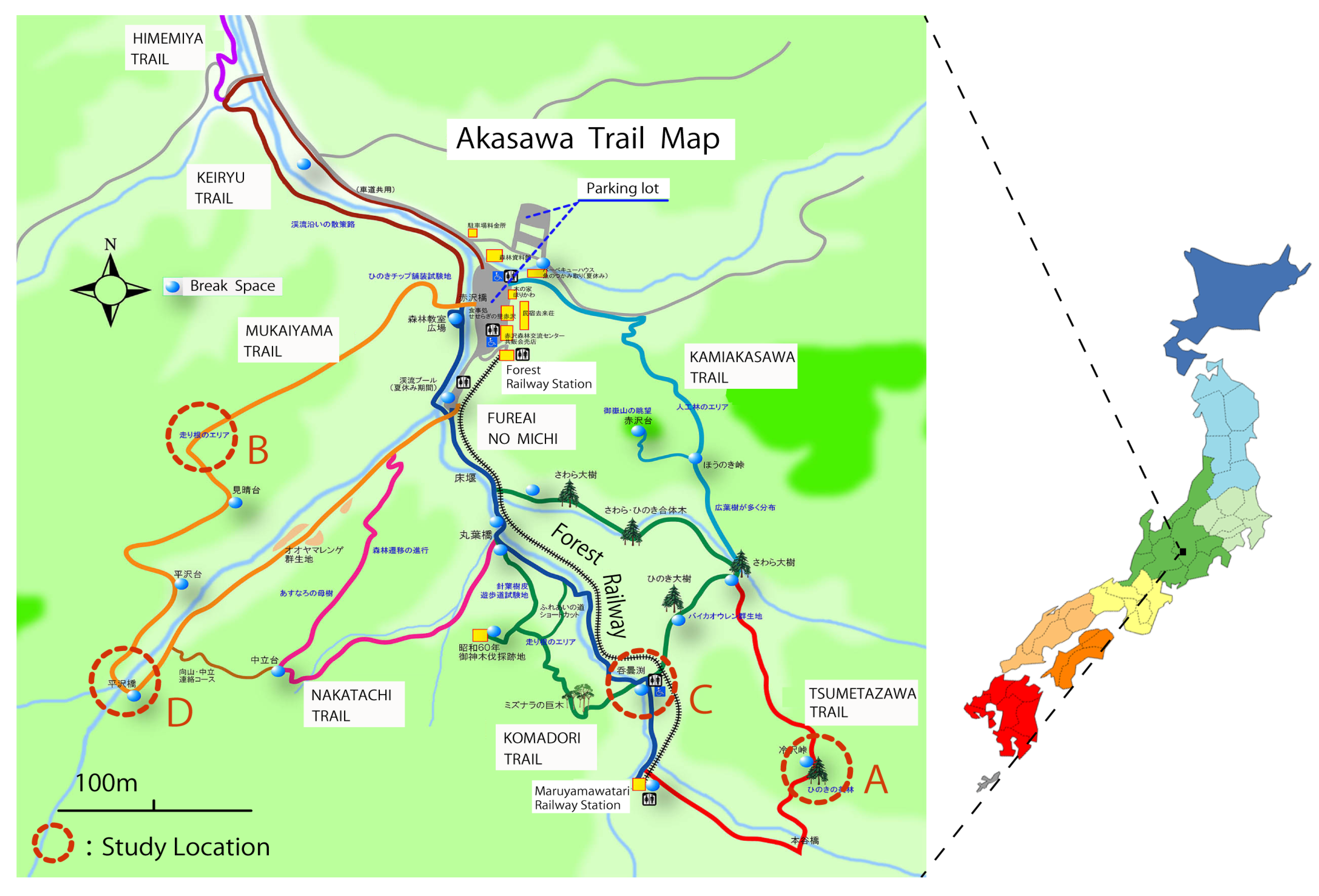
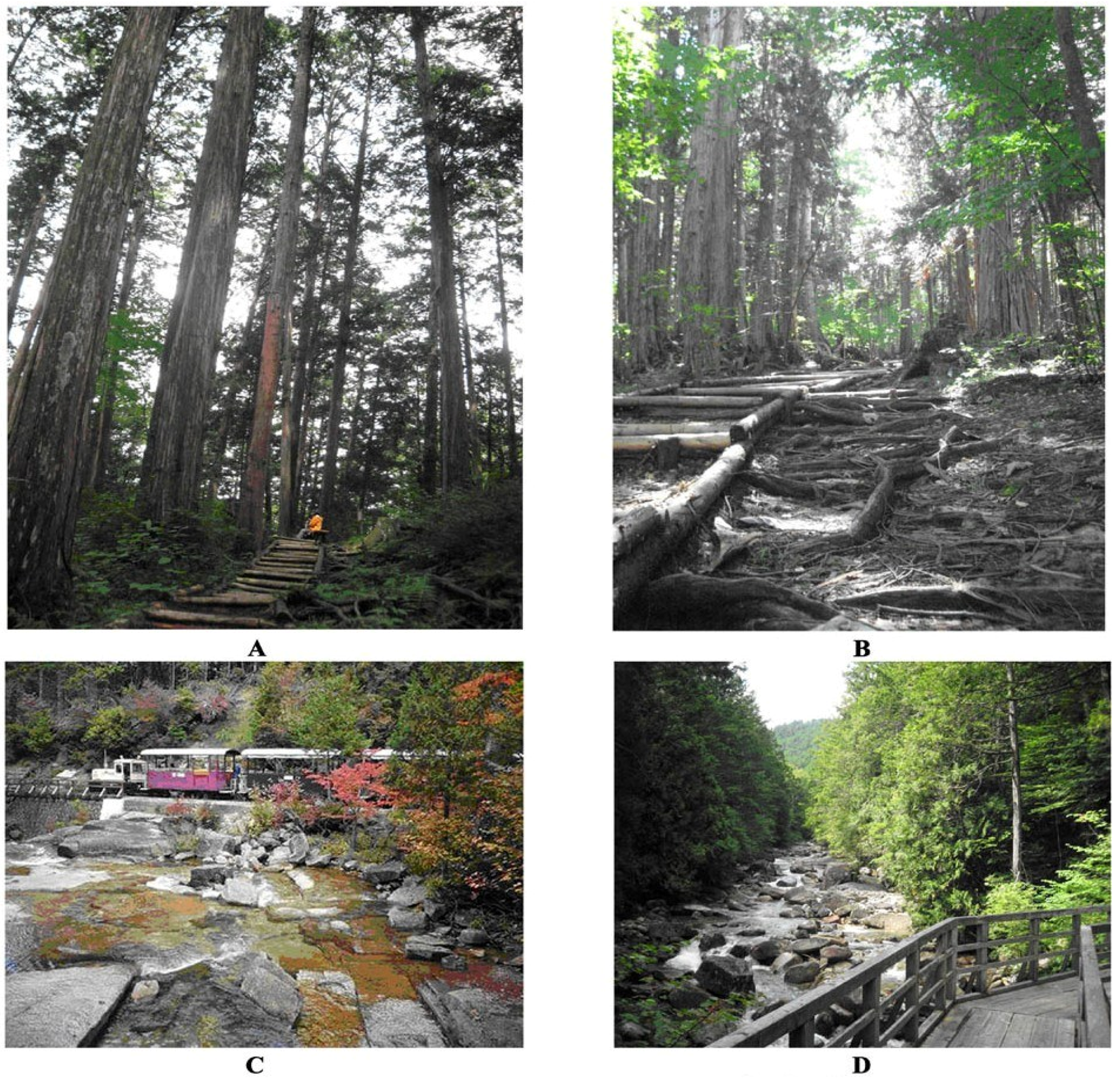
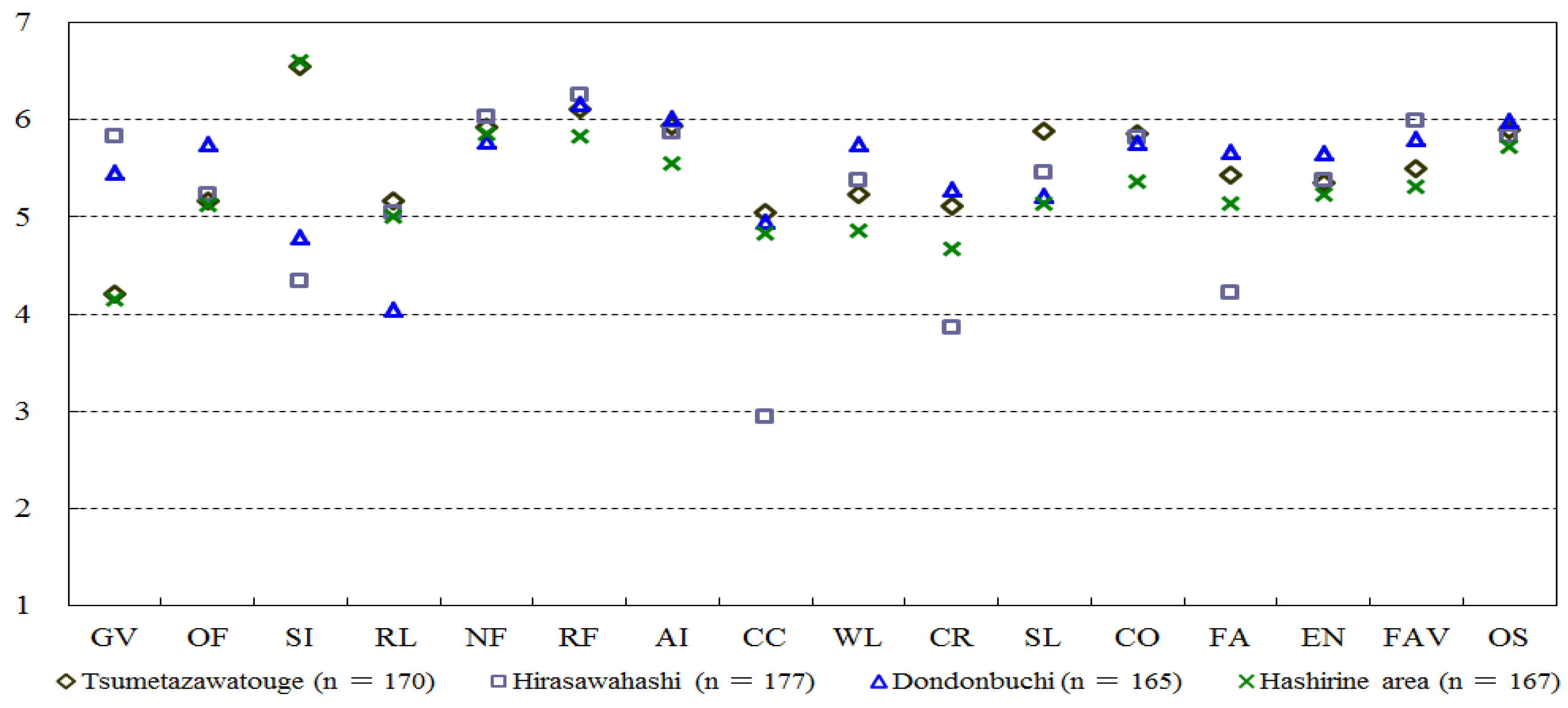
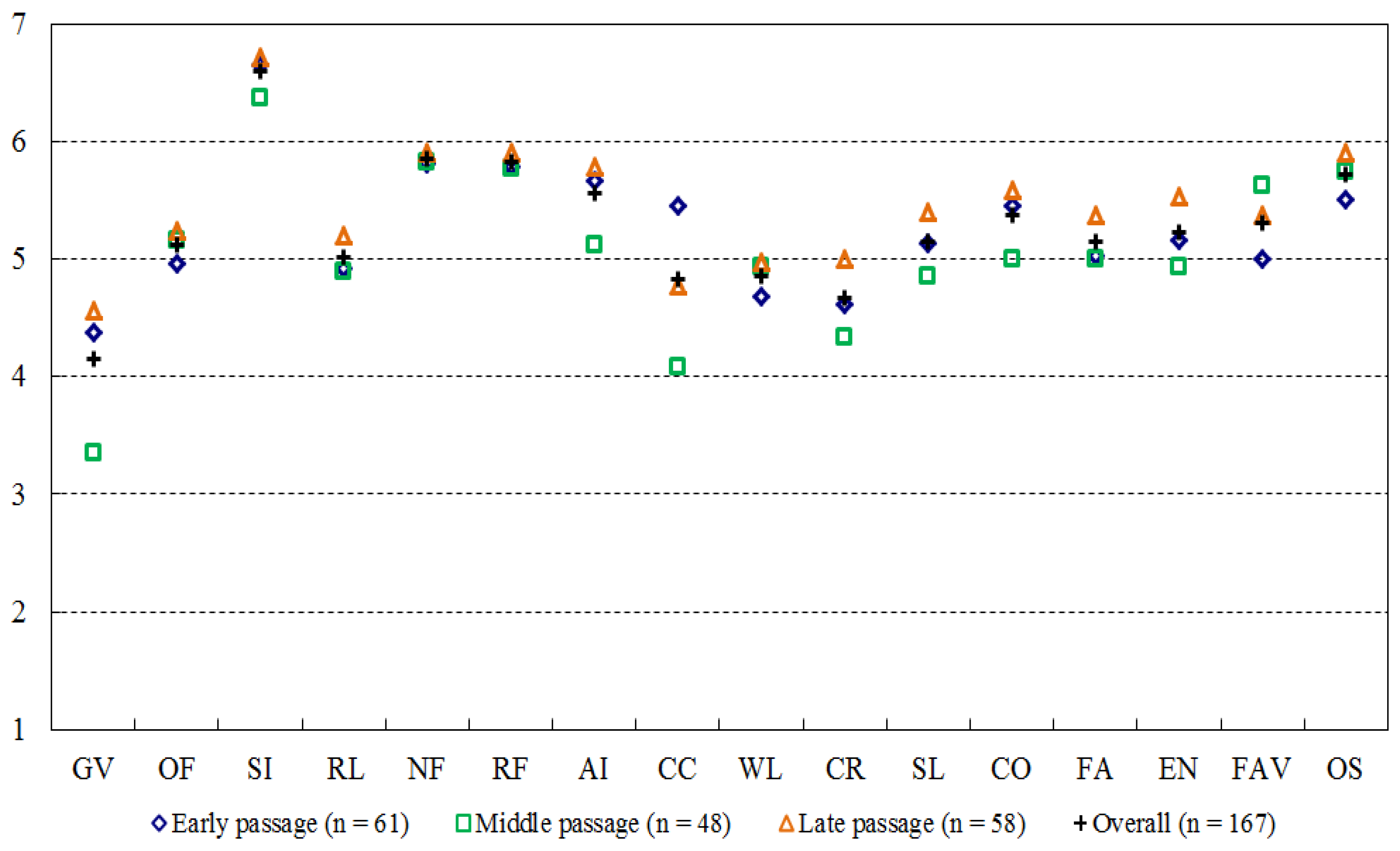
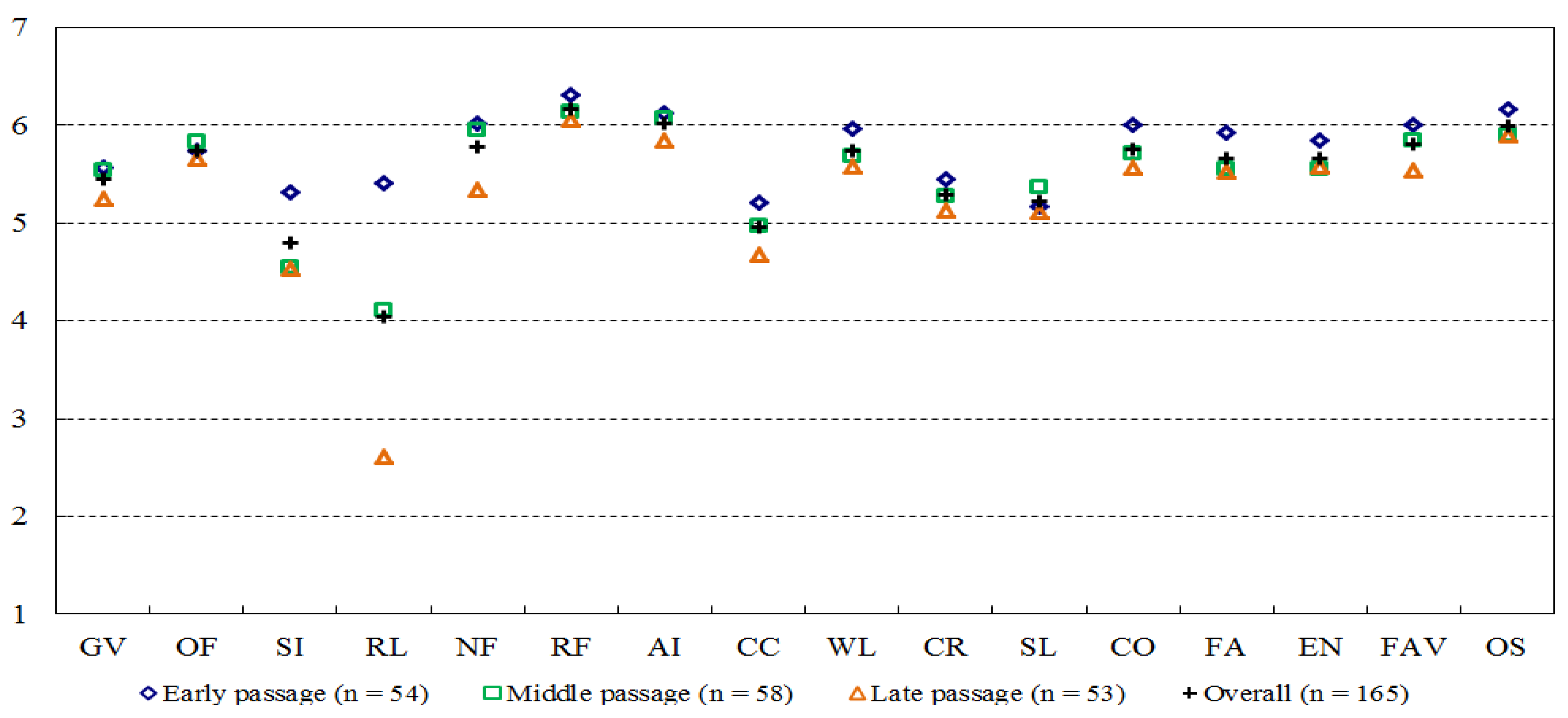
Forest planners are interested not only in forest spaces that visitors prefer but also in the preferred spatial arrangements of landscape features. In this study, we aimed to clarify walkers’ evaluations of four landscape locations composed of various scenic features in various spatial arrangements along forest walking routes. We also analyzed the trends, differences, and common features associated with different walking distances and experiences. The results are summarized as follows: (1) The walkers’ evaluations changed depending on the elements of the scene they observed and the spatial arrangements of those elements. The visitors preferred silent environments in forest spaces to the sounds of a stream. Meanwhile, they appreciated a good view in an open area. (2) The length of a walk prior to visiting a location on a route affected walkers’ evaluations of that location. For example, a special landscape feature was more positively rated by the respondents who visited the location late in their walks than those in the early and middle walking stages. However, the early-passage walkers were more pleased by touching natural objects such as rocks and large trees than those later in their walks. (3) Analysis revealed that the ratings of certain parameters differed according to the route taken to a location, whereas other ratings remain unchanged. Consequently, we must consider the effects of spatial properties of scenic factors on people’s perceptions in forest planning. (4) Walkers provided similar ratings on three parameters within forest landscapes—“Open feeling”, “Regular landscape” and “Natural” feel—even in the middle and near the end of their walks. Conversely, locations with water elements led to variations in parameter ratings that were maintained until the end of a person’s walk. Based on these results, we suggest that positive walking experiences can be maintained by considering the open feeling, regularity, and natural landscape in all three passage stages in planning walking routes. View Full-Text
Keywords: forest recreation;  walkers’ perceptions;  forest bathing;  walking preference
This is an open access article distributed under the Creative Commons Attribution License which permits unrestricted use, distribution, and reproduction in any medium, provided the original work is properly cited. (CC BY 4.0).

For further details log on website :
http://www.mdpi.com/1999-4907/6/8/2853?utm_source=TrendMD&utm_medium=cpc&utm_campaign=Forests_TrendMD_0
at March 07, 2017 No comments:
Email ThisBlogThis!Share to XShare to FacebookShare to Pinterest

Airborne Laser Scanning for the Site Type Identification of Mature Boreal Forest Stands

Remote Sens. 2011, 3(1), 100-116; doi:10.3390/rs3010100

Author 

Mikko Vehmas 1,* , Kalle Eerikäinen 2
, Jussi Peuhkurinen 1
, 
Petteri Packalén 1
 and 
Matti Maltamo 1

1
School of Forest Sciences, University of Eastern Finland, P.O. Box 111, 80101 Joensuu, Finland
2
Joensuu Research Unit, Finnish Forest Research Institute, P.O. Box 68, 80101 Joensuu, Finland
*
Author to whom correspondence should be addressed. 
Received: 8 November 2010 / Revised: 17 December 2010 / Accepted: 27 December 2010 / Published: 10 January 2011
View Full-Text   |     Download PDF [552 KB, uploaded 19 June 2014]   |    
 Browse Figures
 

Abstract 

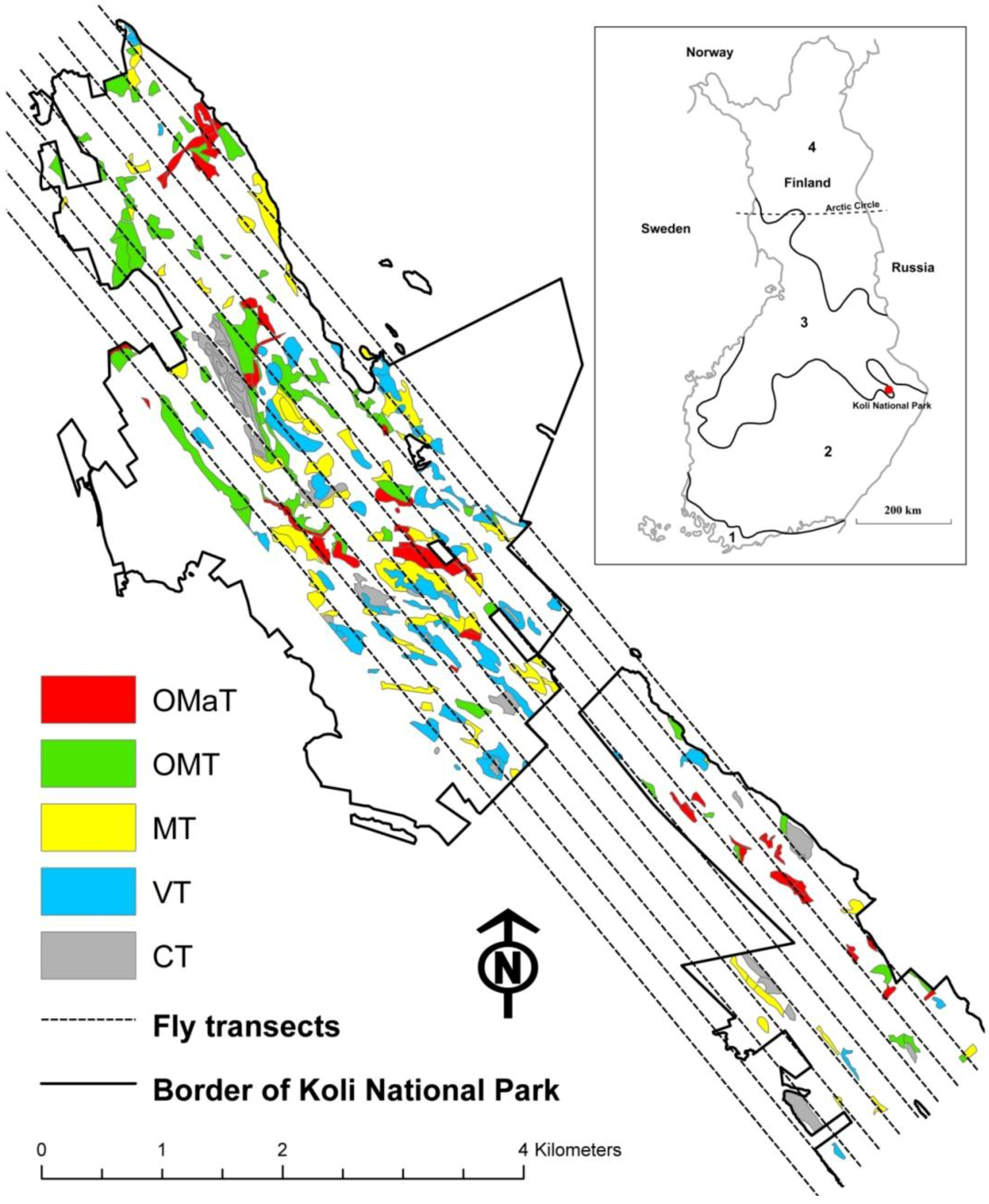
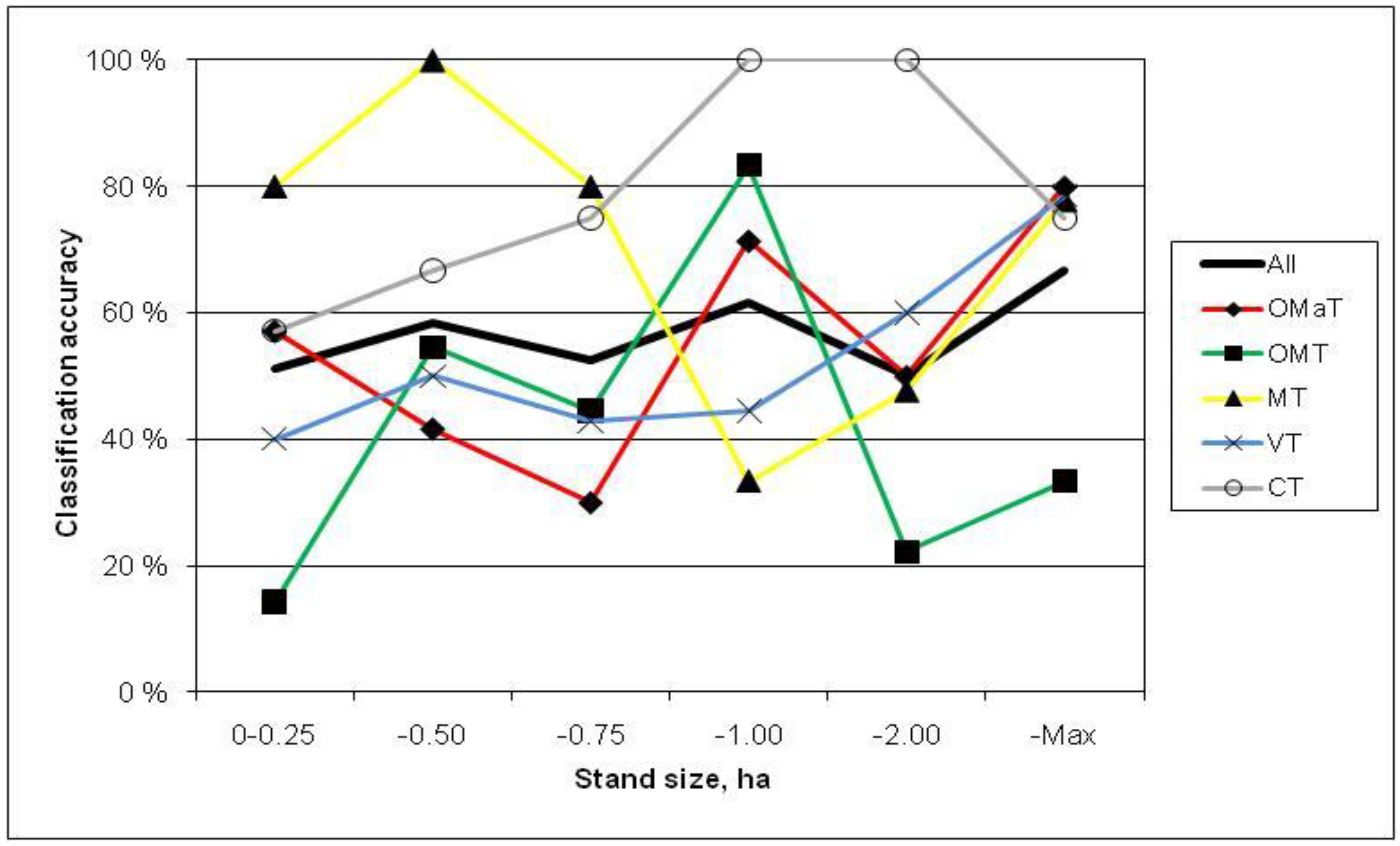
In Finland, forest site types are used to assess the need of silvicultural operations and the growth potential of the forests and, therefore, provide important inventory information. This study introduces airborne laser scanner (ALS) data and the k-NN classifier data analysis technique applicable to the site quality assessment of mature forests. Both the echo height and the intensity value percentiles of different echo types of ALS data were used in the analysis. The data are of 274 mature forest stands of different sizes, belonging to five forest site types, varying from very fertile to poor forests, in Koli National Park, eastern Finland. The k-NN classifier was applied with values of k varying from 1 to 5. The best overall classification accuracy achieved for all the forest site types and for a single type, were 58% and 73%, respectively. The conclusion is that when conducting large-scale forest inventories ALS-data based analysis would be a useful technology for the identification of mature boreal site types. However, the technique could still be improved and further studies are needed to ensure its applicability under different local conditions and with data representing earlier stages of stand development. View Full-Text
Keywords: k-NN classification;  vegetation;  height distribution
This is an open access article distributed under the Creative Commons Attribution License (CC BY 3.0).

For further details log on website :
http://www.mdpi.com/2072-4292/3/1/100?utm_source=TrendMD&utm_medium=cpc&utm_campaign=Remote_Sens_TrendMD_0
at March 07, 2017 No comments:
Email ThisBlogThis!Share to XShare to FacebookShare to Pinterest

New method recognizes tree species automatically

January 20, 2017
Source:
Natural Resources Institute Finland
Summary:
A new method of recognizing tree species based on laser scanning measurements has been developed by scientists. The method enables the calculation of classification features in a completely new way.
Share:
FULL STORY

Reconstructed tree models can be stored in a database.
Credit: Image courtesy of Natural Resources Institute Finland
A joint research project by Tampere University of Technology's mathematics laboratory and the Natural Resources Institute Finland (Luke) has developed a new method of recognising tree species based on laser scanning measurements. The method enables the calculation of classification features in a completely new way.
The researchers from TUT and Luke received promising results when testing a fully automatic method of recognising tree species. In the future, this method can be applied to automate timber measurements during felling, selection of trees to be felled and optimisation of cutting.
"This method also allows for efficient measuring of the extensive materials needed in forest ecology research concerning tree species and the competitive relationships between their crowns," says Principal Scientist Raisa Mäkipää from Luke.
New use for comprehensive tree models
A method previously developed by TUT is used to recognise the tree species. In this method, individual trees can be extracted from the forest plot level point cloud data, and the structure of their crowns can be reconstructed as comprehensive 3D models. The created tree models consist of consecutive cylinders, which determine the structure of the tree stem and branches as well as the branching structure.
"Previously, it was possible to make a rough distinction between the stem and the crown, based on the point cloud. Now, we are able to make out individual branches and analyse the characteristics of their diameters, volumes and branch angles," says Markku Åkerblom, member of the research team and a researcher at TUT.
For recognising the species, the researchers defined 15 classification features, the values of which were then calculated for each tree. Some of these features are completely new and some have been used in previous studies. The new aspect is that now their value can be calculated more accurately, as they can now utilise information about the tree's entire crown. Furthermore, the magnitude of the testing data far exceeds any previous study.
Exact species recognition is possible
Three different classification methods were tested, and three of the most common tree species in Finland -- birch, pine and spruce -- were included in the study.
"According to our results, automatic species recognition is possible with more than 95% accuracy. The purpose was not to find the best possible combination of features, but only to prove that classification based on detailed tree models is possible. However, several combinations produced good results and all the classification methods had a maximum accuracy over 95%. The results also showed that just 30 trees per species is enough learning material for the classification," says Åkerblom.
In the future, the developed method will be tested with more tree species and with measurements taken from more diverse forests. The tree models calculated based on the laser scanning data can be stored in a database, which can be utilised for even more accurate species recognition when the number of included samples grows.

The researchers from TUT and Luke received promising results when testing a fully automatic method of recognising tree species. In the future, this method can be applied to automate timber measurements during felling, selection of trees to be felled and optimisation of cutting.
"This method also allows for efficient measuring of the extensive materials needed in forest ecology research concerning tree species and the competitive relationships between their crowns," says Principal Scientist Raisa Mäkipää from Luke.
New use for comprehensive tree models
A method previously developed by TUT is used to recognise the tree species. In this method, individual trees can be extracted from the forest plot level point cloud data, and the structure of their crowns can be reconstructed as comprehensive 3D models. The created tree models consist of consecutive cylinders, which determine the structure of the tree stem and branches as well as the branching structure.
"Previously, it was possible to make a rough distinction between the stem and the crown, based on the point cloud. Now, we are able to make out individual branches and analyse the characteristics of their diameters, volumes and branch angles," says Markku Åkerblom, member of the research team and a researcher at TUT.
For recognising the species, the researchers defined 15 classification features, the values of which were then calculated for each tree. Some of these features are completely new and some have been used in previous studies. The new aspect is that now their value can be calculated more accurately, as they can now utilise information about the tree's entire crown. Furthermore, the magnitude of the testing data far exceeds any previous study.
Exact species recognition is possible
Three different classification methods were tested, and three of the most common tree species in Finland -- birch, pine and spruce -- were included in the study.
"According to our results, automatic species recognition is possible with more than 95% accuracy. The purpose was not to find the best possible combination of features, but only to prove that classification based on detailed tree models is possible. However, several combinations produced good results and all the classification methods had a maximum accuracy over 95%. The results also showed that just 30 trees per species is enough learning material for the classification," says Åkerblom.
In the future, the developed method will be tested with more tree species and with measurements taken from more diverse forests. The tree models calculated based on the laser scanning data can be stored in a database, which can be utilised for even more accurate species recognition when the number of included samples grows.


Story Source:
Materials provided by Natural Resources Institute Finland. Note: Content may be edited for style and length.

Cite This Page:
  • MLA
  • APA
  • Chicago
Natural Resources Institute Finland. "New method recognizes tree species automatically." ScienceDaily. ScienceDaily, 20 January 2017. <www.sciencedaily.com/releases/2017/01/170120085850.htm>.


For further details log on website :
https://www.sciencedaily.com/releases/2017/01/170120085850.htm?utm_source=TrendMD&utm_medium=cpc&utm_campaign=ScienceDaily_TrendMD_1
at March 07, 2017 No comments:
Email ThisBlogThis!Share to XShare to FacebookShare to Pinterest

Sustainable wood-plastic composites from bio-based polyamide 11 and chemically modified beech fibers

Published Date
Sustainable Materials and Technologies
December 2015, Vol.6:6–14, doi:10.1016/j.susmat.2015.10.001
Open Access, Creative Commons license


  • Author 


  • Patrick Zierdt a,,
  • Torsten Theumer a
  • Gaurav Kulkarni a
  • Veronika Däumlich a
  • Jessica Klehm a
  • Ulrike Hirsch a


  • Andreas Weber b

  • aFraunhofer Institute for Mechanics of Materials IWM, Walter-Hülse-Straße 1, 06120 Halle (Saale), Germany
    bInstitut für Holztechnologie Dresden IHD, Zellescher Weg 24, 01217 Dresden, Germany
    Received 5 August 2015. Revised 14 October 2015. Accepted 14 October 2015. Available online 26 October 2015. 

    Abstract

    Wood-plastic composites from bio-based polymers and wood fibers (bio-WPC) provide an improved sustainability and carbon footprint compared to conventional composites. Actually, the implementation of this approach into industrial applications is hindered by the missing knowledge on the mechanical and thermo-mechanical properties of such bio-WPC. In this study, the properties of a bio-WPC from bio-based polyamide 11 (PA 11) and chemically modified beech fibers were investigated. The chemical modification of the beech fibers by an alkaline treatment with an aqueous solution of sodium hydroxide (NaOH) was done to support the melt processing and adhesion to the PA 11 matrix. Analysis of the modified fibers by Thermogravimetric Analysis (TGA) proved an increased thermal stability, as identified by an increase of the extrapolated TGA onset temperature from 290 to 330 °C. This improvement resulted from hemicellulose removal, as confirmed through Attenuated Total Reflection Infrared Spectroscopy (ATR-FTIR). Consequently, mechanical and thermo-mechanical analysis of the processed bio-WPC showed an increase in elastic modulus and storage modulus of the composites by the chemical treatment of the fibers. This effect was attributed to an increased number of hydrogen bonds between the modified beech fibers and the PA 11 matrix. The overall mechanical properties of the investigated bio-WPCs support their use as sustainable construction material for technical applications.

    Keywords


  • Sustainable WPC
  • Bio-WPC
  • Polyamide 11
  • Beech Fiber
  • Chemical Modification


  • 1 Introduction

    Wood-plastic composites (WPC) have been used as construction materials for many years due to their beneficial properties in comparison to synthetic fiber composites, like decreased density and lower costs [1]. The raw materials used to process WPC are mainly polyolefin thermoplastics, such as polyethylene (PE), polypropylene (PP) or polyvinylchloride (PVC), and wood flour or fibers mainly from softwood like spruce or pine [2], [3] and [4]. Typical applications include extruded decking and profiles in the building and construction sector and also complex interior parts for automotive applications, produced by injection molding [5] and [6]. The next generation of these materials is based on the implementation of biogenic matrix polymers and thus being processed from completely regenerative raw materials [7]. The idea behind the approach of such completely biogenic wood-plastic composites (bio-WPC) is that the amount of CO2 generated by the processing of the composite material is partially or completely compensated by the CO2 consumed in the growth phase of the plants used as raw materials [8]. Thus, construction materials with a significantly improved sustainability and carbon footprint could be produced. Despite the ecological advantages, economic interests like decreased dependency in fossil resources and the support of the development of new and sustainable technologies are also addressed with this approach.
    Biopolymers can be divided into biodegradables and non-biodegradables, the latter being of particular interest for the use as matrix polymers in technical composite materials since they can be seen as drop-in solutions for already existing conventional plastics [9]. In recent years, bio-based polyethylene from sugar cane and bio-based polyamides from castor oil have become commercially available and represent the most interesting alternatives to their fossil-based counterparts [10]. The main obstacle in producing WPC based on polyamides is their relatively high melting temperature which promotes thermal degradation of the wood fibers during processing. Despite this, conventional polyamide 6 (PA 6) has been studied as matrix material for natural fiber-reinforced composites because of its beneficial thermo-mechanical properties [11], [12], [13], [14], [15], [16], [17] and [18]. Bio-based polyamides, like polyamide 11 (PA 11), polyamide 10.10 (PA 10.10) and polyamide 6.10 (PA 6.10), have generally lower melting temperatures than conventional PA 6 [19]. This enables the melt processing of wood fiber reinforced composites before the start of thermal degradation of the wood fibers, which has been reported to be at around 220 °C [20]. Accordingly, there is a great potential to develop sophisticated and sustainable bio-WPCs with these bio-based polyamides. However, actual market prices of bio-based polyamides are up to five times higher than conventional PA 6 due to lower production capacities [21].
    The chemical modification of wood fibers has been studied in the past mainly to improve their adhesion to thermoplastic polymers or coupling agents and in consequence to improve the mechanical properties of the subsequently processed wood-plastic composites. One widely used chemical treatment is mercerization, an alkaline treatment with aqueous sodium hydroxide (NaOH) [22]. The main effect is the disruption of the hydrogen bonds on the fiber surface, leading to a higher roughness of the surface by removal of certain amounts of lignin, waxes, oils and hemicelluloses. In consequence, this increases the amount of hydroxyl groups on the fiber surface and improves wetting and adhesion with thermoplastic polymers. Additionally, the thermal stability of the wood fibers can be enhanced. Improvement of the thermal stability of wood fibers can also be done by physical modification techniques, especially by heat treatment [23]. The general mechanism of both treatments is the selective decomposition of the hemicellulose components, which display the least thermally stable components of wood fibers.
    Although non-biodegradable biopolymers, such as bio-based polyamides, are gradually entering the market, there is no extensive knowledge about their potential as matrix polymers in composite materials for technical applications. There is a multitude of studies available on wood-plastic composites based on conventional polyolefins, but only a few studies discuss the approach of bio-WPC from non-biodegradable biopolymers as sustainable composite materials for technical applications. Furthermore, the mechanism of improving the thermal stability of wood fibers by chemical modification is already discussed but not systematically applied to process wood-plastic composites from highly melting polymers like polyamides in literature. In this study, the processing and the resulting properties of a bio-WPC from bio-based polyamide 11 (PA 11) and chemically modified pulped beech fibers were therefore investigated. In the first part, modification of the morphology and the thermal stability of the beech fibers was done by an alkaline treatment to improve the processability with the PA 11. In the second part, characterization of the morphological, mechanical and thermo-mechanical properties of the subsequently processed bio-WPC was done. The goal of these investigations was to quantify the potential of bio-WPCs based on bio-polyamides and further to support their implementation as sustainable drop-in materials for conventional WPCs in already existing technical applications.

    2 Materials and methods

    2.1 Materials

    2.1.1 Bio-based polyamide 11

    The matrix polymer used to produce the bio-WPC was a bio-based polyamide 11 (PA 11, Rilsan BESNO TL) from Arkema Company. The raw material for this polymer is castor oil, which can be converted into 11-aminoundecanoic acid and subsequently polycondensed into PA 11 with a bio-based carbon content of > 98%. The melting temperature of the used grade is 186 °C and the density is 1.02 g/cm3. The material was used as delivered in spherical pellet form and dried at 80 °C for 8 h before processing.

    2.1.2 Chemically modified beech fibers

    The beech fibers (BF) used to process the bio-WPC were derived by a thermo-mechanical pulping process from beech wood (Fagus sylvatica). In the first step, a hydro-thermal pretreatment of the beech wood chips was done at 80 °C. Secondly, the pretreated wood chips were transported into a digester, where they were plasticized over 4 min at a temperature of 170 °C and a pressure of 9 bar. Given this, the plasticized wood material was conveyed into a twin disk refiner with a gap of 0.1 mm. Finally, the obtained beech fibers were dried at 80 to 100 °C to a water content of approximately 6.5% as measured with the Soxhlet method. The chemical modification of the beech fibers was done separately after the pulping process with an alkaline treatment (mercerization). For this, the fibers were soaked in distilled water and then washed in an aqueous solution of sodium hydroxide (NaOH) with a concentration of 10 g/l at room temperature for 60 min. Afterwards, the fibers were removed and washed again with distilled water until pH 7 was achieved. Drying of the modified beech fibers (BFmod) was done at 100 °C for 5 h in a convection oven to a moisture content of approximately 2.8% as measured with the Soxhlet method.

    2.2 Methods

    2.2.1 Attenuated total reflection infrared spectroscopy (ATR-FTIR) of beech fibers

    The ATR-FTIR measurements were conducted with a Bruker Equinox 55 device with an ATR unit. The unit is equipped with a diamond ATR crystal with a total measurement area of 4 mm2. The measuring chamber was continuously purged with gaseous N2. For data collection and processing, the software OPUS 6.5 was used. All spectra were collected over the wave number span of 650–4000 cm− 1 at a resolution of 4 cm− 1. Before the specimen measurement, a reference spectrum of the gaseous environment was collected. Then, compacted pellets of the wood fibers were placed onto the ATR crystal and secured with a screw. For each sample, three spectra were collected and converted into a mean spectrum. The baselines of the spectra were corrected using the concave rubber band method with 10 iterations.

    2.2.2 Thermogravimetric analysis (TGA) of beech fibers

    The characterization of the thermal stability of the beech fibers was done by TGA with a Netzsch STA 449 F1 device. Compacted pellets of approximately 4.5 mg of wood fibers encased in aluminum pans were placed into the device and the weight loss from room temperature to 600 °C was measured in dynamic mode with a heating rate of 10 K/min. During the measurements, the measuring chamber was continuously purged with gaseous N2. Analysis of the obtained data was done with the software Proteus Analysis.

    2.2.3 Preparation of bio-WPC and test specimens

    The preparation of the bio-WPC was carried out by discontinuous mixing in a two-roll internal mixer (PolyLab, Thermo Scientific). Compounds of the PA 11 and the modified as well as the unmodified beech fibers were processed with fiber contents of 30, 40 and 50 wt.%. The processing conditions were kept constant for all the composites at 196 °C melt temperature and 50 rpm rotation speed. After 3 min melting of the PA 11, the beech fibers were added and the components were mixed for 5 min. Subsequently, the composites were removed from the mixing chamber and directly injection molded into standard test specimens by a lab scale plunger injection molding machine (MiniJet, Thermo Scientific). Processing parameters for the preparation of the test specimens were kept constant at 220 °C melting temperature, 110 °C mold temperature, 3.5 min melting time, 900 bar injection pressure and 460 bar hold pressure. The processed test specimens were immediately sealed in multilayered aluminum foil to prevent water uptake (fresh as-molded).

    2.2.4 Morphological characterization of beech fibers and bio-WPC

    The morphological properties of the beech fibers were determined by manual statistical analysis of the length and width of the unmodified and modified fibers. For this, random fiber samples were individually arranged between two transparent polypropylene films and optical scans were made. Picture analysis was subsequently done manually with an evaluation program (CellF) for approximately 2500 single fibers. In result, the average fiber length and fiber width were obtained. Additionally, the surfaces of the unmodified and modified beech fibers as well as the fracture surfaces of Charpy notched impact test specimens of the bio-WPC were analyzed by Scanning Electron Microscopy (SEM), with a FEI Quanta 3D FEG device at an acceleration voltage of 5 kV. To avoid charging, the fiber samples and test specimens were coated with Platinum (Pt) beforehand.

    2.2.5 Mechanical characterization of bio-WPC

    Testing of the mechanical properties of the processed bio-WPC was done by tensile testing according to ISO 527 with a universal testing machine (Z050 AllroundLine, Zwick) and Charpy notched impact testing according to ISO 179eA with a notch test apparatus (CEAST Resil Impactor Junior, Instron). For each composite, 6 specimens were tested and mean values of the mechanical parameters were calculated. The testing was done on fresh as-molded (sealed) and conditioned specimens to investigate the impact of water uptake on the mechanical properties. The conditioning of each specimen was done in a climate chamber at 70 ± 1 °C and 62 ± 1% relative humidity until the weight gain in three successive measurements was less than 0,1% according to ISO 1110. The resulting water content of the conditioned test specimens was calculated from the relative weight gain compared to the fresh as-molded test specimens.

    2.2.6 Dynamic mechanical thermal analysis (DMTA) of bio-WPC

    The thermo-mechanical properties of the processed bio-WPC were analyzed by DMTA between − 70 and 120 °C on fresh as-molded specimens (60 × 10 × 4 mm). The experimental set-up used was a force controlled oscillating three-point bending mode (ISO 6721), the testing device was a DMA Q800 from TA Instruments. The linear viscoelastic regime of each composite was identified by amplitude sweeps from 0.1 to 3 MPa with a frequency of 1 Hz at a temperature of − 70, 25, and 120 °C. Ultimately, the DMTA measurements were done at an amplitude of 0.3 MPa, a frequency of 1 Hz and a heating rate of 3 K/min in the temperature range of − 70 to 120 °C for all composites. During all measurements, the measuring chamber was continuously purged with gaseous N2. Values of the storage modulus (E′), loss modulus (E″), and loss factor (tan δ) of the composites were obtained and analyzed as a function of temperature.

    3 Results and discussion

    3.1 Chemical modification of beech fibers

    The surface of the unmodified (BF) and modified beech fibers (BFmod) was analyzed by ATR-FTIR. The obtained spectra in the fingerprint region from 2000 to 800 cm− 1 of the two fiber types are shown in Fig. 1. An overview of the characteristic bands and their assignments is given in Table 1. The first significant difference in the spectra is the disappearing band at around 1729 cm− 1 for the modified fibers. This band can be assigned to the stretching of carbonyl groups (Cdouble bond; length as m-dashO) in the unmodified beech fibers, which are mainly occurring in the branched xylan type polymers of the hemicellulose but also in the cellulose and lignin [24]. Interestingly, the characteristic peak for the stretching of the carbonyl groups for pristine beech wood is reported to be at 1740 cm− 1 [25]. This indicates that the hydro-thermal treatment of the beech wood during the thermo-mechanical pulping process influenced the chemical composition of the beech wood in terms of an increase in the relative concentration of lignin by a dissolution of cellulose or hemicellulose components, which shifted the peak position to a lower wavenumber [26].
    Fig. 1. ATR-FTIR spectra of unmodified (BF) and chemically modified beech fibers (BFmod).
    Table 1. Assigned ATR-FTIR peaks in the fingerprint region from 2000 cm− 1 to 800 cm− 1 of unmodified (BF) and chemically modified beech fibers (BFmod).
    Wave number
    [cm− 1]
    BF assignmentBFmod peak shiftReference
    1729Cdouble bond; length as m-dashO stretching of ester groups
    (xylan)
    −[24], [25], [27], [32] and [34]
    1643Cdouble bond; length as m-dashC stretching of alkene groups
    (cellulose, xylan)
    −[34]
    1597Cdouble bond; length as m-dashC stretching of alkene groups
    (lignin)
    =[24], [32] and [34]
    1500C–H stretching of aromatic rings
    (lignin)
    =[24], [27], [32] and [34]
    1450C–H deformation of alkane groups
    (lignin)
    =[33] and [34]
    1419C–H deformation of alkene groups
    (xylan)
    =[27] and [33]
    1369C–H deformation of alkane groups
    (cellulose)
    =[27], [33] and [34]
    1317C–H vibration of alcoholic groups
    (cellulose)
    +[27] and [33]
    1266C–O stretching of guaiacyl groups
    (lignin)
    =[25], [27] and [28]
    1236C–O stretching of ester groups
    (xylan)
    −[34]
    1224C–O stretching of syringyl groups
    (lignin)
    =[27], [28] and [33]
    1159C–O vibration of alcoholic groups
    (cellulose)
    +[27] and [33]
    1106C–O stretching of ether groups
    (cellulose)
    +[27], [32] and [33]
    1029C–O stretching of alcoholic groups
    (cellulose)
    =[27], [32] and [33]
    894C–H deformation of alkene groups
    (lignin)
    =[25], [33] and [34]
    Peak shift: + increase, = constant, − decrease
    The second significant difference in the spectra in Fig. 1 is the disappearing band at around 1236 cm− 1 and the emerge of two smaller peaks at 1266 and 1224 cm− 1 for the alkaline modified fibers. The strong peak at 1236 cm− 1 can be assigned to the stretching of the C–O bonds in the ester groups of the xylan based hemicellulose polymers, while the peaks at 1266 and 1224 cm− 1 belong to the C–O stretching in the guaiacyl and syringyl polymers of lignin, respectively [27]. Again, these peaks are slightly shifted to lower wavenumbers as reported in literature for hardwood lignin [28]. From these findings can be concluded that the alkaline treatment of the pulped beech fibers significantly altered the chemical surface properties by partial removal of the hemicellulose, while the cellulosic and lignin components were retained. The alkaline conditions caused the de-esterification of the carboxylic groups in the xylan polymers and the release of hemicellulose into solution by formation of acetic acids. Comparable findings on alkaline modification of natural fibers have been reported from Gregorova et al. [29] for beech wood flour, Pranovich et al. [30] for pulped spruce fibers and Mwaikambo et al. [31] for plant fibers from hemp, sisal, jute and kapok.

    3.2 Thermal stability of beech fibers

    The thermal stabilities of the unmodified and modified beech fibers were analyzed by TGA measurements. The resulting thermograms of the mass loss and of the first derivative in relation to temperature are shown in Fig. 2 (a) and (b), respectively. An overview of the identified thermogravimetric characteristics of the beech fibers is given in Table 2. Three stages of mass loss were found for both types of beech fibers. The first stage can be related to the release of water and other volatiles from the fibers. This stage corresponds to a mass loss of approximately 4% for the unmodified and modified fibers. The second stage can be attributed to the decomposition of the hemicellulose, lignin and cellulose components of the beech fibers. The onset of this second decomposition stage was found to be significantly shifted to a higher temperature for the modified beech fibers, presumably due to the removal of hemicellulose from the fiber surface as identified by the ATR-FTIR measurements. While for the unmodified fibers an extrapolated TGA onset temperature (Tonset) of 290 °C was found, an extrapolated TGA onset temperature of 330 °C was identified for the modified fibers. The third and final stage of thermal decomposition extends to the ending test temperature with a total mass loss (ML600 °C) of approximately 87% for the unmodified and modified beech fibers.
    Fig. 2. TGA thermograms of unmodified (BF) and chemically modified beech fibers (BFmod); (a) TGA curves and (b) DTG curves.
    Table 2. Thermogravimetric characteristics of unmodified (BF) and chemically modified beech fibers (BFmod).
    MaterialTonset
    [°C]
    T25
    [°C]
    T50
    [°C]
    ML600 °C
    [%]
    BF29031335387
    BFmod33033336388
    Tonset — onset temperature of second decomposition stage.
    T25 — temperature at 25% mass loss.
    T50 — temperature at 50% mass loss.
    ML600 °C — mass loss at 600 °C.
    The results of the TGA investigations showed that the applied alkaline treatment effectively enhanced the thermal stability of the beech fibers. Corresponding results on the thermal stability of unmodified and modified wood fibers have been reported in literature by Nguyen et al. [20] and [35]. From the main components in beech wood, hemicellulose is the least thermally stable, followed by lignin and cellulose [36]. Accordingly, an improvement of the thermal stability of the wood fibers is mainly effected by a selective dissolution of the hemicellulose components. These conclusions correlate to the findings of the ATR-FTIR measurements and prove the effectiveness of the applied chemical modification of the beech fibers.

    3.3 Morphology of beech fibers and bio-WPC

    The fiber length distribution and fiber width distribution of the unmodified and chemically modified beech fibers as obtained by manual statistical analysis of optical scans are shown in Fig. 3 (a) and (b), respectively. The resulting morphological characteristics are presented in Table 3. It can be seen that the chemical treatment of the beech fibers had an effect on the medium fiber length but not on the medium fiber width. While for the unmodified fibers a medium fiber length of 1.72 mm was identified, this value increased to 2.12 mm for the chemically modified fibers. This effect can be attributed to the washing out of smaller fibers and flour particles by the chemical treatment of the beech fibers with the aqueous solution of sodium hydroxide. On the other hand, both fiber types had comparable medium fiber widths, identified as 189 μm for the unmodified beech fibers and 194 μm for the chemically modified beech fibers. Accordingly, the aspect ratio of the two fiber types varied, resulting in 9.1 for the unmodified fibers and 10.9 for the chemically modified fibers.
    Fig. 3. Morphological characteristics of unmodified (BF) and chemically modified beech fibers (BFmod); (a) fiber length distribution and (b) fiber width distribution.
    Table 3. Morphological characteristics of unmodified (BF) and chemically modified beech fibers (BFmod).
    MaterialFiber length
    [mm]
    Fiber width
    [μm]
    Aspect ratio
    BF1.72 ± 0.66189 ± 539.1
    BFmod2.12 ± 0.92194 ± 4910.9
    However, the obtained morphological characteristics of the investigated pulped beech fibers are in good agreement with morphological data of pulped beech fibers recently published by Schirp et al. [37]. The processing parameters of the refining process have a strong influence on the resulting fiber length and width. Length and width of the resulting fibers especially increase with refiner disc distance. Schirp et al. [37] found a fiber length of 2.36 mm and a fiber width of 185 μm, when a disc distance of 0.15 mm was used. These values are comparable to the obtained values in this study, where a disc distance of 0.1 mm was used.
    Schirp et al. [37] also showed that the processing of beech fibers with polyethylene to conventional WPC by lab scale kneading and injection molding leads to a significant decrease in fiber length in the composite. Similar studies on the resulting fiber length of beech fibers in polyamide 11 based WPC offer further scope for investigation. Conventional Soxhlet extraction of the wood fibers from the processed composites is not applicable due to the chemical resistance of PA 11, whereby more sophisticated techniques have to be used to obtain the fiber length in the composites.
    A detailed view on the surface structure of the unmodified and chemically modified beech fibers is given by the SEM pictures in Fig. 4 (a) and (b), respectively. It can be seen that the chemical modification strongly affected the surface structure of the fibers. The modified fibers showed a much more textured surface, indicating an increase of the surface area by the chemical modification. Similar findings have been reported by Valadez-Gonzales et al. [38] for the alkaline modification of henequen fibers. They found that the modified fibers showed much more crevices on the fiber surface.
    Fig. 4. SEM pictures of (a) unmodified beech fibers (BF), (b) chemically modified beech fibers (BFmod), (c) fracture surface of PA11/BF-50/50 and (d) fracture surface of PA11/BFmod-50/50.
    The fracture surfaces of the Charpy notched impact strength test specimens of the bio-WPCs with the unmodified and chemically modified fibers are shown in Fig. 4 (c) and (d). Coverage of the wood fibers with the matrix polymer can clearly be seen in both composites, indicating a good fiber/matrix adhesion. However, the fracture surfaces of the bio-WPC with the unmodified fibers in Fig. 4 (c) also show partial debonding and crack propagation in the fiber/matrix interface, while this can hardly be seen for the bio-WPC with the modified fibers in Fig. 4 (d). This qualitatively indicates a better fiber/matrix adhesion due to the chemical treatment of the fibers.

    3.4 Mechanical properties of bio-WPC

    An overview of the obtained mechanical properties of the investigated bio-WPC from PA 11 and unmodified and chemically modified beech fibers is given in Fig. 5. A detailed listing of the mechanical values is given in Table 4. As can be seen in Fig. 5(a), a positive correlation of the elastic modulus (E-modulus) and the fiber content was found. The E-modulus increased with increasing fiber content and the values for the composites with the modified fibers were slightly higher compared to the composites with the unmodified fibers. The highest E-modulus of 5049 MPa was found for the composite with 50 wt.% of modified fibers. This corresponds to a four-fold value compared to the neat PA 11 and an increase of approximately 8% to the composite with 50 wt.% unmodified fibers. Water uptake due to conditioning resulted in a drop in the E-modulus for all composites, which can be attributed to matrix softening as can be seen on the values of the neat PA 11. Similar results have been found for the tensile strength as shown in Fig. 5 (b). Interestingly, no increase in tensile strength of the composites with the modified fibers compared to the composites with the unmodified fibers could be found. Again, the composites with the highest fiber content of 50 wt.% showed the highest values with 65 MPa. This significant increase in stiffness and strength caused an expectable decrease in toughness, as can be seen in Fig. 5 (c) and (d) for the strain at break and the Charpy notched impact strength, respectively. For these two values, a negative correlation with the fiber content was found, with the lowest values for the composites with the highest fiber content of 50 wt.%. Conditioning caused a slight increase in strain at break and impact strength for the composites, while for the neat PA 11 a decrease in strain at break and a significant increase in impact strength was found.
    Fig. 5. Mechanical properties of bio-WPC from polyamide 11 and unmodified (PA11/BF) and chemically modified beech fibers (PA11/BFmod) as a function of fiber content; (a) E-modulus, (b) tensile strength, (c) strain at break and (d) Charpy notched impact strength.
    Table 4. Mechanical values of bio-WPC from polyamide 11 and unmodified (PA11/BF) and chemically modified beech fibers (PA11/BFmod).
    MaterialFiber content
    [wt.%]
    E-modulus
    [MPa]
    Tensile strength
    [MPa]
    Strain at break
    [%]
    Impact strength
    [kJ/m2]
    PA1101297 ± 2848 ± 2136.7 ± 9.512.8 ± 1
    PA11/BF302983 ± 7553 ± 14.2 ± 1.32.8 ± 0.1
    403764 ± 6958 ± 12.9 ± 0.42.8 ± 0.4
    504684 ± 18465 ± 22.2 ± 0.22.4 ± 0.2
    PA11/BFmod303278 ± 8557 ± 16.4 ± 1.13.0 ± 0.1
    404012 ± 9059 ± 23.4 ± 0.73.0 ± 0.1
    505049 ± 10865 ± 22.6 ± 0.22.9 ± 0.1
    As expected, the water uptake during conditioning was found to be dependent on the fiber content. An increase in fiber content from 30 to 50 wt.% led to an increase in water content from 1.18 to 1.98% after conditioning for the composites with the unmodified fibers, respectively. The water uptake was found to be further increased for the composites with the modified fibers. Here, a maximum water content of 2.46% was found for the highest fiber content of 50 wt.%. This can be attributed to the increased number of hydroxyl groups on the surface of the modified fibers, which promote water uptake. However, this additional water uptake had no significant softening effect on mechanical properties compared to the composites with the unmodified fibers.
    The results of the mechanical characterization of the bio-WPC show that the chemical modification of the beech fibers had a positive influence on the properties. This can be attributed to a better load transfer from the matrix to the fibers by an increased number of hydrogen bonds between the modified beech fibers and the PA 11 matrix. However, this effect becomes insignificant at high deformation rates and strains. According results have been reported by George et al. [39] and Kalia et al. [40] for alkaline pretreatments in natural fiber reinforced composites. It was also reported that alkaline treatments can influence the crystalline structure of the cellulose and the mechanical properties of the fibers. A positive influence of an alkaline treatment on the E-modulus of bio-WPC from poly(3-hydroxybutyrate) and beech wood fibers has been reported by Gregorova et al. [29]. However, higher values for E-modulus and tensile strength were achieved by a chemical treatment of the beech fibers with stearic acid.

    3.5 Thermo-mechanical properties of bio-WPC

    The thermo-mechanical properties of the processed bio-WPC were investigated by Dynamic Mechanical Thermal Analysis (DMTA). The storage modulus and loss modulus of the composites as a function of temperature are shown in Fig. 6 (a) and (b), respectively. A typical behavior of the storage modulus with three confined regions, the glassy region, the glass transition and the rubbery region, was found for all composites. Consistently, the storage modulus showed a positive correlation with the fiber content. The composites made from the chemically modified fibers had a higher storage modulus than the composites made from the unmodified fibers, as already observed via the E-moduli in the tensile tests. However, no such difference between modified and unmodified fiber based composites was found in the rubbery region. Similar results for the dynamic mechanical properties of wood and natural fiber reinforced polyamide 6 have been reported in literature [12], [13] and [14].
    Fig. 6. Dynamic mechanical properties of bio-WPC from Polyamid 11 and unmodified (PA11/BF) and chemically modified beech fibers (PA11/BFmod) as a function of temperature; (a) storage modulus and (b) loss modulus.
    In general a good dispersion of wood fibers in the polymer matrix leads to an even distribution of the applied stress throughout the composite, which results in an increasing storage modulus with increasing fiber content. Hosseinaei et al. [32]studied the dynamic mechanical properties of wood-plastic composites from polypropylene and hemicellulose-extracted wood fibers. It was found that the crystallinity of the matrix polymer was affected by the surface properties of the wood fibers, resulting in a higher crystallinity for the composites with the modified wood fibers, which in result lead to an increased storage modulus in the glassy region. Additionally, the extraction of the hemicellulose from wood fibers changed the mechanical properties of the fibers itself, which also affected the storage modulus of the composite. Similar results have been reported by Aydemir et al. [18] for composites from heat-treated wood and polyamide 6.
    However, in comparison to conventional wood-plastic composites predominantly based on petrochemical PE, PP and PVC the thermo-mechanical properties of the processed bio-WPC were improved. This can be attributed to the higher glass transition temperature of the matrix polymer PA 11. The influence of the fiber content and the chemical modification of the beech fibers on the glass transition temperature of the bio-WPC as derived by the peak position of the loss factor (tan δ) can be seen in Fig. 7 and Table 5, respectively. The glass transition temperature (Tg) of the neat PA 11 was found to be 67.4 °C. The addition of the beech fibers resulted in no significant change of the glass transition temperature in the composites, regardless of whether unmodified or modified fibers were used. In general, the tan δ peak decreased with increased fiber content, which indicates improved elastic properties by formation of network structures in the composites [41]. Interestingly, the peaks of the composites made from the unmodified beech fibers are generally lower than their counterparts made from the chemically modified fibers, which indicates that the crystallinity of these composites should be higher. This can be addressed to promoted nucleation by smaller fibers and flour particles, which were washed out by the wet chemical treatment. According investigations are the focus of further studies. In general, the identified glass transition temperatures of the investigated bio-WPC were significantly higher compared to conventional wood-plastic composites predominant based on polyolefins like PP [42]. In conclusion, this enables higher service temperatures for new applications with increased sustainability.
    Fig. 7. Dynamic mechanical loss factor (tan δ) of bio-WPC from polyamide 11 and unmodified (PA11/BF) and chemically modified beech fibers (PA11/BFmod) as a function of temperature.
    Table 5. Glass transition temperature (Tg) of bio-WPC from polyamide 11 and unmodified (PA11/BF) and chemically modified beech fibers (PA11/BFmod) as obtained by the peak analysis of tan δ.
    MaterialFiber content
    [wt.%]
    Tg
    [°C]
    PA 11067.42
    PA 11/BF3063.44
    4068.79
    5066.84
    PA 11/BFmod3066.31
    4066.78
    5066.94

    4 Conclusions

    Completely bio-based wood-plastic composites (bio-WPC) provide an approach to create sustainable construction materials for technical applications. In this study, the processing and resulting properties of such a bio-WPC from bio-based polyamide 11 (PA 11) and unmodified as well as chemically modified beech fibers were investigated. The chemical treatment of the beech fibers with an aqueous solution of sodium hydroxide resulted in an increase in thermal stability, as shown by an increased extrapolated TGA onset temperature of 330 °C. This effect can be attributed to the partial removal of less thermal stable hemicellulose components, as proven by the ATR-FTIR analysis.
    Another positive effect of the chemical treatment was found in the rougher structured fiber surface, leading to an increased number of reactive hydroxyl groups available to promote fiber-matrix adhesion. In result, subsequent measurements of the tensile properties of the processed bio-WPC showed that the chemical treatment also had a beneficial effect on the E-modulus as measured by an increase of approximately 8% in comparison to the bio-WPC with the unmodified fibers. The overall mechanical and thermo-mechanical properties of the investigated composites proved that bio-WPCs based on bio-based polyamide 11 and chemically modified beech fibers provide a sustainable alternative to conventional wood-plastic composites based on petrochemical PE, PP or PVC.
    From these findings it can be concluded that a systematically applied chemical modification of wood fibers, e.g. by an alkaline treatment with an aqueous solution of sodium hydroxide, can significantly improve the processability with high melting polymers like bio-based polyamides as well as the mechanical properties of the composite and seems therefore to be crucial for the implementation of sophisticated bio-WPC. However, major challenges for the broad use of such bio-WPCs derive by their economically competitiveness to conventional composite materials since bio-polyamides actually have higher market prices compared to petrochemical polymers.

    Acknowledgment

    Co-financing of the presented study by the German Federal Ministry of Education and Research is gratefully acknowledged (project number: 031A076).

    References

      • [1]
      • A.K. Bledzki, S. Reihmane, J. Gassan
      • Thermoplastics reinforced with wood fillers: a literature review
      • Polym. Plast. Technol. Eng., Volume 37, 1998, pp. 451–468
      • View Record in Scopus
         | 
        CrossRef
        Citing articles (220)
      • [2]
      • S.E. Selke, I. Wichman
      • Wood fiber/polyolefin composites
      • Compos. Part A, Volume 35, 2004, pp. 321–326
      • Article
         | 
         PDF (204 K)
         | 
        View Record in Scopus
        Citing articles (135)
      • [3]
      • V. Kumar, L. Tyagi, S. Sinha
      • Wood flour — reinforced plastic composites: a review
      • Rev. Chem. Eng., Volume 27, 2011, pp. 253–264
      • View Record in Scopus
        Citing articles (34)
      • [4]
      • H. Jiang, D.P. Kamdem
      • Development of poly (vinyl chloride)/wood composites. A literature review
      • J. Vinyl Add. Tech., Volume 10, 2004, pp. 59–69
      • View Record in Scopus
         | 
        CrossRef
        Citing articles (97)
      • [5]
      • J. Markarian
      • Wood-plastic composites: current trends in materials and processing
      • Plast. Addit. Compounding, Volume 7, 2005, pp. 20–26
      • Article
         | 
         PDF (1586 K)
         | 
        View Record in Scopus
        Citing articles (39)
      • [6]
      • A. Ashori
      • Wood-plastic composites as promising green-composites for automotive industries!
      • Bioresour. Technol., Volume 99, 2008, pp. 4661–4667
      • Article
         | 
         PDF (281 K)
         | 
        View Record in Scopus
        Citing articles (349)
      • [7]
      • O. Faruk, A.K. Bledzki, H.-P. Fink, M. Sain
      • Biocomposites reinforced with natural fibers: 2000–2010
      • Prog. Polym. Sci., Volume 37, 2012, pp. 1552–1596
      • Article
         | 
         PDF (2918 K)
         | 
        View Record in Scopus
        Citing articles (697)
      • [8]
      • A.K. Mohanty, M. Misra, L.T. Drzal
      • Sustainable bio-composites from renewable resources: opportunities and challenges in the green materials world
      • J. Polym. Environ., Volume 10, 2002, pp. 19–26
      • View Record in Scopus
         | 
        CrossRef
        Citing articles (951)
      • [9]
      • R.P. Babu, K. O'Connor, R. Seeram
      • Current progress on bio-based polymers and their future trends
      • Prog. Biomater., Volume 2, 2013, pp. 1–16
      • View Record in Scopus
         | 
        CrossRef
        Citing articles (86)
      • [10]
      • H.-J. Endres, A. Siebert-Raths
      • Engineering Biopolymers
      • 2011, Hanser Publications, Cincinnati
      • [11]
      • P.A. Santos, M.A.S. Spinacé, K.K.G. Fermoselli, M.-A. De Paoli
      • Polyamide-6/vegetal fiber composite prepared by extrusion and injection molding
      • Compos. Part A, Volume 38, 2007, pp. 2404–2411
      • Article
         | 
         PDF (325 K)
         | 
        View Record in Scopus
        Citing articles (49)
      • [12]
      • J. Chen, D.J. Gardner
      • Dynamic mechanical properties of extruded nylon–wood composites
      • Polym. Compos., Volume 29, 2008, pp. 372–379
      • View Record in Scopus
         | 
        CrossRef
        Citing articles (26)
      • [13]
      • M. Tajvidi, M. Feizmand, R.H. Falk, C. Felton
      • Effect of cellulose fiber reinforcement on the temperature dependent mechanical performance of nylon 6
      • J. Reinf. Plast. Compos., Volume 28, 2009, pp. 2781–2790
      • View Record in Scopus
         | 
        CrossRef
        Citing articles (13)
      • [14]
      • A. Kiziltas, D.J. Gardner, Y. Han, H.-S. Yang
      • Dynamic mechanical behavior and thermal properties of microcrystalline cellulose (MCC)-filled nylon 6 composites
      • Thermochim. Acta, Volume 519, 2011, pp. 38–43
      • Article
         | 
         PDF (376 K)
         | 
        View Record in Scopus
        Citing articles (36)
      • [15]
      • Y. Amintowlieh, A. Sardashti, L.C. Simon
      • Polyamide 6–wheat straw composites: effects of additives on physical and mechanical properties of the composite
      • Polym. Compos., Volume 33, 2012, pp. 976–984
      • View Record in Scopus
         | 
        CrossRef
        Citing articles (5)
      • [16]
      • E. Ozen, A. Kiziltas, E.E. Kiziltas, D.J. Gardner
      • Natural fiber blend—nylon 6 composites
      • Polym. Compos., Volume 34, 2013, pp. 544–553
      • View Record in Scopus
         | 
        CrossRef
        Citing articles (31)
      • [17]
      • A. Kiziltas, B. Nazari, D.J. Gardner, D.W. Bousfield
      • Polyamide 6–cellulose composites: effect of cellulose composition on melt rheology and crystallization behavior
      • Polym. Eng. Sci., Volume 54, 2014, pp. 739–746
      • View Record in Scopus
         | 
        CrossRef
        Citing articles (25)
      • [18]
      • D. Aydemir, A. Kiziltas, E.E. Kiziltas, D.J. Gardner, G. Gunduz
      • Heat treated wood–nylon 6 composites
      • Compos. Part B, Volume 68, 2015, pp. 414–423
      • Article
         | 
         PDF (1047 K)
         | 
        View Record in Scopus
        Citing articles (12)
      • [19]
      • M. Feldmann, A.K. Bledzki
      • Bio-based polyamides reinforced with cellulosic fibres — processing and properties
      • Compos. Sci. Technol., Volume 100, 2014, pp. 113–120
      • Article
         | 
         PDF (3253 K)
         | 
        View Record in Scopus
        Citing articles (20)
      • [20]
      • T. Nguyen, E. Zavarin, E.M. Barral II
      • Thermal analysis of lignocellulosic materials. Part I. Unmodified materials
      • J. Macromol. Sci. Polym. Rev., Volume 20, 1981, pp. 1–65
      • View Record in Scopus
         | 
        CrossRef
        Citing articles (7)
      • [21]
      • L. Shen, J. Haufe, M.K. Patel
      • Product Overview and Market Projection of Emerging Bio-based Plastics, Final Report PRO-BIP 2009
      • 2009, University of Utrecht, Utrecht
      • [22]
      • X. Li, L.G. Tabil, S. Panigrahi
      • Chemical treatments of natural fiber for use in natural fiber-reinforced composites: a review
      • J. Polym. Environ., Volume 15, 2007, pp. 25–33
      • View Record in Scopus
         | 
        CrossRef
        Citing articles (624)
      • [23]
      • B.M. Estevez, H.M. Pereira
      • Wood modification by heat treatment: a review
      • Bioresources, Volume 4, 2009, pp. 370–404
      • [24]
      • N.L. Owen, D.W. Thomas
      • Infrared studies of “hard” and “soft” woods
      • Appl. Spectrosc., Volume 43, 1989, pp. 451–455
      • View Record in Scopus
         | 
        CrossRef
        Citing articles (123)
      • [25]
      • P.A. Evans
      • Differentiating “hard” from “soft” woods using Fourier transform infrared and Fourier transform spectroscopy
      • Spectrochim. Acta, Volume 47, 1991, pp. 1441–1447
      • Article
         | 
         PDF (492 K)
         | 
        View Record in Scopus
        Citing articles (63)
      • [26]
      • B.F. Tjeerdsma, H. Militz
      • Chemical changes in hydrothermal treated wood: FTIR analysis of combined hydrothermal and dry heat-treated wood
      • Holz Roh Werkst., Volume 63, 2005, pp. 102–111
      • View Record in Scopus
         | 
        CrossRef
        Citing articles (274)
      • [27]
      • K.K. Pandey
      • A study of chemical structure of soft and hardwood and wood polymers by FTIR spectroscopy
      • J. Appl. Polym. Sci., Volume 71, 1999, pp. 1969–1975
      • View Record in Scopus
        Citing articles (459)
      • [28]
      • J.R. Obst
      • Guaiacyl and syringyl lignin composition in hardwood cell components
      • Holzforschung, Volume 36, 1982, pp. 143–152
      • View Record in Scopus
         | 
        CrossRef
        Citing articles (52)
      • [29]
      • A. Gregorova, R. Wimmer, M. Hrabalova, M. Koller, T. Ters, N. Mundigler
      • Effect of surface modification of beech wood flour on mechanical and thermal properties of poly (3-hydroxybutyrate)/wood flour composites
      • Holzforschung, Volume 63, 2009, pp. 565–570
      • View Record in Scopus
        Citing articles (26)
      • [30]
      • A.V. Pranovich, K.E. Sundberg, B.R. Holmbom
      • Chemical changes in thermomechanical pulp at alkaline conditions
      • J. Wood Chem. Technol., Volume 23, 2003, pp. 89–112
      • View Record in Scopus
        Citing articles (57)
      • [31]
      • L.Y. Mwaikambo, M.P. Ansell
      • Chemical modification of hemp, sisal, jute, and kapok fibers by alkalization
      • J. Appl. Polym. Sci., Volume 84, 2002, pp. 2222–2234
      • View Record in Scopus
         | 
        CrossRef
        Citing articles (606)
      • [32]
      • O. Hosseinaei, S. Wang, A.A. Enayati, T.G. Rials
      • Effects of hemicellulose extraction on properties of wood flour and wood-plastic composites
      • Compos. Part A, Volume 43, 2012, pp. 686–694
      • Article
         | 
         PDF (785 K)
         | 
        View Record in Scopus
        Citing articles (50)
      • [33]
      • B. Mohebby
      • Attenuated total reflection infrared spectroscopy of white-rot decayed beech wood
      • Int. Biodeterior. Biodegrad., Volume 55, 2005, pp. 247–251
      • Article
         | 
         PDF (236 K)
         | 
        View Record in Scopus
        Citing articles (43)
      • [34]
      • R. Bodirlau, C.A. Teaca, I. Spiridon
      • Chemical modification of beech wood: effect on thermal stability
      • Bioresources, Volume 3, 2008, pp. 789–800
      • View Record in Scopus
        Citing articles (1)
      • [35]
      • T. Nguyen, E. Zavarin, E.M. Barral II
      • Thermal analysis of lignocellulosic materials. Part II. Modified materials
      • J. Macromol. Sci. Polym. Rev., Volume 21, 1981, pp. 1–60
      • View Record in Scopus
         | 
        CrossRef
        Citing articles (101)
      • [36]
      • E. Windeisen, C. Strobel, G. Wegener
      • Chemical changes during the production of thermo-treated beech wood
      • Wood Sci. Technol., Volume 41, 2007, pp. 523–536
      • View Record in Scopus
         | 
        CrossRef
        Citing articles (137)
      • [37]
      • A. Schirp, M. Mannheim, B. Plinke
      • Influence of refiner fibre quality and fibre modification treatments on properties of injection-moulded beech wood-plastic composites
      • Compos. Part A, Volume 61, 2014, pp. 245–257
      • Article
         | 
         PDF (5383 K)
         | 
        View Record in Scopus
        Citing articles (12)
      • [38]
      • A. Valadez-Gonzalez, J.M. Cervantes-Uc, R. Olayo, P.J. Herrera-Franco
      • Effect of fiber surface treatment on the fiber–matrix bond strength of natural fiber reinforced composites
      • Compos. Part B, Volume 30, 1999, pp. 309–320
      • Article
         | 
         PDF (1228 K)
         | 
        View Record in Scopus
        Citing articles (316)
      • [39]
      • J. George, M.S. Sreekala, S. Thomas
      • A review on interface modification and characterization of natural fiber reinforced plastic composites
      • Polym. Eng. Sci., Volume 41, 2001, pp. 1471–1485
      • View Record in Scopus
         | 
        CrossRef
        Citing articles (501)
      • [40]
      • S. Kalia, B.S. Kaith, I. Kaur
      • Pretreatments of natural fibers and their application as reinforcing material in polymer composites—a review
      • Polym. Eng. Sci., Volume 49, 2009, pp. 1253–1272
      • View Record in Scopus
         | 
        CrossRef
        Citing articles (413)
      • [41]
      • A. Azizi, I. Ghasemi
      • Investigation on the dynamic melt rheological properties of polypropylene/wood flour composites
      • Polym. Compos., Volume 30, 2009, pp. 429–435
      • [42]
      • J. Son, D.J. Gardner, S. O'Neill, C. Metaxas
      • understanding the viscoelastic properties of extruded polypropylene wood plastic composites
      • J. Appl. Polym. Sci., Volume 89, 2003, pp. 1638–1644
      • View Record in Scopus
         | 
        CrossRef
        Citing articles (21)

    • ⁎ 
      Corresponding author.
    Copyright © 2015 The Authors. Published by Elsevier B.V.

    For further details log on website :
    http://www.sciencedirect.com/science/article/pii/S2214993715000111
    at March 07, 2017 No comments:
    Email ThisBlogThis!Share to XShare to FacebookShare to Pinterest
    Newer Posts Older Posts Home
    Subscribe to: Comments (Atom)

    Advantages and Disadvantages of Fasting for Runners

    Author BY   ANDREA CESPEDES  Food is fuel, especially for serious runners who need a lot of energy. It may seem counterintuiti...

    • Pengalaman bekerja sebagai kerani kilang.
      Assalamualaikum dan salam sejahtera chu olls.     Alhamdulillah sudah seminggu saya melalui pengalaman bermakna ini. Sebagai seorang pel...
    • MIDA- INDUSTRI BERASASKAN KAYU
      Industri berasaskan kayu di Malaysia terdiri daripada  Kayu bergergaji; Venir dan produk panel yang termasuk papan lapis dan produk ...
    • Advantages and Disadvantages of Fasting for Runners
      Author BY   ANDREA CESPEDES  Food is fuel, especially for serious runners who need a lot of energy. It may seem counterintuiti...
    • UKIRAN KAYU DALAM MASYARAKAT MELAYU
      Seni ukiran kayu di kalangan masyarakat Melayu bukan sahaja terdapat pada rumah-rumah tetapi penjelmaan dan penerapannya terdapat pada is...
    • Laboratory Assessment of Forest Soil Respiration Affected by Wildfires under Various Environments of Russia
      International Journal of Ecology Volume 2017 (2017), Article ID 3985631, 10 pages https://doi.org/10.1155/2017/3985631 Author Evgeny  ...
    • Diploma Teknologi Berasaskan Kayu
      LATARBELAKANG POLITEKNIK KOTA KINABALU Politeknik Kota Kinabalu merupakan politeknik yang ketujuh ditubuhkan oleh Kementerian Pendidikan...
    • DIPLOMA REKA BENTUK PERABUT
      Sijil Teknologi Diploma Rekabentuk Perabot Kod Kursus :  K18 ...
    • Motif, Corak dan Ragi Tenun Melayu Riau
      Author MELAYU Riau kaya dengan khazanah budayanya. Antaranya yang amat menonjol adalah motif ornamen Melayunya, yang banyak dipakai untuk ...
    • SISTEM PENGURUSAN HUTAN
      Polisi dan Strategi Untuk memastikan HSK diurus secara berkekalan, "Dasar dan Strategi Pengurusan Hutan untuk Semenanjung ...
    • 5 Jenama Foundation Terbaik, Beli Di Farmasi Je!
      Beberapa minggu sudah, penulis pernah mencadangkan beberapa jenama maskara terbaik yang mudah didapati pada harga berpatutan dari farmas...

    nuffnang ads

    Search This Blog

    Pages

    • Home

    About Me

    Unknown
    View my complete profile

    Blog Archive

    • ►  2018 (371)
      • ►  June (17)
        • ►  Jun 22 (8)
        • ►  Jun 12 (1)
        • ►  Jun 11 (2)
        • ►  Jun 05 (6)
      • ►  May (6)
        • ►  May 31 (6)
      • ►  April (75)
        • ►  Apr 30 (1)
        • ►  Apr 27 (1)
        • ►  Apr 26 (15)
        • ►  Apr 25 (10)
        • ►  Apr 24 (11)
        • ►  Apr 18 (2)
        • ►  Apr 12 (4)
        • ►  Apr 10 (5)
        • ►  Apr 09 (9)
        • ►  Apr 05 (17)
      • ►  March (65)
        • ►  Mar 27 (7)
        • ►  Mar 22 (2)
        • ►  Mar 20 (4)
        • ►  Mar 13 (14)
        • ►  Mar 12 (11)
        • ►  Mar 08 (7)
        • ►  Mar 06 (1)
        • ►  Mar 05 (1)
        • ►  Mar 01 (18)
      • ►  February (103)
        • ►  Feb 28 (25)
        • ►  Feb 27 (27)
        • ►  Feb 26 (10)
        • ►  Feb 20 (1)
        • ►  Feb 19 (9)
        • ►  Feb 09 (13)
        • ►  Feb 06 (6)
        • ►  Feb 05 (5)
        • ►  Feb 02 (7)
      • ►  January (105)
        • ►  Jan 25 (11)
        • ►  Jan 23 (5)
        • ►  Jan 16 (6)
        • ►  Jan 15 (9)
        • ►  Jan 14 (7)
        • ►  Jan 10 (1)
        • ►  Jan 09 (2)
        • ►  Jan 08 (4)
        • ►  Jan 04 (24)
        • ►  Jan 03 (2)
        • ►  Jan 02 (21)
        • ►  Jan 01 (13)
    • ▼  2017 (6160)
      • ►  December (11)
        • ►  Dec 30 (11)
      • ►  November (31)
        • ►  Nov 26 (9)
        • ►  Nov 07 (8)
        • ►  Nov 06 (3)
        • ►  Nov 01 (11)
      • ►  October (345)
        • ►  Oct 31 (4)
        • ►  Oct 25 (42)
        • ►  Oct 24 (5)
        • ►  Oct 23 (15)
        • ►  Oct 22 (3)
        • ►  Oct 18 (7)
        • ►  Oct 17 (27)
        • ►  Oct 16 (14)
        • ►  Oct 15 (6)
        • ►  Oct 13 (18)
        • ►  Oct 12 (44)
        • ►  Oct 11 (57)
        • ►  Oct 09 (47)
        • ►  Oct 06 (14)
        • ►  Oct 05 (1)
        • ►  Oct 04 (13)
        • ►  Oct 03 (17)
        • ►  Oct 02 (11)
      • ►  September (186)
        • ►  Sept 29 (3)
        • ►  Sept 26 (7)
        • ►  Sept 25 (18)
        • ►  Sept 21 (29)
        • ►  Sept 20 (10)
        • ►  Sept 19 (11)
        • ►  Sept 18 (2)
        • ►  Sept 14 (19)
        • ►  Sept 13 (28)
        • ►  Sept 11 (3)
        • ►  Sept 10 (15)
        • ►  Sept 08 (5)
        • ►  Sept 06 (22)
        • ►  Sept 05 (14)
      • ►  August (158)
        • ►  Aug 29 (10)
        • ►  Aug 28 (73)
        • ►  Aug 27 (2)
        • ►  Aug 21 (4)
        • ►  Aug 18 (17)
        • ►  Aug 17 (4)
        • ►  Aug 14 (13)
        • ►  Aug 11 (5)
        • ►  Aug 10 (4)
        • ►  Aug 09 (7)
        • ►  Aug 08 (1)
        • ►  Aug 06 (3)
        • ►  Aug 04 (2)
        • ►  Aug 03 (13)
      • ►  July (290)
        • ►  Jul 26 (9)
        • ►  Jul 25 (7)
        • ►  Jul 24 (25)
        • ►  Jul 23 (5)
        • ►  Jul 21 (13)
        • ►  Jul 18 (19)
        • ►  Jul 17 (18)
        • ►  Jul 14 (17)
        • ►  Jul 13 (75)
        • ►  Jul 12 (10)
        • ►  Jul 11 (64)
        • ►  Jul 10 (26)
        • ►  Jul 09 (2)
      • ►  June (522)
        • ►  Jun 30 (1)
        • ►  Jun 27 (3)
        • ►  Jun 22 (13)
        • ►  Jun 21 (41)
        • ►  Jun 20 (3)
        • ►  Jun 19 (68)
        • ►  Jun 16 (33)
        • ►  Jun 15 (87)
        • ►  Jun 13 (25)
        • ►  Jun 12 (26)
        • ►  Jun 09 (20)
        • ►  Jun 08 (60)
        • ►  Jun 07 (54)
        • ►  Jun 06 (53)
        • ►  Jun 05 (35)
      • ►  May (684)
        • ►  May 31 (6)
        • ►  May 22 (3)
        • ►  May 21 (14)
        • ►  May 20 (12)
        • ►  May 19 (3)
        • ►  May 18 (26)
        • ►  May 17 (63)
        • ►  May 16 (27)
        • ►  May 15 (25)
        • ►  May 14 (16)
        • ►  May 07 (9)
        • ►  May 06 (26)
        • ►  May 05 (74)
        • ►  May 04 (126)
        • ►  May 03 (51)
        • ►  May 02 (153)
        • ►  May 01 (50)
      • ►  April (759)
        • ►  Apr 29 (56)
        • ►  Apr 28 (37)
        • ►  Apr 27 (67)
        • ►  Apr 26 (87)
        • ►  Apr 25 (6)
        • ►  Apr 10 (4)
        • ►  Apr 09 (5)
        • ►  Apr 08 (78)
        • ►  Apr 07 (57)
        • ►  Apr 06 (52)
        • ►  Apr 05 (53)
        • ►  Apr 04 (43)
        • ►  Apr 03 (94)
        • ►  Apr 02 (28)
        • ►  Apr 01 (92)
      • ▼  March (1744)
        • ►  Mar 31 (90)
        • ►  Mar 30 (74)
        • ►  Mar 29 (58)
        • ►  Mar 28 (50)
        • ►  Mar 27 (95)
        • ►  Mar 26 (58)
        • ►  Mar 25 (98)
        • ►  Mar 24 (94)
        • ►  Mar 23 (77)
        • ►  Mar 22 (43)
        • ►  Mar 21 (54)
        • ►  Mar 20 (43)
        • ►  Mar 19 (88)
        • ►  Mar 18 (65)
        • ►  Mar 17 (63)
        • ►  Mar 16 (94)
        • ►  Mar 15 (79)
        • ►  Mar 14 (35)
        • ►  Mar 11 (10)
        • ►  Mar 10 (43)
        • ►  Mar 09 (40)
        • ►  Mar 08 (27)
        • ▼  Mar 07 (40)
          • Can We Model the Scenic Beauty of an Alpine Landsc...
          • Evaluations of Landscape Locations along Trails Ba...
          • Airborne Laser Scanning for the Site Type Identifi...
          • New method recognizes tree species automatically
          • Sustainable wood-plastic composites from bio-based...
          • The Real World
          • Crop Monitoring Based on SPOT-5 Take-5 and Sentine...
          • Waste generation and utilisation in micro-sized fu...
          • Impending Crisis: Earth to Run Out of Food by 2050?
          • Evaluation of Feature Selection Methods for Object...
          • Topographic Correction of Landsat TM-5 and Landsat...
          • Mapping Deforestation in North Korea Using Phenolo...
          • Single-Sensor Solution to Tree Species Classificati...
          • A Robust Random Forest-Based Approach for Heart Ra...
          • Assessing the Potential of Sentinel-2 and Pléiades...
          • Wood/polymer/nanoclay composites, environmentally ...
          • Processing considerations for wood-plastic composites
          • Quantifying Live Aboveground Biomass and Forest Di...
          • A Quantitative Assessment of Forest Cover Change i...
          • The Utility of AISA Eagle Hyperspectral Data and R...
          • Characteristics of particleboard made from recycle...
          • Feature Selection of Power Quality Disturbance Sig...
          • Mechanical properties of boards made in biocomposi...
          • Numerical analysis of the two-phase heat transfer ...
          • Effects of cryogenic thermal cycle and immersion o...
          • Mapping Tree Canopy Cover and Aboveground Biomass ...
          • Long-term engineering properties of recycled plast...
          • Rapid Land Cover Map Updates Using Change Detectio...
          • Mapping Distinct Forest Types Improves Overall For...
          • Modeling Anthropogenic Fire Occurrence in the Bore...
          • A Permutation Importance-Based Feature Selection M...
          • Comparison of Manual Mapping and Automated Object-...
          • Examining the Spectral Separability of Prosopis gl...
          • Using Remote Sensing and Random Forest to Assess t...
          • Topological Models for Prediction of Pharmacokinet...
          • Assessing the Potential to Operationalize Shorelin...
          • Quantifying Multi-Decadal Change of Planted Forest...
          • Mapping Forest Canopy Height Across Large Areas by...
          • Particleboard manufactured from Tauari (Couratari ...
          • Random Forest-Based Recognition of Isolated Sign L...
        • ►  Mar 06 (62)
        • ►  Mar 05 (48)
        • ►  Mar 04 (63)
        • ►  Mar 03 (54)
        • ►  Mar 02 (13)
        • ►  Mar 01 (86)
      • ►  February (715)
        • ►  Feb 28 (10)
        • ►  Feb 27 (61)
        • ►  Feb 26 (31)
        • ►  Feb 24 (22)
        • ►  Feb 23 (31)
        • ►  Feb 22 (42)
        • ►  Feb 21 (30)
        • ►  Feb 20 (42)
        • ►  Feb 19 (43)
        • ►  Feb 18 (46)
        • ►  Feb 17 (39)
        • ►  Feb 16 (39)
        • ►  Feb 15 (24)
        • ►  Feb 14 (54)
        • ►  Feb 13 (25)
        • ►  Feb 12 (78)
        • ►  Feb 10 (53)
        • ►  Feb 09 (22)
        • ►  Feb 01 (23)
      • ►  January (715)
        • ►  Jan 30 (25)
        • ►  Jan 28 (19)
        • ►  Jan 27 (36)
        • ►  Jan 26 (27)
        • ►  Jan 24 (27)
        • ►  Jan 22 (22)
        • ►  Jan 21 (58)
        • ►  Jan 20 (20)
        • ►  Jan 19 (30)
        • ►  Jan 18 (39)
        • ►  Jan 17 (26)
        • ►  Jan 16 (36)
        • ►  Jan 15 (62)
        • ►  Jan 14 (22)
        • ►  Jan 13 (20)
        • ►  Jan 12 (33)
        • ►  Jan 11 (32)
        • ►  Jan 10 (26)
        • ►  Jan 05 (11)
        • ►  Jan 04 (22)
        • ►  Jan 03 (35)
        • ►  Jan 02 (34)
        • ►  Jan 01 (53)
    • ►  2016 (6885)
      • ►  December (986)
        • ►  Dec 31 (12)
        • ►  Dec 30 (23)
        • ►  Dec 29 (15)
        • ►  Dec 28 (29)
        • ►  Dec 27 (32)
        • ►  Dec 26 (29)
        • ►  Dec 25 (39)
        • ►  Dec 24 (43)
        • ►  Dec 23 (29)
        • ►  Dec 22 (28)
        • ►  Dec 21 (46)
        • ►  Dec 20 (28)
        • ►  Dec 19 (36)
        • ►  Dec 18 (14)
        • ►  Dec 17 (24)
        • ►  Dec 16 (10)
        • ►  Dec 15 (43)
        • ►  Dec 14 (55)
        • ►  Dec 13 (38)
        • ►  Dec 12 (45)
        • ►  Dec 11 (26)
        • ►  Dec 10 (48)
        • ►  Dec 09 (34)
        • ►  Dec 08 (22)
        • ►  Dec 07 (29)
        • ►  Dec 06 (15)
        • ►  Dec 05 (45)
        • ►  Dec 04 (38)
        • ►  Dec 03 (41)
        • ►  Dec 02 (41)
        • ►  Dec 01 (29)
      • ►  November (600)
        • ►  Nov 30 (38)
        • ►  Nov 29 (36)
        • ►  Nov 28 (43)
        • ►  Nov 27 (22)
        • ►  Nov 26 (27)
        • ►  Nov 25 (39)
        • ►  Nov 24 (27)
        • ►  Nov 23 (37)
        • ►  Nov 22 (21)
        • ►  Nov 21 (32)
        • ►  Nov 20 (20)
        • ►  Nov 19 (31)
        • ►  Nov 18 (34)
        • ►  Nov 17 (29)
        • ►  Nov 16 (21)
        • ►  Nov 15 (33)
        • ►  Nov 14 (16)
        • ►  Nov 13 (3)
        • ►  Nov 12 (3)
        • ►  Nov 11 (1)
        • ►  Nov 09 (2)
        • ►  Nov 07 (14)
        • ►  Nov 04 (16)
        • ►  Nov 03 (17)
        • ►  Nov 02 (23)
        • ►  Nov 01 (15)
      • ►  October (374)
        • ►  Oct 31 (15)
        • ►  Oct 30 (2)
        • ►  Oct 29 (4)
        • ►  Oct 28 (25)
        • ►  Oct 27 (19)
        • ►  Oct 26 (16)
        • ►  Oct 25 (11)
        • ►  Oct 24 (14)
        • ►  Oct 23 (12)
        • ►  Oct 21 (14)
        • ►  Oct 20 (19)
        • ►  Oct 19 (21)
        • ►  Oct 18 (17)
        • ►  Oct 17 (15)
        • ►  Oct 16 (20)
        • ►  Oct 15 (12)
        • ►  Oct 14 (11)
        • ►  Oct 13 (21)
        • ►  Oct 12 (13)
        • ►  Oct 11 (6)
        • ►  Oct 10 (12)
        • ►  Oct 09 (17)
        • ►  Oct 08 (10)
        • ►  Oct 07 (11)
        • ►  Oct 06 (19)
        • ►  Oct 05 (13)
        • ►  Oct 03 (5)
      • ►  September (406)
        • ►  Sept 29 (6)
        • ►  Sept 28 (2)
        • ►  Sept 27 (12)
        • ►  Sept 16 (20)
        • ►  Sept 15 (34)
        • ►  Sept 14 (39)
        • ►  Sept 13 (32)
        • ►  Sept 12 (36)
        • ►  Sept 11 (18)
        • ►  Sept 10 (16)
        • ►  Sept 07 (6)
        • ►  Sept 06 (26)
        • ►  Sept 05 (14)
        • ►  Sept 04 (44)
        • ►  Sept 03 (17)
        • ►  Sept 02 (38)
        • ►  Sept 01 (46)
      • ►  August (777)
        • ►  Aug 31 (13)
        • ►  Aug 29 (22)
        • ►  Aug 28 (13)
        • ►  Aug 27 (26)
        • ►  Aug 26 (18)
        • ►  Aug 25 (14)
        • ►  Aug 24 (13)
        • ►  Aug 23 (22)
        • ►  Aug 22 (23)
        • ►  Aug 21 (20)
        • ►  Aug 20 (23)
        • ►  Aug 19 (13)
        • ►  Aug 18 (31)
        • ►  Aug 17 (36)
        • ►  Aug 16 (17)
        • ►  Aug 15 (33)
        • ►  Aug 14 (24)
        • ►  Aug 13 (28)
        • ►  Aug 12 (28)
        • ►  Aug 11 (28)
        • ►  Aug 10 (59)
        • ►  Aug 09 (33)
        • ►  Aug 08 (39)
        • ►  Aug 07 (23)
        • ►  Aug 06 (36)
        • ►  Aug 05 (23)
        • ►  Aug 04 (25)
        • ►  Aug 03 (17)
        • ►  Aug 02 (26)
        • ►  Aug 01 (51)
      • ►  July (890)
        • ►  Jul 31 (27)
        • ►  Jul 30 (31)
        • ►  Jul 29 (29)
        • ►  Jul 28 (40)
        • ►  Jul 27 (32)
        • ►  Jul 26 (16)
        • ►  Jul 25 (5)
        • ►  Jul 24 (45)
        • ►  Jul 23 (16)
        • ►  Jul 22 (42)
        • ►  Jul 21 (11)
        • ►  Jul 20 (41)
        • ►  Jul 19 (31)
        • ►  Jul 18 (35)
        • ►  Jul 17 (41)
        • ►  Jul 16 (21)
        • ►  Jul 15 (23)
        • ►  Jul 14 (38)
        • ►  Jul 13 (49)
        • ►  Jul 12 (42)
        • ►  Jul 11 (25)
        • ►  Jul 10 (48)
        • ►  Jul 09 (33)
        • ►  Jul 08 (38)
        • ►  Jul 07 (19)
        • ►  Jul 06 (10)
        • ►  Jul 05 (14)
        • ►  Jul 04 (13)
        • ►  Jul 03 (20)
        • ►  Jul 02 (26)
        • ►  Jul 01 (29)
      • ►  June (1003)
        • ►  Jun 30 (29)
        • ►  Jun 29 (43)
        • ►  Jun 28 (27)
        • ►  Jun 27 (33)
        • ►  Jun 26 (49)
        • ►  Jun 25 (30)
        • ►  Jun 24 (32)
        • ►  Jun 23 (42)
        • ►  Jun 22 (38)
        • ►  Jun 21 (20)
        • ►  Jun 20 (30)
        • ►  Jun 19 (37)
        • ►  Jun 18 (15)
        • ►  Jun 17 (12)
        • ►  Jun 16 (52)
        • ►  Jun 15 (59)
        • ►  Jun 14 (49)
        • ►  Jun 13 (38)
        • ►  Jun 12 (39)
        • ►  Jun 11 (44)
        • ►  Jun 10 (22)
        • ►  Jun 09 (34)
        • ►  Jun 08 (39)
        • ►  Jun 07 (28)
        • ►  Jun 06 (38)
        • ►  Jun 05 (19)
        • ►  Jun 04 (20)
        • ►  Jun 03 (27)
        • ►  Jun 02 (27)
        • ►  Jun 01 (31)
      • ►  May (648)
        • ►  May 31 (32)
        • ►  May 30 (48)
        • ►  May 29 (46)
        • ►  May 28 (43)
        • ►  May 27 (19)
        • ►  May 26 (37)
        • ►  May 25 (29)
        • ►  May 24 (22)
        • ►  May 23 (23)
        • ►  May 22 (18)
        • ►  May 21 (18)
        • ►  May 20 (22)
        • ►  May 19 (28)
        • ►  May 18 (12)
        • ►  May 17 (24)
        • ►  May 16 (9)
        • ►  May 15 (18)
        • ►  May 14 (13)
        • ►  May 13 (16)
        • ►  May 12 (6)
        • ►  May 11 (15)
        • ►  May 10 (15)
        • ►  May 09 (25)
        • ►  May 08 (14)
        • ►  May 07 (15)
        • ►  May 06 (10)
        • ►  May 04 (21)
        • ►  May 03 (22)
        • ►  May 02 (9)
        • ►  May 01 (19)
      • ►  April (490)
        • ►  Apr 30 (7)
        • ►  Apr 29 (21)
        • ►  Apr 28 (19)
        • ►  Apr 27 (15)
        • ►  Apr 26 (12)
        • ►  Apr 25 (19)
        • ►  Apr 24 (13)
        • ►  Apr 23 (24)
        • ►  Apr 22 (24)
        • ►  Apr 21 (22)
        • ►  Apr 20 (19)
        • ►  Apr 19 (46)
        • ►  Apr 18 (24)
        • ►  Apr 17 (15)
        • ►  Apr 16 (19)
        • ►  Apr 15 (8)
        • ►  Apr 14 (19)
        • ►  Apr 13 (22)
        • ►  Apr 12 (18)
        • ►  Apr 11 (11)
        • ►  Apr 10 (13)
        • ►  Apr 09 (12)
        • ►  Apr 08 (12)
        • ►  Apr 07 (15)
        • ►  Apr 06 (16)
        • ►  Apr 05 (10)
        • ►  Apr 04 (8)
        • ►  Apr 03 (15)
        • ►  Apr 01 (12)
      • ►  March (445)
        • ►  Mar 31 (7)
        • ►  Mar 30 (10)
        • ►  Mar 29 (17)
        • ►  Mar 28 (15)
        • ►  Mar 27 (8)
        • ►  Mar 26 (11)
        • ►  Mar 25 (10)
        • ►  Mar 24 (9)
        • ►  Mar 23 (13)
        • ►  Mar 22 (9)
        • ►  Mar 21 (13)
        • ►  Mar 20 (9)
        • ►  Mar 19 (15)
        • ►  Mar 18 (14)
        • ►  Mar 17 (11)
        • ►  Mar 16 (15)
        • ►  Mar 15 (23)
        • ►  Mar 14 (26)
        • ►  Mar 13 (20)
        • ►  Mar 12 (14)
        • ►  Mar 11 (18)
        • ►  Mar 10 (27)
        • ►  Mar 09 (18)
        • ►  Mar 08 (25)
        • ►  Mar 07 (11)
        • ►  Mar 06 (15)
        • ►  Mar 05 (18)
        • ►  Mar 04 (9)
        • ►  Mar 03 (14)
        • ►  Mar 02 (7)
        • ►  Mar 01 (14)
      • ►  February (258)
        • ►  Feb 29 (22)
        • ►  Feb 28 (14)
        • ►  Feb 27 (12)
        • ►  Feb 26 (4)
        • ►  Feb 25 (17)
        • ►  Feb 24 (16)
        • ►  Feb 23 (16)
        • ►  Feb 22 (8)
        • ►  Feb 21 (23)
        • ►  Feb 20 (6)
        • ►  Feb 19 (5)
        • ►  Feb 18 (3)
        • ►  Feb 17 (9)
        • ►  Feb 16 (17)
        • ►  Feb 15 (20)
        • ►  Feb 14 (10)
        • ►  Feb 13 (17)
        • ►  Feb 11 (3)
        • ►  Feb 10 (1)
        • ►  Feb 08 (2)
        • ►  Feb 07 (5)
        • ►  Feb 05 (2)
        • ►  Feb 04 (10)
        • ►  Feb 03 (7)
        • ►  Feb 02 (1)
        • ►  Feb 01 (8)
      • ►  January (8)
        • ►  Jan 30 (4)
        • ►  Jan 10 (4)
    • ►  2013 (23)
      • ►  February (18)
        • ►  Feb 07 (1)
        • ►  Feb 06 (2)
        • ►  Feb 05 (8)
        • ►  Feb 04 (5)
        • ►  Feb 02 (1)
        • ►  Feb 01 (1)
      • ►  January (5)
        • ►  Jan 31 (4)
        • ►  Jan 30 (1)

    Report Abuse

    Follower

    Translate

    Total Pageviews

    nuffnang ads

    Nuffnang Ads

    nuffnang ads

    Nuffnang Ads

    Picture Window theme. Theme images by sndrk. Powered by Blogger.