Blog List

Sunday, 13 March 2016

DALBERGIA MELANOXYLON

Dalbergia melanoxylon (African blackwood, grenadilla, or mpingo) is a flowering plant in the family Fabaceae, native to seasonally dry regions of Africa from Senegal east to Eritrea and south to the Transvaal in South Africa. The tree is an important timber species in its native areas; it is used in the manufacture of musical instruments and fine furniture. Populations and genomic resources for genetic biodiversity maintenance in parts of its native range are threatened by over harvesting due to poor or absent conservation planning and by the species' low germination rates.
African blackwood
Dalbergia melanoxylon.jpg

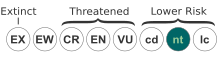
Near Threatened (IUCN 2.3)
Scientific classification
Kingdom:Plantae
(unranked):Angiosperms
(unranked):Eudicots
(unranked):Rosids
Order:Fabales
Family:Fabaceae
Subfamily:Faboideae
Genus:Dalbergia
Species:D. melanoxylon
Binomial name
Dalbergia melanoxylon
Guill & Perr.
Synonyms
  • Amerimnon melanoxylon (Guill. & Perr.) Kuntze
  • Amerimnon stocksii (Benth.) Kuntze
  • Dalbergia stocksii Benth.
It is a small tree, reaching 4–15 m tall, with grey bark and spiny shoots. The leaves are deciduous in the dry season alternate, 6–22 cm long, pinnately compound, with 6-9 alternately arranged leaflets. The flowers are white and produced in dense clusters. The fruit is a pod 3–7 cm long, containing one to two seeds.
Uses
The dense, lustrous wood, ranges from reddish to pure black. It is generally cut into small billets or logs with its sharply demarcated bright yellow white sapwood left on to assist in the slow drying so as to prevent cracks developing. Good quality "A" grade African blackwood commands high prices on the commercial timber market. The tonal qualities of African blackwood are particularly valued when used in woodwind instruments, principally clarinets, oboes, transverse flutes, piccolos, Highland pipes and Northumbrian pipes. The timber is used mainly because of its machinability and dimensional stability. Deering Banjo Company uses blackwood ("grenadilla") to construct the tone ring in its John Hartford model banjo. Deering indicates that this reduces weight versus brass/bronze tone rings, and that the wood "plays in" (improves in tone) with use. Furniture makers from the time of the Egyptians have valued this timber. A story states that it has even been used as ballast in trading ships and that some enterprising Northumbrian pipe makers used old discarded blackwood ballast to great effect. The German knife company Wüsthof [Zwilling J. A. Heckles] has also begun to sell a series of knives with blackwood handles due to the wood's moisture repellent qualities. Gresso, a cell phone manufacturer based in Russia, recently began selling luxury cell phones whose casing is made from African blackwood.
Grenadil-African Blackwood.jpg
Due to overuse, the mpingo tree is severely threatened in Kenya and is needing attention in Tanzania and Mozambique. The trees are being harvested at an unsustainable rate, partly because of illegal smuggling of the wood into Kenya, but also because the tree takes upwards of 60 years to mature.
Relation to other wood

  • African blackwood is no longer regarded as ebony, a name now reserved for a limited number of timbers yielded by the genus Diospyros: these are more of a matte appearance and are more brittle.
  • The genus Dalbergia yields other famous timbers such as Brazilian rosewood (Dalbergia nigra), Dalbergia cearensis and cocobolo (Dalbergia retusa).

Names

Other names by which the tree is known include babanus and grenadilla, which appear as loanwords in various local English dialects.

Conservation
There are multiple organisations involved in the conservation of African blackwood: the Mpingo Conservation & Development Initiative, the African Blackwood Conservation Project, and Clarinets for Conservation.
The Mpingo Conservation & Development Initiative (MCDI, formerly the Mpingo Conservation Project) is involved in research, awareness raising and practical conservation of African blackwood. Conservation of Mpingo and its natural habitat can be achieved by ensuring that local people living in mpingo harvesting areas receive a fair share of the revenue created, thus providing them with an incentive to manage the habitat in an environmentally friendly manner. In order to achieve this, the MCDI is helping communities to get Forest Stewardship Certification.
The African blackwood Conservation Project works around Mount Kilimanjaro replanting African blackwood trees, and in conservation education. It also works with adult and women's groups in the promotion of environmentally sound land uses
Clarinets for Conservation is based in Moshi, Tanzania and aims to raise awareness and promote conservation of Mpingo through music education. Students participate in an interdisciplinary program during the summer months that raises awareness of the value of Mpingo through musical performances, classroom instruction, and tree plantings at local secondary and primary schools.
Small growers in Naples, Florida, have been successful in growing African blackwood there. Growth habit in Florida yields taller, larger trees, and the rich soil combined with ample nutrients and long growing season yields timber of superior quality at more sustainable rates. Hopefully, ventures like this will be able to take strain off African reserves and allow this timber to be used in the future.
Footnotes

  1. ^ The Plant List: A Working List of All Plant Species, retrieved 12 December 2015
  2. ^ a b Amri, E.; Z.L. Kanyeka; H.V.M. Lyaruu; A.S. Nyomora (2009). "Evaluation of genetic diversity in Dalbergia elanoxylon populations using random amplified polymorphic DNA markers". Research Journal of Cell and Molecular Biology (INSInet Publication) 3 (2): 71–79.
  3. ^ Most Expensive Wood. June 22, 2009
  4. ^ World's Most Expensive Cell Phones. October 11, 2010
  5. ^ "Welcome". Mpingo Conservation & Development Initiative. Retrieved 2013-07-07.
  6. ^ "Home". African Blackwood Conservation Project. Retrieved 2013-07-07.
  7. ^ "Our Mission". Clarinets for Conservation. Retrieved 2013-07-07.

References and External Links


- Wikipedia 

Lacto-Ovo Vegetarian Meal Plans


Lacto-Ovo Vegetarian Meal Plans
Vegetarian meal. Photo Credit Eising/Photodisc/Getty Images
Lacto-ovo vegetarians exclude meat, fish and poultry from their diets, but include dairy and eggs, making it easier for them to meet their nutrient needs than vegans who don't consume eggs and dairy products. Following a lacto-ovo vegetarian diet can improve your health. A well-planned lacto-ovo vegetarian diet can reduce your risk of diabetes and heart disease, and help you maintain a healthy weight, according to the American Dietetic Association.

Whole Grains

Lacto-Ovo Vegetarian Meal Plans
Whole grain bread. Photo Credit Jupiterimages/Photos.com/Getty Images
When it comes to maintaining a healthy weight, calories count. The number of servings you should eat from each food group depends on your calorie needs. Talk to your doctor about how many calories you need each day. Most healthy adult men and women can maintain a healthy weight consuming 2,000 calories a day. On a 2,000-calorie diet, you should eat six servings of whole grains a day. Whole grains and serving sizes include one slice of whole wheat bread, 1/2 cup of cooked oatmeal, 1 cup of whole grain ready-to-eat cereal, five whole grain crackers, two rice cakes and 1/2 cup of brown rice or whole wheat pasta. Whole grains contain fiber, B vitamins and iron

Legumes and Soy

Lacto-Ovo Vegetarian Meal Plans
Soybeans. Photo Credit Petro Perutskyi/iStock/Getty Images
Legumes and soy products provide the lacto-ovo vegetarian with protein, iron, folate and fiber. Aim for three servings a day. A serving might include 1/2 cup of cooked beans, such as chickpeas or kidney beans, 1/2 cup of tofu or 1 cup of soy milk.


Vegetables

Lacto-Ovo Vegetarian Meal Plans
Kale. Photo Credit Stockbyte/Stockbyte/Getty Images
Vegetables provide vitamin C, vitamin A, potassium, folate and fiber. You need about eight servings of vegetables a day on a lacto-ovo vegetarian diet. One serving might include 1 cup of leafy greens, 1/2 cup of raw chopped vegetables or 1/2 cup of cooked vegetables. Healthy vegetable choices include kale, spinach, broccoli, cauliflower, green beans, peppers, sweet potatoes, cucumbers and mushrooms.

Fruits

Lacto-Ovo Vegetarian Meal Plans
Cut up cantaloupe melon. Photo Credit Viktar Malyshchyts/iStock/Getty Images
Fruit also contains vitamin C, vitamin A, potassium, folate and fiber. Include four servings of fruit a day in your lacto-ovo vegetarian meal plan. Healthy choices and serving sizes include a medium apple, orange or pear, 1 cup of strawberries or blueberries, 1 cup of cubed melon, 3/4 cup of 100 percent fruit juice and 1/4 cup of dried fruit.

Nuts and Seeds

Lacto-Ovo Vegetarian Meal Plans
Peanut butter on toast. Photo Credit Stockbyte/Stockbyte/Getty Images
Nuts and seeds contain protein, fiber and magnesium. Nuts also act as healthy sources of monounsaturated and polyunsaturated fats. Including more monounsaturated and polyunsaturated fats in your diet can help reduce your blood cholesterol levels. You can have one serving of nuts or seeds a day. Serving sizes include 1 ounce of nuts or 2 tablespoons of a nut butter.
Lacto-Ovo Vegetarian Meal Plans
Olive oil. Photo Credit Volosina/iStock/Getty Images
Oils also contain monounsaturated and polyunsaturated fats. Include two servings of oil in your lacto-ovo vegetarian meal plan. Healthy choices and serving sizes include 1 teaspoon of olive oil or other plant oil or 1/8 of an avocado.

Dairy Foods

Lacto-Ovo Vegetarian Meal Plans
Cottage cheese. Photo Credit Digital Vision./Photodisc/Getty Images
Dairy foods provide the lacto-ovo vegetarian with calcium, vitamin D and vitamin B12. You need about two servings of dairy foods a day on this diet. Choose low-fat or nonfat dairy foods to limit your intake of saturated fat. Eating too much saturated fat can increase your blood cholesterol levels. Dairy choices and serving sizes include 1 cup of low-fat or nonfat milk, 1 cup of low-fat or nonfat yogurt, 1 1/2 ounces of low-fat natural cheese and 1/2 cup of low-fat cottage cheese.

Eggs

Lacto-Ovo Vegetarian Meal Plans
Cooked egg on toast. Photo Credit Jupiterimages/Polka Dot/Getty Images
Eating eggs can help you meet your protein and iron needs. You need half of an egg a day on your lacto-ovo vegetarian diet. Because egg yolks are high in cholesterol, eating too many a week can increase your blood cholesterol levels.
www.livestrong.com

CALAMANDER WOOD

Calamander wood or Coromandel wood is a valuable wood from India, Sri Lanka (Ceylon) and South East Asia. It is of a hazel-brown color, with black stripes (or the other way about), very heavy and hard. It is also known as Macassar Ebony or variegated ebony and is closely related to genuine ebony, but is obtained from different species in the same genus; one of these is Diospyros quaesitaThwaites, from Sri Lanka. The name Calamander comes from the local sinhalese name, 'kalu-medhiriya', which means dark chamber; referring to the characteristic ebony black wood. It is used in furniture, Luthiery and for sculpture.
Macassar-Ebenholz.jpg
Coromandel wood has been logged to extinction over the last 2 to 3 hundred years and is no longer available for new work in any quantity. Furniture in coromandel is so expensive and so well looked after that even recycling it is an unlikely source. A substitute, Macassar Ebony, has similar characteristics and to the untrained eye is nearly the same but it lacks the depth of colour seen in genuine Coromandel.
bookmatched veneer

References

  • Webster's Revised Unabridged Dictionary, 1913.

In Literature
Coromandel Wood is referred to by Dame Edith Sitwell in her poem "Black Mrs Behemoth", part of "Façade", the grain of which, she likened to the rolling, curling smoke of a blown out candle.
- Wikipedia 

EBONOL

Ebonol is an artificial material similar to ebony (Diospyros crassiflora), a black wood from Africa, which sometimes includes grey streaks. Ebonol is commonly used in place of ebony in the construction of stringed instruments, like fretless bass fingerboards, because it is easy to work with and resistant to forming grooves from roundwound strings. Ebonol is technically known as "XXX Paper Phenolic", and is a paper-based high pressure laminate made from layers of black paper and phenolic resin.

- Wikipedia 

EBONY

Ebony is a dense black hardwood, most commonly yielded by several different species in the genus Diospyros. Ebony is dense enough to sink in water. It is finely-textured and has a very smooth finish when polished, making it valuable as an ornamental wood. The word ebony derives from the Ancient Egyptian hbny, via the Ancient Greek ἔβενος (ébenos), by way of Latin and Middle English.


Rough ebony

Species

Species of ebony include Diospyros ebenum (Ceylon ebony), native to southern India and Sri Lanka; Diospyros crassiflora (Gabon ebony), native to western Africa; and Diospyros celebica (Makassar ebony), native to Indonesia and prized for its luxuriant, multi-colored wood grain. Mauritius ebony, Diospyros tesselaria, was largely exploited by the Dutch in the 17th century. Some species in the genus Diospyros yield an ebony with similar physical properties, but striped rather than evenly black (Diospyros ebenum).

Uses

Ebony has a long history of use, with carved pieces having been found in Ancient Egyptian tombs. By the end of the 16th century, fine cabinets for the luxury trade were made of ebony in Antwerp.  The wood's dense hardness lent itself to refined moldings framing finely detailed pictorial panels with carving in very low relief (bas-relief), usually of allegorical subjects, or with scenes taken from classical or Christian history. Within a short time, such cabinets were also being made in Paris, where their makers became known as ébénistes, which remains the French term for a cabinetmaker.


Ebony label depicting the pharaoh Den, found in his tomb in Abydos, circa 3000 BC
Modern uses are largely restricted to small items, such as crucifixes and musical instrument parts, including black piano and harpsichord keys, violin, viola, mandolin, guitar, double bass, and cello fingerboards, tailpieces, pegs, chinrests and bow frogs. Many plectra, or guitar picks, are made from this black wood. Traditionally, the black pieces in chess sets were made from ebony, with rare boxwood or ivory being used for the white pieces. Modern East Midlands-style lace-making bobbins,  also being small, are often made of ebony and look particularly decorative when bound with brass or silver wire. Due to its strength, many handgun grips and rifle fore-end tips are made of ebony, as are the butts of pool cues.
As a result of unsustainable harvesting, many species yielding ebony are now considered threatened. Africa in particular has had most of its indigenous ebony cut down illegally, and for this reason it has become common for street traders to blacken lighter woods with shoe polish in an effort to make a sale.


Elephant carvings from Sri Lanka, made from ebony, in this case likely Gabon ebony (Diospyros crassiflora
Legal Penalties for Illegal Sales and Importation
In some countries like Sri Lanka, ebony is a protected species and selling of ebony logs is illegal (most often punishable by imprisonment), due to the wood's rarity and high price.
In 2012, the Gibson Guitar company was raided by the US Fish and Wildlife Service for violations of the Lacey Act of 1900, which prohibits the importation of threatened woods and other materials. Gibson had been buying illegally harvested hardwoods—such as the Madagascar ebony—from protected forests, and using the wood for their guitar fretboards.
Pete Lowry, ebony and rosewood expert at the Missouri Botanical Garden, calls the Madagascar wood trade the "equivalent of Africa's blood diamonds". 
References

  1. ^ "http://www.treehugger.com/corporate-responsibility/gibson-guitar-company-admits-using-illegal-rainforest-woods-settles-government.html".

External Links 

  • Red List —For recommendations found under the IUCN.

- Wikipedia 

EBONITE

Ebonite was a brand name for very hard rubber first obtained by Charles Goodyear by vulcanizing rubber for prolonged periods. For vulcanizing rubber he received patent number 3633 from the United States Patent Office On June 15, 1844. Besides natural rubber Ebonite contains about 25% to 80% sulfur and linseed oil. Its name comes from its intended use as an artificial substitute for ebony wood.
The material is known generically as hard rubber and has formerly been called "vulcanite", although that name now refers to the mineral vulcanite.
Ebonite applications from the 19th century
History 

Charles Goodyear's brother Nelson Goodyear experimented with the chemistry of ebonite composites. In 1851 he used zinc oxide as a filler.

Properties
The sulfur percentage and the applied temperatures and duration during vulcanizing are the main variables that determine the technical properties of the hard rubber polysulfide elastomer. The occurring reaction is basically addition of sulfur at the double bonds, forming intramoleculer ring structures, so a large portion of the sulfur is highly cross-linked in the form of intramoleculer addition. High sulfur content up to 40% may be used for greatest resistance to swelling and minimal dielectric loss. The strongest mechanical properties and greatest heat resistance is obtained with sulfur contents around 35%. Best impact strength is obtained with somewhat lower sulfur contents around 30%. The rigidity of hard rubber at room temperature is attributed to the van der Waals forces between the intramoleculer sulfur atoms. Raising the temperature gradually increases the molecular vibrations that overcome the van der Waals forces making it elastic. Hard rubber has a content mixture dependent density around 1.1 to 1.2. When reheated hard rubber exhibits shape-memory effect and can be fairly easy reshaped within certain limits. Depending on the sulfur percentage hard rubber has a thermoplastic transition or softening temperature of 70 to 80 °C (158 to 176 °F).
The material is brittle, which produces problems in its use in battery cases for example, where the integrity of the case is vital to prevent leakage of sulfuric acid. It has now been generally replaced by carbon black, filled polypropylene.
Schematic presentation of two strands (blue and green) of natural rubber after vulcanization with elemental sulfur
Under the influence of the ultraviolet portion in daylight hard rubber oxidizes and exposure to moisture bonds water with free sulfur on the surface creating sulfuric acid at the surface. These aging processes will gradually discolor the surface grayish green to brown and cause rapid deterioration of electric surface resistivity.
Contamination

Ebonite contamination was problematic when it was used for electronics. The ebonite was rolled between metal foil sheets, which were peeled off, leaving traces of metal behind. For electronic use the surface was ground to remove metal particles.

Applications
Hard rubber was used in early 20th century bowling balls, however was phased out in favor of other materials (the Ebonite name remains as a trade name for one of the major manufacturers of polymer balls). It has been used in electric plugs, smoking pipe mouthpieces (in competition with lucite), fountain pen bodies and nib feeds, saxophone and clarinet mouthpieces as well as complete humidity-stable clarinets (barrels/upper & lower joints/bells). Hard rubber is often seen as the wheel material in casters. It is also commonly used in physics classrooms to demonstrate static electricity because it is at or near the negative end of the triboelectric series.
Green/black rippled ebonite fountain pen made in 2014
Hard rubber was used in the cases of automobile batteries for years, thus establishing black as their traditional colour even long after stronger modern plastics like polypropylene were substituted. It was used famously for many decades in hair combs made by Ace, now part of Newell Rubbermaid, although the current models are known to be produced solely with plastics. (An easy way to identify a hard rubber comb is to rub part of its surface vigorously, then immediately smell the comb. Hard rubber's scent, resulting from the sulfur in the ebonite, can usually be detected temporarily. The same effect can often be produced by running the comb under hot tap water.) Ebonite is used as an anticorrosive lining for various (mainly storage) vessels that contain hydrochloric acid. It forms bubbles when storing hydrofluoric acid at temperatures above room temperature, or for prolonged durations.
References

  1. ^ United States Patent Office, patent number 3633, Improvement in India-rubber Fabrics.
  2. ^ Hartgummi (Ebonite) (German).
  3. ^ eboDUST Ebonite/Hard-rubber dust.
  4. ^ Merriam-Webster (2002) [1961], "vulcanite", Webster's Third New International Dictionary, Unabridged (Springfield, Massachusetts, USA: Merriam-Webster).
  5. ^ Seymour, Raymond Benedict; Deaning, Rudolph D. (1987). History of Polymeric Composites. VSP. p. 374.
  6. ^ "Care of Objects Made from Rubber and Plastic - CCI Notes 15/1. CCI Notes Series 15 (Modern Materials and Industrial Collections). Canadian Conservation Institute. Retrieved August 28, 2015.
  7. ^ "Bowling Balls: An In-Depth Overview. Bowling This Month. Retrieved August 29,2015.
  8. ^ Craven, Leslie. "Ridenour Clarinets - Lyrique in A and B-flat. A review. Leslie Craven. Retrieved August 28, 2015.

- Wikipedia 

CREPE RUBBER

Crepe rubber is coagulated latex that is rolled out in crinkled sheets, commonly used to make soles for shoes and boots but is also a raw material for further processed rubber products.


Latex collection from a rubber tree

Processing

Colloidal latex is first mixed with formic acid to cause it to coagulate. The coagulum is processed in a "creping battery", a series of machines that crush, press and roll the coagula. The sheets are hung in a heated drying shed and then sorted by grade and packed for shipping

Types

There are several types and grades of rubber crepe, mainly distinguished by the grade and pre-processing of the latex used in their manufacture.
  • Pale latex crepe (PLC) is a premium grade, made from raw field latex.
  • Estate brown crepe (EBC) is made from "cup lump" (raw, naturally coagulated rubber from the collection cup) and other coagulum.
  • Re-milled crepe is made from "wet slab coagulum" (cured latex, still wet from the coagulation tanks), latex sheets (unsmoked) and cup lump.
  • Smoked blanket crepe is made from thick sheets of latex that have been processed in a smoker.
  • Flat bark crepe is made from scraps and other poor quality raw product.
References

  1. ^ Cecil, John; Mitchell, Peter; Diemer, Per; Griffee, Peter (2013). "Processing of Natural Rubber, Manufacture of Latex-Grade Crepe Rubber". ecoport.org. FAO, Agricultural and Food Engineering Technologies Service. Retrieved March 19, 2013.

- Wikipedia 

Advantages and Disadvantages of Fasting for Runners

Author BY   ANDREA CESPEDES  Food is fuel, especially for serious runners who need a lot of energy. It may seem counterintuiti...