Blog List

Monday, 6 March 2017

The Effect of Organizational Practices on Supply Chain Agility: An Empirical Investigation on Malaysia Manufacturing Industry

Published Date
Procedia - Social and Behavioral Sciences
2012, Vol.40:274281doi:10.1016/j.sbspro.2012.03.191
ASIA PACIFIC BUSINESS INNOVATION AND TECHNOLOGY MANAGEMENT SOCIETY
Open Access, Creative Commons license

Author 
  • Inda Sukati a,,,
  •  
  • Abu Bakar Hamid a
  •  
  • Rohaizat Baharun a
  •  
  • Rosman Md Yusoff a
  •  
  • Melati Ahmad Anuar a
  • aFaculty of Management and Human Resourse Development Universiti Teknologi Malaysia, UTM Skudai Malaysia


Abstract

The aim of this study is to investigate the relationship between organizational practices and supply chain agility. Data collection instrument used was a questionnaire which was administrated to a total sample of 150 executive officers, directors, presidents, vice presidents, managers, and senior staff from 40 manufacturing firms in Malaysia. In order to contact of respondent in efficient and cost effective manner, it was decide to distribute questionnaires to respondents through mail. The response rate was 70% while 63% was usable questionnaires. Sample selection was based on convenience sampling. The data were analyzed using mean, standard deviation and correlation between independent and dependent variables. The analyses involved statistical methods such as reliability and validity tests and multiple regressions. The finding showed that supply organizational practices have a significant relationship with supply chain agility. This research also shows that supporting technology moderate the relationship between organizational practices and supply agility do exist.

Keywords

  • organizational practices
  • manufacturing industry
  • supply chain agility

  • supporting technology


  • References

      • [2]
      • A. Chandrashekar
      • Toward the Virtual Supply Chain: The Convergence of IT and Organization”
      • The International Journal of Logistics ManagementVolume 10Issue 21999pp. 27–39
      • [3]
      • Lee. Chang WongG. Ik-WhanKwonDennis Severance
      • Relationship between supply performance and degree of linkage among supplier
      • internal integration, and customer”, Supply chain management: an International journal2007pp. 444–452
      • [5]
      • M.T. FrohlichR. Westbrook
      • Arcs of integration: an international study of supply chain strategies”
      • Journal of Operations Management;Volume 19Issue 22000pp. 185–200
      • [6]
      • R.B. HandfieldE.L. Nichols
      • Introduction to Supply Chain Management”
      • 1999Prentice-Hall, Upper Saddle River,NJ
      • [8]
      • D.M. LambertM.C. CooperJ.D. Pagh
      • Supply chain management: Implementation issues and research opportunities
      • International Journal of Logistics ManagementVolume 9Issue 21998pp. 1–19
      • [9]
      • J. MichaelBraunscheidel
      • Antecedents of Supply Chain Agility: An Empirical Investigation: published PhD Thesis. School of Management University of Buffalo the State University of New York;2005
      • [11]
      • E. PraterM. BiehlM.A. Smith
      • International supply chain agility Tradeoffs between flexibility and uncertainty
      • International Journal of Operations and Production ManagementVolume 21Issue 5/62001pp. 823–839
      • [12]
      • D.J. PowerA.S. Sohal
      • Critical success factors in agile supply chain management: an empirical study
      • International Journal of Physical Distribution and Logistics ManagementVolume 31Issue 42001pp. 247–265
      • [13]
      • E.D. RosenzweigA.V. RothJ.J.W. Dean
      • The influence of an integration strategy on competitive capabilities and business performance: An exploratory study of consumer products manufacturers”
      • Journal of Operations Management;Volume 212003pp. 437–456
      • [14]
      • J. Stevens
      • Integrating the supply chain. International Journal of Physical Distribution and Materials ManagementVolume 19Issue 81989pp. 3–8
      • [15]
      • Iwan. Sudrajat
      • Supply chain integration practices in the U. S. electronic industry”
      • published Doctoral Dissertation Portland State University2007
      • [16]
      • R.I. van HoekA. HarrisonM. Christopher
      • Measuring agile capabilities in the supply chain. International Journal of Operations and Production ManagementVolume 21Issue 1/22001pp. 126–147
      • [17]
      • G. VastagJ. KasardaT. Boone
      • Logistical support for manufacturing agility in global markets
      • International Journal of Operations and Production ManagementVolume 14Issue 111994pp. 73–85
      • [20]
      • D. Lewicka
      • Creating Innovative Attitudes in an Organisation – Comparative Analysis of Tools Applied in IBM Poland and ZPAS Group
      • Journal of Asia Pacific Business Innovation and Technology Management.Volume 1Issue 12011pp. 1–12

    • ⁎ 
      Corresponding author. Tel.: +607 553 5140; fax: +607 556 6911.
    Copyright © 2012 Published by Elsevier Ltd.
    For further details log on website :
    http://www.sciencedirect.com/science/article/pii/S1877042812006581

    New satellite data will help farmers facing drought

    Date: August 20, 2014
    Source:
    NASA/Jet Propulsion Laboratory
    Summary:
    NASA's Soil Moisture Active Passive (SMAP) satellite mission, scheduled to launch this winter, will collect the kind of local data agricultural and water managers worldwide need. SMAP uses two microwave instruments to monitor the top 2 inches (5 centimeters) of soil on Earth's surface. Together, the instruments create soil moisture estimates with a resolution of about 6 miles (9 kilometers), mapping the entire globe every two or three days.
    Share:
    FULL STORY

    California has been experiencing one of its driest years on record.
    Credit: NASA Earth Observatory
    About 60 percent of California is experiencing "exceptional drought," the U.S. Drought Monitor's most dire classification. The agency issued the same warning to Texas and the southeastern United States in 2012. California's last two winters have been among the driest since records began in 1879. Without enough water in the soil, seeds can't sprout roots, leaves can't perform photosynthesis, and agriculture can't be sustained.
    Currently, there is no ground- or satellite-based global network monitoring soil moisture at a local level. Farmers, scientists and resource managers can place sensors in the ground, but these only provide spot measurements and are rare across some critical agricultural areas in Africa, Asia and Latin America. The European Space Agency's Soil Moisture and Ocean Salinity mission measures soil moisture at a resolution of 31 miles (50 kilometers), but because soil moisture can vary on a much smaller scale, its data are most useful in broad forecasts.
    Enter NASA's Soil Moisture Active Passive (SMAP) satellite. The mission, scheduled to launch this winter, will collect the kind of local data agricultural and water managers worldwide need.
    SMAP uses two microwave instruments to monitor the top 2 inches (5 centimeters) of soil on Earth's surface. Together, the instruments create soil moisture estimates with a resolution of about 6 miles (9 kilometers), mapping the entire globe every two or three days. Although this resolution cannot show how soil moisture might vary within a single field, it will give the most detailed maps yet made.
    "Agricultural drought occurs when the demand for water for crop production exceeds available water supplies from precipitation, surface water and sustainable withdrawals from groundwater," said Forrest Melton, a research scientist in the Ecological Forecasting Lab at NASA Ames Research Center in Moffett Field, California.
    "Based on snowpack and precipitation data in California, by March we had a pretty good idea that by summer we'd be in a severe agricultural drought," Melton added. "But irrigation in parts of India, the Middle East and other regions relies heavily on the pumping of groundwater during some or all of the year." Underground water resources are hard to estimate, so farmers who rely on groundwater have fewer indicators of approaching shortfalls than those whose irrigation comes partially from rain or snowmelt. For these parts of the world where farmers have little data available to help them understand current conditions, SMAP's measurements could fill a significant void.
    Some farmers handle drought by changing irrigation patterns. Others delay planting or harvesting to give plants their best shot at success. Currently, schedule modifications are based mostly on growers' observations and experience. SMAP's data will provide an objective assessment of soil moisture to help with their management strategy.
    "If farmers of rain-fed crops know soil moisture, they can schedule their planting to maximize crop yield," said Narendra Das, a water and carbon cycle scientist on SMAP's science team at NASA's Jet Propulsion Laboratory in Pasadena, California. "SMAP can assist in predicting how dramatic drought will be, and then its data can help farmers plan their recovery from drought."
    "Scientists see tremendous potential in SMAP," Melton said. "It is not going to provide field-level information, but it will give very useful new regional observations of soil moisture conditions, which will be important for drought monitoring and a wide range of applications related to agriculture. Having the ability provided by SMAP to continuously map soil moisture conditions over large areas will be a major advance."
    For more information about SMAP, visit: http://smap.jpl.nasa.gov/
    NASA monitors Earth's vital signs from land, air and space with a fleet of satellites and ambitious airborne and ground-based observation campaigns. NASA develops new ways to observe and study Earth's interconnected natural systems with long-term data records and computer analysis tools to better see how our planet is changing. The agency shares this unique knowledge with the global community and works with institutions in the United States and around the world that contribute to understanding and protecting our home planet.
    For more information about NASA's Earth science activities in 2014, visit: http://www.nasa.gov/earthrightnow

    Story Source:
    Materials provided by NASA/Jet Propulsion LaboratoryNote: Content may be edited for style and length.

    Cite This Page:
    NASA/Jet Propulsion Laboratory. "New satellite data will help farmers facing drought." ScienceDaily. ScienceDaily, 20 August 2014. <www.sciencedaily.com/releases/2014/08/140820172537.htm>.


    For further details log on website :
    https://www.sciencedaily.com/releases/2014/08/140820172537.htm?utm_source=TrendMD&utm_medium=cpc&utm_campaign=ScienceDaily_TrendMD_1

    A Sustainable Partnership Model among Supply Chain Players in Wooden Furniture Industry Using Goal Programming

    Published Date
    Agriculture and Agricultural Science Procedia
    2015, Vol.3:154158doi:10.1016/j.aaspro.2015.01.030
    International Conference on Agro-industry (IcoA): Sustainable and Competitive Agro-industry for Human Welfare Yogyakarta-INDONESIA 2014
    Open Access, Creative Commons license

    Author 
    • Muh. Hisjam a,b,,
    •  
    • Adi Djoko Guritno c
    •  
    • Nunuk Supriyatno c
    •  
    • Shalihuddin Djalal Tandjung c
    • aPh. D Candidate in Environmental Science, The Graduate School, Gadjah Mada University, Jl. Teknika Utara, Yogyakarta 55281, Indonesia
    • bDepartment of Industrial Engineering, Fac. of Engineering, Sebelas Maret University, Jl. Ir. Sutami 36A, Surakarta 57126, Indonesia
    • cThe Graduate School, Gadjah Mada University, Jl. Teknika Utara, Yogyakarta 55281, Indonesia

    Abstract

    Sustainability in industry is very important. Hence we proposed a partnership of sustainable model among supply chain three players and proposed 13 goals in the model. We used goal programming to achieve the goals. To illustrate the model, we conducted a numerical trial based on our observations in export oriented wooden furniture industry in Central Java, Indonesia and we gave different weightings among the goals. The results show that more weighting to social or environmental makes better goal achievements in almost all goals than the results achieved from the same weighting or the more weighting only to the economic aspects.

    Keywords

  • sustainable partnership model
  • wooden furniture industry
  • goal programming
  • supply chain

  • sustainability;


  • References

      • Armstrong, 2004
      • Armstrong, G.W., 2004. Sustainability of Timber Supply Considering the Risk of Wildfire, Forest Science 50: 5, 626-639.
      • Casson and Obidzinski, 2002
      • Casson, A., Obidzinski, K., 2002. From New Order to Regional Autonomy: Shifting Dynamics of “Illegal” Logging in Kalimantan, Indonesia. World Development 30: 12, 2133-2151.
      • Emerging Markets Group, 2006
      • Emerging Markets Group (EMG), 2006. EU Furniture Market Study – Summary, USAID : The United States Agency for International Development, http://pdf.usaid.gov/pdf_docs/PNADH793.pdf, retrieved on 24 Maret 2011.
      • Ewasechko, 2005
      • Ewasechko, A.C., 2005. Upgrading the Central Java Wood Furniture Industry: A Value-Chain Approach, International Labor Organization.
      • Guritno and Murao, 1999
      • Guritno, A.D., Murao, K., 1999. The Observation of Log Export Banning Policy in Indonesia: Conditions, Problems, and Alternative Solutions, J. For. Res. 4, 79-85.
      • Hisjam et al., 2010
      • Hisjam, M., Ota, I., Guritno, A.D., Simon, H., Tandjung, S.D., 2010. Comparing the Practices of Forest Product Certification between Perum Perhutani And Yusuhara Forest Owner's Cooperative, 3rd Gadjah Mada – Ehime Network International Seminar : Sustainable Bio-resources for Global Welfare, August 7-8, Nusa Dua Beach Hotel, Bali, Indonesia, 85-92.
      • Hisjam et al., 2011
      • Hisjam, M., Guritno, A.D., Simon, H., Tandjung, S.D., 2011. A Framework for The Development of Sustainable Supply Chain Management for Business Sustainability of Export-Oriented Furniture Industry in Indonesia (A Case Study of Teak Wooden Furniture in Central Java Province), 1st International Conference on Industrial Engineering and Service Science”, 20-21 September, Hotel Lor In, Solo, 285-290.
      • Hisjam et al., 2012a
      • Hisjam, M., Guritno, A.D., Tandjung, S.D., 2012a. The Development of Sustainable Supply Chain Model of The Relationship between Wood Supplier with Furniture Industry in Indonesia”, Teknosains 1: 2, 115-125.
      • Hisjam et al., 2012b
      • Hisjam, M., Guritno, A.D., Supriyatno, N., Tandjung, S.D., 2012b. A Sustainable Supply Chain Model of Manufacturer-Buyer Relationship in Export Oriented Furniture Industry in Indonesia”, Civil and Environmental Research 2: 5, 1-10.
      • Hahn and Kühnen, 2013
      • Hahn, R., Kühnen, M., 2013. Determinants of sustainability reporting: a review of results, trends,theory, and opportunities in an expanding field of research, Journal of Cleaner Production 59, 5-2.
      • Loebis and Schmitz, 2005
      • Loebis, L., Schmitz, H., 2005. Java furniture makers: Globalisation winners or losers?, Development in Practice 15: 3 & 4, 514-521.
      • Teuteberg and Wittstruck, 2010
      • Teuteberg, F., and Wittstruck, D., 2010. A systematic review of sustainable supply chain management. Multikonferenz Wirtschaftsinformatik 2010, 203.
      • United, 2005
      • United Nations General Assembly, 2005 World Summit Outcome, Resolution A/60/1, Retrieved on: 2014-06-24.

    • Peer-review under responsibility of Jurusan Teknologi Industri Pertanian, Fakultas Teknologi Pertanian, Universitas Gadjah Mada.
    • ⁎ 
      Corresponding author. Tel.: +6-227-163-2110; fax: +6-227-163-2110.
    For further details log on website :
    http://www.sciencedirect.com/science/article/pii/S2210784315000315

    Determinants of Residential Solid Waste Management Services Provision: A Village-Level Analysis in Rural China

    Sustainability 20179(1), 110; doi:10.3390/su9010110

    Author

     1
     2, and  3

    1
    Institute of Poyang Lake Eco-Economics, Jiangxi University of Finance and Economics, Nanchang 330013, China
    2
    College of Economics and Management, Nanjing Agricultural University, Nanjing 210095, China
    3
    China Academy of Rural Development, Zhejiang University, No. 388 Yuhangtang Road, Hangzhou 310058, China
    *
    Author to whom correspondence should be addressed. 
    Academic Editors: Yongrok Choi, Malin Song and Seunghwan Myeong
    Received: 30 November 2016 / Revised: 9 January 2017 / Accepted: 10 January 2017 / Published: 13 January 2017
    View Full-Text   |     Download PDF [981 KB, uploaded 13 January 2017]   |    
     

    Abstract 

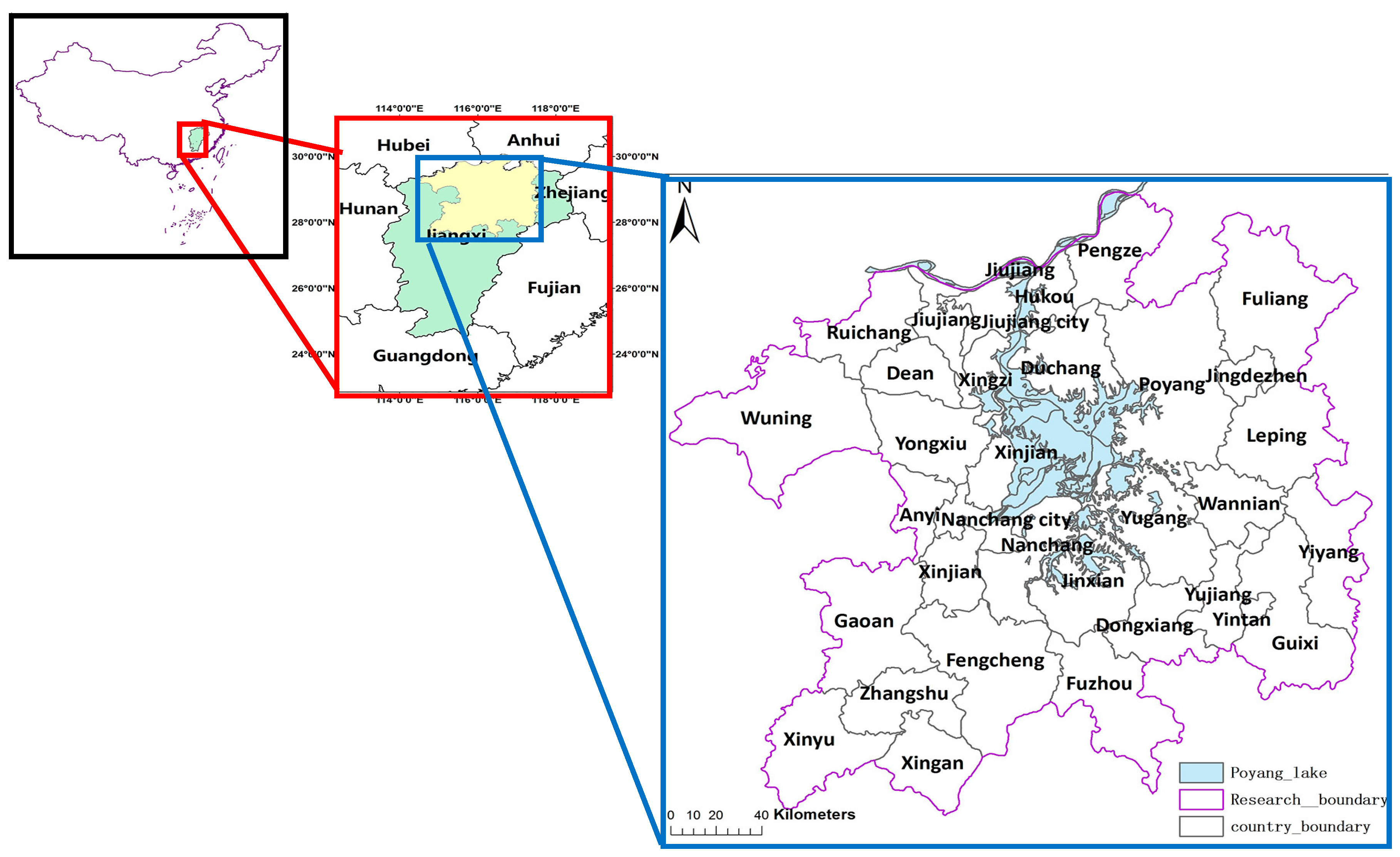
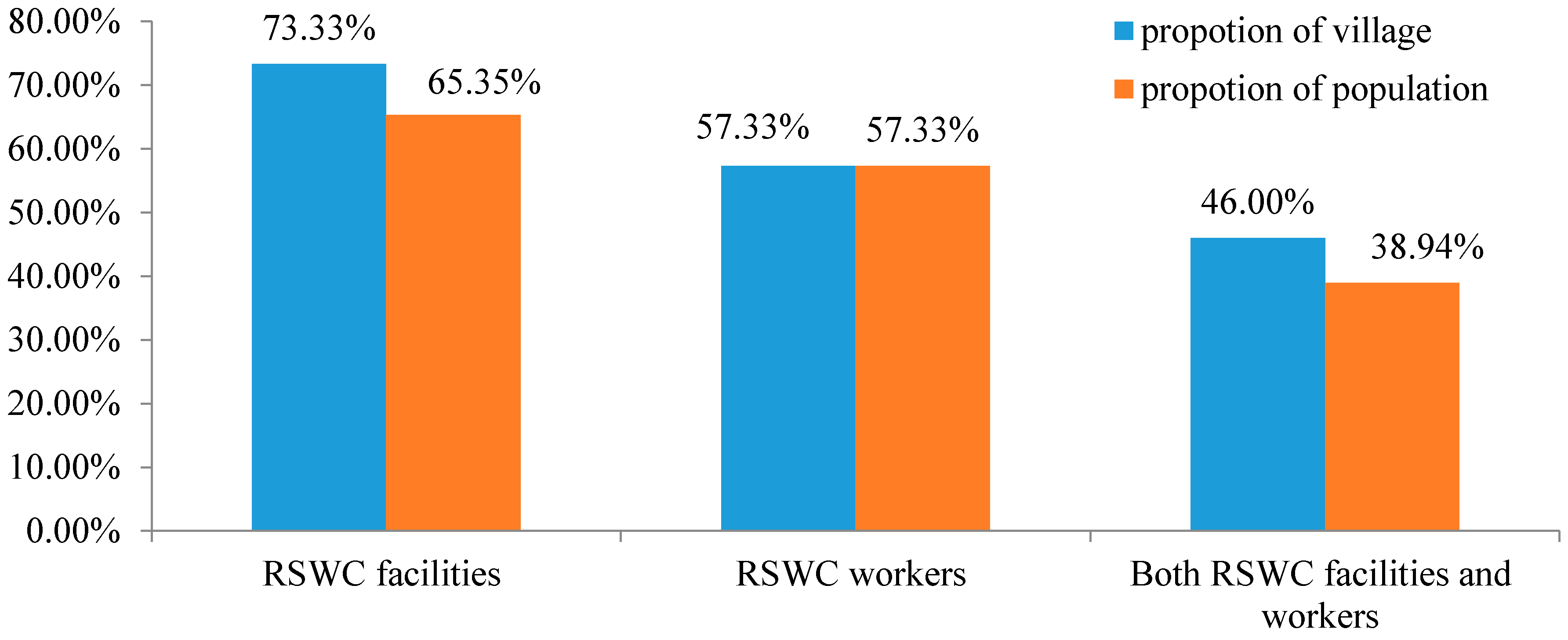
    Providing residential solid waste collection (RSWC) services is the first and most indispensable part of residential solid waste management and is crucial for rural environment protection. This paper seeks to analyze the determinants of RSWC services’ provision at the village level, based on a latest survey data set of 150 villages in the Poyang Lake Eco-Economic Zone (PLEEZ) in Jiangxi Province. Using a Probit regression model and a Bivariate Probit regression model, our results indicated that: (1) The provision of RSWC services is not evenly distributed and richer villages have more RSWC services; (2) A showcasing phenomenon exists in the provision of RSWC services. Villages that are more populous, nearer to the township government, and located in the new countryside and old liberated areas saw an increase in the provision of RSWC facilities, services that will more easily showcase village leaders’ political achievement, while the provision of RSWC workers and both RSWC facilities and workers, services that will less easily showcase village leaders’ political achievement, do not increase in these villages; (3) Informal governance characteristics, such as the ratio of largest family clans, whether village leaders come from the village’s largest family clans, and the number of people working in the upper-level government have strong predictive power over the provision of RSWC services, while formal governance characteristics, such as elections, do not matter in RSWC services’ provision. View Full-Text
     Figures

    Figure 1
    This is an open access article distributed under the Creative Commons Attribution License which permits unrestricted use, distribution, and reproduction in any medium, provided the original work is properly cited. (CC BY 4.0).

    For further details log on website :
    http://www.mdpi.com/2071-1050/9/1/110

    Advantages and Disadvantages of Fasting for Runners

    Author BY   ANDREA CESPEDES  Food is fuel, especially for serious runners who need a lot of energy. It may seem counterintuiti...