Blog List

Tuesday, 1 March 2016

Do Malt Beverages Have Gluten?

Gluten is a protein found in many different grains, including wheat, rye, oats and barley. Individuals who develop an allergy to gluten -- a condition called celiac disease -- are unable to consume foods containing this protein without enduring gastrointestinal pain, including diarrhea in some cases. Consequently, individuals with a gluten allergy need to monitor what they consume and avoid gluten-bearing products. This includes malt beverages.
Do Malt Beverages Have Gluten?
Malt is an ingredient in many beers and is made from barley, a gluten-bearing food. Photo Credit Shaiith/iStock/Getty Images

Malt Origin

Malt is a product of barley, which features gluten. Malt is used in a variety of foods but is commonly used as an ingredient in beer. Some beers may feature only malt, while others might features a mix of malt and hops in varying proportions. Barley grains are soaked in water to germinate. From there they are taken to be used in various foods.

Presence of Gluten

The potential for gluten to be present in foods is a considerable threat to the health of anyone with celiac disease. Unfortunately, there is no way for malt beverages to have gluten extracted from them -- any nutrition label listing malt as an ingredient indicates a food that is not safe for consumption if you need to avoid gluten.
Risks
Many different health risks accompany gluten consumption for individuals with celiac disease. Bloating, stomach pain and diarrhea are common, as is irritability. Over time the gluten will destroy the lining of your small intestines, weakening the organ's ability to absorb important nutrients from food. Chronic gluten consumption could cause you to lose weight. If the consequences of celiac disease are ignored for too long the damage done to your organs can be permanent. Extreme allergies to gluten could resul in hives, itching, swelling, sneezing and rashes, followed by difficulty breathing, unconsciousness and even death, according to Drugs.com.

Considerations

If you are not able to drink malt beverages, there are still several alternatives. Certain alcoholic beverages do not contain malt, barley or other gluten-bearing products and are safe for people with celiac disease. Hard ciders that do not feature caramel coloring are safe, as are sorghum beers. If you are unsure of the safety of a beverage and/or whether it features malt in it, consult your doctor or a list of gluten-free foods.
www.livestrong.com

CORD (UNIT)

The cord is a unit of measure of dry volume used to measure firewood and pulpwood in the United States and Canada.
A cord is the amount of wood that, when "racked and well stowed" (arranged so pieces are aligned, parallel, touching and compact), occupies a volume of 128 cubic feet (3.62 m3). This corresponds to a well-stacked woodpile 4 feet (122 cm) high, 8 feet (244 cm) long, and 4 feet (122 cm) deep; or any other arrangement of linear measurements that yields the same volume.


A cord of wood
The name cord probably comes from the use of a cord or string to measure it.
Definitions
In Canada, the cord is legally defined by Measurement Canada.  The cord is one of three legal standards for the sale of firewood in Canada (stacked cubic metre, cubic foot, and cord). However the stacked cubic metre is now the preferred unit of measurement.
In the United States, the cord is defined by statute in most states. The U.S. National Institute of Standards and Technology Handbook 130, section 2.4.1.2, defines a cord and provides uniform regulations for the sale of fireplace and stove wood. In the metric system, wood is usually measured in steres and cubic metres : 1 stere = 1 m3 ≈ 0.276 cords.
Maine appears unique among U.S. states by also defining a "loose thrown cord" or pile of cut firewood: "A cord of 12 or 16 inches (30 or 41 cm) in length shall mean the amount of wood, bark and air contained in a space of 180 cubic feet (5.1 m3); and a cord of wood 24 inches (61 cm) in length shall mean the amount of wood, bark and air contained in a space of 195 cubic feet (5.5 m3). [1981, c. 219 (amd).]"
Other non-official terms for firewood volume include standing cordkitchen cordrunning cordface cordfencing cordcountry cordlong cord, and rick all subject to local variation. These are usually taken to mean a well-stacked pile of wood in which the logs are shorter or longer than in a legal cord, to accommodate various burners. For example, a face cord commonly consists of wood that is 16 inches (41 cm) long. The volume of a face cord therefore is 1/3 of the volume of a full cord even though it is 8 feet (244 cm) long and 4 feet (122 cm) high. A face cord is also called a rick in Midwestern United States.
The term is used in other English-speaking countries, such as New Zealand, but may not have a legal definition.
Heating Value

One seasoned (dry) cord of red oak (22.1 MBtu per cord) (million British thermal units per cord) has the heating equivalent of 159 US gallons (132 imperial gallons; 602 litres) of fuel oil (138,700 Btu per Gal).

References

  1. ^ British Columbia Ministry of Forests and Range. "Glossary of Forestry Terms in British Columbia"(pdf). Retrieved 2008-09-04.
  2.  Oxford English Dictionary
  3. ^ Measurement Canada (2014). "Buying Firewood? Don’t Get Burned".
  4. ^ NIST, Weights and Measures Division (2006). "Uniform Laws and Regulations in the Areas of Legal Metrology and Engine Fuel Quality. NIST Handbook 130 - 2006 Edition. Retrieved 2008-09-04.
- Wikipedia 

WOODLOTS

woodlot is a term used in North America to refer to a segment of a woodland or forest capable of small-scale production of forest products such as wood fuel, sap for maple syrup, sawlogs, as well as recreational uses like bird watching, bushwalking and wildflower appreciation. In Britain a woodlot would be called a wood, woodland or coppiceswhich.
Many woodlots occur as part of a larger farm or as buffers and undevelopable land between these and other property types such as housing subdivisions industrial forests, or public properties (highways, parks,  watersheds, etc.). Very small woodlots can occur where a subdivision has not met its development potential, or where terrain does not easily permit other uses. Very large woodlots (hundreds of acres) might emerge where profitable wood species have been depleted by commercial logging practices or compromised by diseases, leaving little choice but to divide and liquidate the real estate for other purposes.
One distinguishing characteristic of a woodlot is that the parcel size or quality of wood on the parcel does not generally justify full-scale commercial harvesting, leaving many woodlots as private investments by individuals. On the other hand, good forest management practices, even on a small scale, may create a sustainable source of products, which can significantly contribute to the aggregate inventory available to forest-product consumers.
Woodlots Economic
A woodlot of a generally non-commercial nature, may make it difficult to justify the expense of ownership, capital equipment, management and harvesting, unless some revenue can be added to the intangible benefits.
Some jurisdictions encourage woodlots (over subdivisions) by providing property tax reductions (see, e.g., Current use) or by subsidized consulting and management plans. For example, a state or provincial government may recognize the important contributions that small, non-industrial land owners make to conservation of natural resources, and provide administrative tools, information and even funding.
There may also be income tax advantages for those who are able to operate their woodlot as a small business, or even as a passive investment (e.g., capital equipment depreciation, inventory depletion and operating expense deductions).
Depending on soils, aspect,  parcel size and plant species and age, a properly managed woodlot might provide sufficient firewood annually for heating a number of local homes, as well as sawlogs and poles for periodic construction or repair of out-buildings. In fact, some states (including New Hampshire) grant woodlot owners an exemption from harvest "yield taxes" otherwise payable on limited quantities taken for personal use. A suitably capable and equipped woodlot owner may enjoy doing the work himself (simple forestry, road-building, selective logging, firewood processing, etc.). Others might prefer sharing the costs with similarly situated neighbors to have several adjacent parcels managed simultaneously by local loggers. Otherwise, hiring professionals to reap small quantities of firewood may be too expensive to be cost-effective.
With the relatively high cost of fossil fuels for heating, a personal woodlot may be held as a biomass energy "savings account". When fuel prices go up, the woodlot pays for itself by providing firewood. When fuel prices go down, the woodlot can be left to mature, or managed for improved output of other products with an eventual higher profit.
However, because of the slow nature of tree growth (for most valuable firewood trees), the profitability of many woodlots must be viewed as a long-term investment, with 20 to 50 years of management necessary before harvesting at a profit. Furthermore, in areas undergoing development, market pressures may ultimately result in poorly managed woodlots being sold and subdivided, often merely because property taxes become unbearable.
- Wikipedia 

BY-PRODUCTS

by-product is a secondary product derived from a manufacturing process or chemical reaction. It is not the primary product or service being produced. In the context of production, a by-product can be defined as the 'output from a joint production process that is minor in quantity and/or net realizable value (NVR) when compared to the main products'. Because they are deemed to have no influence on reported financial results, by-products do not receive allocations of joint costs. By-products also by convention are not inventoried, but the NRV from by-products is typically recognized as 'other income' or as a reduction of joint production processing costs when the by-product is produced. 
A by-product can be useful and marketable or it can be considered waste.
IEA offers the following definition for the purpose of life-cycle assessment : 
... main products, co-products (which involve similar revenues to the main product), by-products (which result in smaller revenues), and waste products (which provide little or no revenue).

Animals Sources

  • blood meal – from slaughterhouse operations
  • poultry by-product meal – clean parts of the carcass of slaughtered poultry, such as necks, feet, undeveloped eggs, and intestines
  • chrome shavings – from a stage of leather manufacture
  • collagen and gelatin – from the boiled skin and other parts of slaughtered livestock
  • feathers - from poultry processing
    • feather meal –from poultry processing
  • fetal pigs
  • lanolin – from the cleaning of wool
  • leather - hides and skins from slaughterhouse operations processed via the leathermaking process
  • manure – from animal husbandry
  • meat and bone meal – from the rendering of animal bones and offal 
  • poultry litter – swept from the floors of chicken coops
  • whey - from cheese manufacturing

Vegetation

  • acidulated soap stock - from the refining of vegetable oil
  • bagasse – the fibrous residue remaining after sugarcane or sorghum stalks are crushed to extract their juice
  • black liquor from the production of cellulose pulp using the kraft process
  • bran  and germ - from the milling of whole grains into refined grains
  • brewer's yeast – from ethanol fermentation
  • cereal food fines – from breakfast cereal processing
  • corn steep liquor – from corn wet-milling
  • distillers grains – from ethanol fermentation
  • glycerol – from the production of biodiesel
  • grape seed oil – recovered from leftovers of the winemaking process
  • molasses - from sugar refining
  • orange oil and other citrus oils – recovered from the peels of processed fruit
  • pectin – recovered from the remains of processed fruit
  • sawdust and bark – from the processing of logs into lumber
  • soybean meal  – from soybean processing
  • stover  – residual plant matter after harvesting of cereals
  • straw -  from grain harvesting
  • tall oil from the production of cellulose pulp using the Kraft process
  • vinasse – from the fermentation of sugar to ethanol fuel

Minerals and Petrochemicals

  • asphalt - from the refining of crude oil
  • fly ash – from the combustion of coal
  • slag – from ore refining
  • gypsum – from flue-gas desulfurization
  • helium - from natural gas extraction
  • ash and smoke – from the combustion of fuel
  • mineral oil -  from refining crude oil to produce gasoline
  • salt - from desalination
  • Molybdenum - from copper extraction

Other

  • sludge – from wastewater treatment
  • waste heat - from electricity production and usage
  • carbon dioxide - process of burning

References

  1. ^ Wouters, Mark; Selto, Frank H.; Hilton, Ronald W.; Maher, Michael W. (2012): Cost Management: Strategies for Business Decisions, International Edition, McGraw-Hill, p. 535.
  2. ^ World Trade Organization (2004): United States - Final dumping determination on softwood lumber from Canada, WT/DS264/AB/R, 11 August 2004.
  3. ^ BIOMITRE Technical Manual, Horne, R. E. and Matthews, R., November 2004

- Wikipedia 

PELLET FUEL

Pellet fuels (or pellets) are biofuels made from compressed organic matter or biomass. Pellets can be made from any one of five general categories of biomass: industrial waste and co-products, food waste, agricultural residues, energy crops, and virgin lumber. Wood pellets are the most common type of pellet fuel and are generally made from compacted sawdust and related industrial wastes from the milling of lumber, manufacture of wood products and furniture and constructions. Other industrial waste sources include empty fruit bunches, palm kernel shells, coconut shells, and tree tops and branches discarded during logging operations. So-called "black pellets" are made of biomass, refined to resemble hard coal and were developed to be used in existing coal-fired power plants. Pellets are categorized by their heating value, moisture and ash content, and dimensions. They can be used as fuels for power generation, commercial or residential heating, and cooking. Pellets are extremely dense and can be produced with a low moisture content (below 10%) that allows them to be burned with a very high combustion efficiency.


Wood pellets.
Further, their regular geometry and small size allow automatic feeding with very fine calibration. They can be fed to a burner by auger feeding or by pneumatic conveying. Their high density also permits compact storage and transport over long distance. They can be conveniently blown from a tanker to a storage bunker or silo on a customer's premises.
A broad range of pellet stoves, central heating furnaces, and other heating appliances have been developed and marketed since the mid-1980s. In 1997 fully automatic wood pellet boilers with similar comfort level as oil and gas boilers became available in Austria. With the surge in the price of fossil fuels since 2005, the demand for pellet heating has increased in Europe and North America, and a sizable industry is emerging. According to the International Energy Agency Task 40, wood pellet production has more than doubled between 2006 and 2010 to over 14 million tons. In a 2012 report, the Biomass Energy Resource Center says that it expects wood pellet production in North America to double again in the next five years.
Production
Pellets are produced by compressing the wood material which has first passed through a hammer mill to provide a uniform dough-like mass. This mass is fed to a press, where it is squeezed through a die having holes of the size required (normally 6 mm diameter, sometimes 8 mm or larger). The high pressure of the press causes the temperature of the wood to increase greatly, and the lignin plasticizes slightly, forming a natural "glue" that holds the pellet together as it cools.
Pellets can be made from grass and other non-woody forms of biomass that do not contain lignin: distiller's dried grains (a brewing industry byproduct) can be added to provide the necessary durability. A 2005 news story from Cornell University News suggested that grass pellet production was more advanced in Europe than North America. It suggested the benefits of grass as a feedstock included its short growing time (70 days), and ease of cultivation and processing. The story quoted Jerry Cherney, an agriculture professor at the school, stating that grasses produce 96% of the heat of wood and that "any mixture of grasses can be used, cut in mid- to late summer, left in the field to leach out minerals, then baled and pelleted. Drying of the hay is not required for pelleting, making the cost of processing less than with wood pelleting." In 2012, the Department of Agricultur of Nova Scotia announced as a demonstration project conversion of an oil-fired boiler to grass pellets at a research facility.
Pellet truck being filled at a plant in Germany
Rice-husk fuel-pellets are made by compacting rice-husk obtained as by-product of rice-growing from the fields. It also has similar characteristics to the wood-pellets and more environment-friendly, as the raw material is a waste-product. The energy content is about 4-4.2 kcal/kg and moisture content is typically less than 10%. The size of pellets is generally kept to be about 6mm diameter and 25mm length in the form of a cylinder; though larger cylinder or briquette forms are not uncommon. It is much cheaper than similar energy-pellets and can be compacted/manufactured from the husk at the farm itself, using cheap machinery. They generally are more environment-friendly as compared to wood-pellets.mIn the regions of the world where wheat is the predominant food-crop, wheat husk can also be compacted to produce energy-pellets, with characteristics similar to rice-husk pellets.
A report by CORRIM (Consortium On Research on Renewable Industrial Material) for the Life-Cycle Inventory of Wood Pellet Manufacturing and Utilization estimates the energy required to dry, pelletize and transport pellets is less than 11% of the energy content of the pellets if using pre-dried industrial wood waste. If the pellets are made directly from forest material, it takes up to 18% of the energy to dry the wood and additional 8% for transportation and manufacturing energy. An environmental impact assessment of exported wood pellets by the Department of Chemical and Mineral Engineering, University of Bologna, Italy and the Clean Energy Research Centre, at the University of British Columbia, published in 2009, concluded that the energy consumed to ship Canadian wood pellets from Vancouver to Stockholm (15,500 km via the Panama Canal), is about 14% of the total energy content of the wood pellets.
Pellet Standards
Pellets conforming to the norms commonly used in Europe (DIN 51731 or Ö-Norm M-7135) have less than 10% water content, are uniform in density (higher than 1 ton per cubic meter, thus it sinks in water)(bulk density about 0.6-0.7 ton per cubic meter), have good structural strength, and low dust and ash content. Because the wood fibres are broken down by the hammer mill, there is virtually no difference in the finished pellets between different wood types. Pellets can be made from nearly any wood variety, provided the pellet press is equipped with good instrumentation, the differences in feed material can be compensated for in the press regulation. In Europe, the main production areas are located in south Scandinavia,  Finland, Central Europe, Austria,  and the Baltic countries. 
Pellets conforming to the European standards norms which contain recycled wood or outside contaminants are considered Class B pellets. Recycled materials such as particle board, treated or painted wood, melamine resin-coated panels and the like are particularly unsuitable for use in pellets, since they may produce noxious emissions and uncontrolled variations in the burning characteristics of the pellets.
Standards used in the United States are different, developed by the Pellet Fuels Institute And,  as in Europe, are not mandatory. Still, many manufacturers comply, as warranties of US-manufactured or imported combustion equipment may not cover damage by pellets non-conformant with regulations. Prices for US pellets surged during the fossil fuel price inflation of 2007–2008, but later dropped markedly and are generally lower on a per-BTU basis than most fossil fuels, excluding coal.
Regulatory agencies in Europe and North America are in the process of tightening the emissions standards for all forms of wood heat, including wood pellets and pellet stoves. These standards will become mandatory, with independently certified testing to ensure compliance. In the United States, the new rules initiated in 2009 have completed the EPA regulatory review process, with final new Standards of Performance for New Residential Wood Heaters rules issued for comment on June 24, 2014. The American Lumber Standard Committee will be the independent certification agency for the new pellet standards.
Pellet Stove Operation
There are three general types of pellet heating appliances, free standing pellet stoves, pellet stove inserts and pellet boilers. Pellet stoves "look like traditional wood stoves but operate more like a modern furnace. [Fuel, wood or other biomass pellets, is stored in a storage bin called a hopper. The hopper can be located on the top of the appliance, the side of it or remotely.] A mechanical auger [automatically feeds] the pellets into a burn pot, where they are incinerated at such a high temperature that they create no vent-clogging creosote and very little ash or emissions… “Heat-exchange tubes”: Send air heated by fire into room… “Convection fan”: Circulates air through heat-exchange tubes and into room… The biggest difference between a pellet stove and … a woodstove, is that, inside, the pellet stove is a high-tech device with a circuit board, a thermostat, and fans—all of which work together to [regulate temperature and] heat your space efficiently.” 
pellet stove insert is a stove that is inserted into an existing masonry or prefabricated wood fireplace. See Fireplace insert
Pellet boilers are standalone central heating and hot water systems designed to replace traditional fossil fuel systems in residential, commercial and institutional applications. Automatic or auto-pellet boilers include silos for bulk storage of pellets, a fuel delivery system that moves the fuel from the silo to the hopper, a logic controller to regulate temperature across multiple heating zones and an automated ash removal system for long-term automated operations.
Pellet baskets allow a person to heat their home using pellets in existing stoves or fireplaces.
Energy Output and Efficiency
The energy content of wood pellets is approximately 4.7 – 5.2 MWh/tonne  (~7450 BTU/lb).
Wood-pellet heater
High-efficiency wood pellet stoves and boilers have been developed in recent years, typically offering combustion efficiencies of over 85%. The newest generation of wood pellet boilers can work in condensing mode and therefore achieve 12% higher efficiency values. Wood pellet boilers have limited control over the rate and presence of combustion compared to liquid or gaseous-fired systems; however, for this reason they are better suited for hydronic heating systems due to the hydronic system's greater ability to store heat. Pellet burners capable of being retrofitted to oil-burning boilers are also available.
Air Pollution Emissions

Emissions such as NOx,  SOand volatile organic compounds from pellet burning equipment are in general very low in comparison to other forms of combustion heating. An additional consideration, though, is such air pollutant emissions caused in producing the energy used to manufacture pellets. A recognized problem is the emission of fine particulate matter to the air, especially in urban areas that have a high concentration of pellet heating systems or coal or oil heating systems in close proximity. This PM2.5 emissions of older pellet stoves and boilers can be problematic in close quarters, especially in comparison to natural gas (or renewable biogas), though on large installations electrostatic precipitators, cyclonic separators, or baghouse particle filters can control particulates when properly maintained and operated. 

Global Warming
There is uncertainty to what degree making heat or electricity by burning wood pellets contributes to global climate change, as well as how the impact on climate compares to the impact of using competing sources of heat. Factors in the uncertainty include the wood source, carbon dioxide emissions from production and transport as well as from final combustion, and what time scale is appropriate for the consideration. 
A report by the Manomet Center for Conservation Sciences, " Biomass Sustainability and Carbon Policy Study" issued in June 2010 for the Massachusetts Department of Energy Resources, concludes that burning biomass such as wood pellets or wood chips releases a large amount of CO2 into the air, creating a "carbon debt" that is not retired for 20–25 years and after which there is a net benefit. In June 2011 the department was preparing to file its final regulation, expecting to significantly tighten controls on the use of biomass for energy, including wood pellets. Biomass energy proponents have disputed the Manomet report's conclusions, and scientists have pointed out oversights in the report, suggesting that climate impacts are worse than reported.
Until ca. 2008 it was commonly assumed, even in scientific papers, that biomass energy (including from wood pellets) is carbon neutral, largely because regrowth of vegetation was believed to recapture and store the carbon that is emitted to the air. Then, scientific papers studying the climate implications of biomass began to appear which refuted the simplistic assumption of its carbon neutrality. According to the Biomass Energy Resource Center, the assumption of carbon neutrality "has shifted to a recognition that the carbon implications of biomass depend on how the fuel is harvested, from what forest types, what kinds of forest management are applied, and how biomass is used over time and across the landscape.” 
In 2011 twelve prominent U.S. environmental organizations adopted policy setting a high bar for government incentives of biomass energy, including wood pellets. It states in part that, "[b]iomass sources and facilities qualifying for (government) incentives must result in lower life-cycle, cumulative and net GHG and ocean acidifying emissions, within 20 years and also over the longer term, than the energy sources they replace or compete with."

Sustainability

The wood products industry is concerned that if large-scale use of wood energy is instituted, the supply of raw materials for construction and manufacturing will be significantly curtailed.

Cost
Due to the rapid increase in popularity since 2005, pellet availability and cost may be an issue. This is an important consideration when buying a pellet stove, furnace, pellet baskets or other devices known in the industry as Bradley Burners. However, current pellet production is increasing and there are plans to bring several new pellet mills online in the US in 2008–2009.
The cost of the pellets can be affected by the building cycle leading to fluctuations in the supply of sawdust and offcuts.
Per the New Hampshire Office of Energy and Planning release on Fuel Prices updated on 5 Oct 2015, the cost of #2 Fuel Oil delivered can be compared to the cost of Bulk Delivered Wood Fuel Pellets using their BTU equivalent: 1 ton pellets = 118.97 gallon of #2 Fuel Oil. This assumes that one ton of pellets produces 16,500,00 BTU and one gallon of #2 Fuel Oil produces 138,690 BTU. Thus if #2 Fuel Oil delivered costs $1.90/Gal, the breakeven price for pellets is $238.00/Ton delivered.
Usage by Region

Europe
EU Pellet Use (ton)[54]
Country2013
UK4 540 000
Italy3 300 000
Denmark2 500 000
Netherlands2 000 000
Sweden1 650 000
Germany1 600 000
Belgium1 320 000
Usage across Europe varies due to government regulations. In the Netherlands, Belgium, and the UK, pellets are used mainly in large-scale power plants. In Denmark,and Sweden, pellets are used in large-scale power plants, medium-scale district heating systems, and small-scale residential heat. In Germany, Austria, Italy, and France, pellets are used mostly for small-scale residential and industrial heat.
The UK has initiated a grant scheme called the Renewable Heat Incentive (RHI) allowing non-domestic and domestic wood pellet boiler installations to receive payments over a period of between 7–20 years It is the first such scheme in the world and aims to increase the amount of renewable energy generated in the UK, in line with EU commitments. Scotland and Northern Ireland have separate but similar schemes. From Spring 2015, any biomass owners whether domestic or commercial must buy their fuels from BSL (Biomass Suppliers List) approved suppliers in order to receive RHI payments. 
Pellets are widely used in Sweden, the main pellet producer in Europe, mainly as an alternative to oil-fired central heating. In Austria, the leading market for pellet central heating furnaces (relative to its population), it is estimated that 2/3 of all new domestic heating furnaces are pellet burners. In Italy, a large market for automatically fed pellet stoves has developed. Italy's main usage for pellets is small - scale private residential and industrial boilers for heating.
New Zealand

The total sales of wood pellets in New Zealand was 3–5,000 tonnes in 2003. Recent construction of new wood pellet plants has given a huge increase in production capacity.

United States
Some companies import European-made boilers. As of 2009, about 800,000 Americans were using wood pellets for heat. It is estimated that 2.33 million tons of wood pellets will be used for heat in the US in 2013.
Horse Bedding
When small amounts of water are added to wood pellets, they expand and revert to sawdust. This makes them suitable to use as a horse bedding. The ease of storage and transportation are additional benefits over traditional bedding. However, some species of wood, including walnut, can be toxic to horses and should never be used for bedding.
In Thailand, rice husk pellets are being produced for animal bedding. They have a high absorption rate which makes them ideal for the purpose.
Absorbents
Wood pellets are also used to absorb contaminated water when drilling oil or gas wells.
- Wikipedia 

WOOD FUEL

Wood fuel (or fuelwood) is a fuel, such as firewood, charcoal, chips, sheets, pellets and sawdust. The particular form used depends upon factors such as source, quantity, quality and application. 
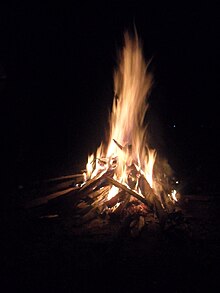

Wood burning
In many areas, wood is the most easily available form of fuel, requiring no tools in the case of picking up dead wood, or few tools, although as in any industry, specialized tools, such as skidders and hydraulic wood splitters, have been developed to mechanize production. Sawmill waste and construction industry by-products also include various forms of lumber tailings.
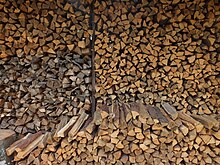

A stack of split firewood in Japan

The discovery of how to make fire for the purpose of burning wood is regarded as one of humanity's most important advances. The use of wood as a fuel source for heating is much older than civilization and is assumed to have been used by Neanderthals. Today, burning of wood is the largest use of energy derived from a solid fuel biomass. Wood fuel can be used for cooking and heating, and occasionally for fueling steam engines and steam turbines that generate electricity. Wood may be used indoors in a furnace, stove, or fireplace or outdoors in a furnace, campfire, or bonfire.


Pile of wood pellets

Historical Development
Wood has been used as fuel for millennia. Historically, it was limited in use only by the distribution of technology required to make a spark. Heat derived from wood is still common throughout much of the world. Early examples included a fire constructed inside a tent. Fires were constructed on the ground, and a smoke hole in the top of the tent allowed the smoke to escape by convection.
In permanent structures and in caves, hearths were constructed or established—surfaces of stone or another noncombustible material upon which a fire could be built. Smoke escaped through a smoke hole in the roof.
Campfires have been used for ages: fires are integral to humanity.
In contrast to civilizations in relatively arid regions (such as Mesopotamia and Egypt), the Greeks, Romans, Celts, Britons, and Gauls all had access to forests suitable for using as fuel. Over the centuries there was a partial deforestation of climax forests and the evolution of the remainder to coppice with standards woodland as the primary source of wood fuel. These woodlands involved a continuous cycle of new stems harvested from old stumps, on rotations between seven and thirty years. One of the earliest printed books on woodland management, in English, was John Evelyn's  "Sylva, or a discourse on forest trees" (1664) advising landowners on the proper management of forest estates. H.L.Edlin, in "Woodland Crafts in Britain", 1949 outlines the extraordinary techniques employed, and range of wood products that have been produced from these managed forests since pre-Roman times. And throughout this time the preferred form of wood fuel was the branches of cut coppice stems bundled into faggots. Larger, bent or deformed stems that were of no other use to the woodland craftsmen were converted to charcoal.
As with most of Europe, these managed woodlands continued to supply their markets right up to the end of World War two. Since then much of these woodlands have been converted to broadscale agriculture. Total demand for fuel increased considerably with the industrial revolution but most of this increased demand was met by the new fuel source coal, which was more compact and more suited to the larger scale of the new industries.
Charcoal, a derivative of wood, was traditionally an important fuel in ironmaking and other processes
During the Edo period of Japan, wood was used for many purposes, and the consumption of wood led Japan to develop a forest management policy during that era. Demand for timber resources was on the rise not only for fuel, but also for construction of ships and buildings, and consequently deforestation was widespread. As a result, forest fires occurred, along with floods and soil erosion. Around 1666, the shogun made it a policy to reduce logging and increase the planting of trees. This policy decreed that only the shogun, and/or a daimyo, could authorize the use of wood. By the 18th century, Japan had developed detailed scientific knowledge about silviculture and plantation forestry.
Fireplaces and Stoves
The development of the chimney and the fireplace allowed for more effective exhaustion of the smoke. Masonry heaters or stoves went a step further by capturing much of the heat of the fire and exhaust in a large thermal mass, becoming much more efficient than a fireplace alone.
Ceramic stoves are traditional in Northern Europe: an 18th-century faience stove at Łańcut Castle, Poland
The metal stove was a technological development concurrent with the industrial revolution. Stoves were manufactured or constructed pieces of equipment that contained the fire on all sides and provided a means for controlling the draft—the amount of air allowed to reach the fire. Stoves have been made of a variety of materials. Cast iron is among the more common. Soapstone (talc) , tile, and steel have all been used. Metal stoves are often lined with refractory materials such as firebrick, since the hottest part of a woodburning fire will burn away steel over the course of several years' use.
The Franklin stove was developed in the United States by Benjamin Franklin. More a manufactured fireplace than a stove, it had an open front and a heat exchanger in the back that was designed to draw air from the cellar and heat it before releasing it out the sides. The heat exchanger was never a popular feature and was omitted in later versions. So-called "Franklin" stoves today are made in a great variety of styles, though none resembles the original design.
The 1800s became the high point of the cast iron stove. Each local foundry would make their own design, and stoves were built for myriads of purposes—parlour stoves, box stoves, camp stoves, railroad stoves, portable stoves, cooking stoves and so on. Elaborate nickel and chrome edged models took designs to the edge, with cast ornaments, feet and doors. Wood or coal could be burnt in the stoves and thus they were popular for over one hundred years. The action of the fire, combined with the causticity of the ash, ensured that the stove would eventually disintegrate or crack over time. Thus a steady supply of stoves was needed. The maintenance of stoves, needing to be blacked, their smokiness, and the need to split wood meant that oil or electric heat found favour.


Potbelly stove at the Museum of Appalachia
The airtight stove, originally made of steel, allowed greater control of combustion, being more tightly fitted than other stoves of the day. Airtight stoves became common in the 19th century.
Use of wood heat declined in popularity with the growing availability of other, less labor-intensive fuels. Wood heat was gradually replaced by coal and later by fuel oil, natural, gas and propane heating except in rural areas with available forests.
After the 1967 Oil Embargo many people in the United States used wood as fuel for the first time. The EPA provided information on clean stoves, which burned much more efficiently.
1970s

A brief resurgence in popularity occurred during and after the 1973 energy crisis, when some believed that fossil fuels, would become so expensive as to preclude their use. A period of innovation followed, with many small manufacturers producing stoves based on designs old and new. Notable innovations from that era include the Ashley heater, a thermostatically controlled stove with an optional perforated steel enclosure that prevented accidental contact with hot surfaces. The decade also saw a number of dual-fuel furnaces and boilers made, which utilized ductwork and piping to deliver heat throughout a house or other building.

1980s
The growth in popularity of wood heat also led to the development and marketing of a greater variety of equipment for cutting, splitting and processing firewood. Consumer grade hydraulic log splitters were developed to be powered by electricity, gasoline, or PTO of farm tractors. In 1987 the US Department of Agriculture published a method for producing kiln dried firewood, on the basis that better heat output and increased combustion efficiency can be achieved with logs containing lower moisture content.
The magazine "Wood Burning Quarterly" was published for several years before changing its name to "Home Energy Digest" and, subsequently, disappearing.
Today
A pellet stove is an appliance that burns compressed wood or biomass pellets. Wood heat continues to be used in areas where firewood is abundant. For serious attempts at heating, rather than mere ambience (open fireplaces), stoves, fireplace inserts, and furnaces are most commonly used today. In rural, forested parts of the U.S., freestanding boilers are increasingly common. They are installed outdoors, some distance from the house, and connected to a heat exchanger in the house using underground piping. The mess of wood, bark, smoke, and ashes is kept outside and the risk of fire is reduced. The boilers are large enough to hold a fire all night, and can burn larger pieces of wood, so that less cutting and splitting is required. There is no need to retrofit a chimney in the house. However, outdoor wood boilers emit more wood smoke and associated pollutants than other wood-burning appliances. This is due to design characteristics such as the water-filled jacket surrounding the firebox, which acts to cool the fire and leads to incomplete combustion. Outdoor wood boilers also typically have short stack heights in comparison to other wood-burning appliances, contributing to ambient levels of particulates at ground level. An alternative that is increasing in popularity are wood gasification boilers, which burn wood at very high efficiencies (85-91%) and can be placed indoors or in an outbuilding. There are plenty of ways to process wood fuel and the inventions today are maximizing by the minute.
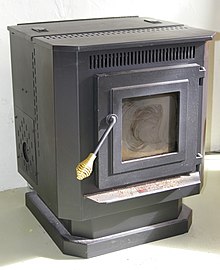
A wood pellet stove
Wood is still used today for cooking in many places, either in a stove or an open fire. It is also used as a fuel in many industrial processes, including smoking meat and making maple syrup.
As a sustainable energy source, wood fuel also remains viable for generating electricity in areas with easy access to forest products and by-products.
Measurement of Firewood
In the metric system, firewood is normally sold by the cubic metre or stere (1 m³ = ~0.276 cords).
Stapled birch wood
In the United States and Canada, firewood is usually sold by the cord, 128 ft³ (3.62 m³), corresponding to a woodpile 8 ft wide × 4 ft high of 4 ft-long logs. The cord is legally defined by statute in most U.S. states. A "thrown cord" is firewood that has not been stacked and is defined as 4 ft wide x 4 ft tall x 10 ft long. The additional volume is to make it equivalent to a standard stacked cord, where there is less void space. It is also common to see wood sold by the "face cord", which is usually not legally defined, and varies from one area to another. For example, in one state a pile of wood 8 feet wide × 4 feet high of 16"-long logs will often be sold as a "face cord", though its volume is only one-third of a cord. In another state, or even another area of the same state, the volume of a face cord may be considerably different. Hence, it is risky to buy wood sold in this manner, as the transaction is not based on a legally enforceable unit of measure.
In Australia, it is normally sold by the tonne.
Energy Content
A common hardwood, red oak, has an energy content (Heat value) of 14.9 mega joules per kilogram (6,388 BTU per pound), and 10.4 mega joules recoverable if burned at 70% efficiency.
The Sustainable Energy Development Office (SEDO), part of the Government of Western Australia states that the energy content of wood is 16.2 megajoules per kilogram (4.5 kWh/kg).
According to The Bioenergy Knowledge Centre, the energy content of wood is more closely related to its moisture content than its species. The energy content improves as moisture content decreases.
In 2008, wood for fuel cost $15.15 per 1 million BTUs (0.041 EUR per kWh).
Environmental Impacts

Combustion by-products
As with any fire burning wood fuel creates numerous by-products, some of which may be useful (heat and steam), and others that are undesirable, irritating or dangerous.
One by-product of wood burning is wood ash, which in moderate amounts is a fertilizer (mainly potash), contributing minerals, but is strongly alkaline as it contains potassium hydroxide (lye). Wood ash can also be used to manufacture soap.
Fireplace and chimney after a wildfire, Witch Fire, California.
Smoke, containing water vapor, carbon dioxide and other chemicals and aerosol particulates, including caustic alkali fly ash, which can be an irritating (and potentially dangerous) by-product of partially burnt wood fuel. A major component of wood smoke is fine particles that may account for a large portion of particulate air pollution in some regions. During cooler months, wood heating accounts for as much as 60% of fine particles in Melbourne, Australia.
Slow combustion stoves increase efficiency of wood heaters burning logs, but also increase particulate production. Low pollution/slow combustion stoves are a current area of research. An alternative approach is to use pyrolysis to produce several useful biochemical byproducts, and clean burning charcoal, or to burn fuel extremely quickly inside a large thermal mass, such as a masonry heater. This has the effect of allowing the fuel to burn completely without producing particulates while maintaining the efficiency of the system.
In some of the most efficient burners, the temperature of the smoke is raised to a much higher temperature where the smoke will itself burn (e.g. 609 °C for igniting carbon monoxide gas). This may result in significant reduction of smoke hazards while also providing additional heat from the process. By using a catalytic converter, the temperature for obtaining cleaner smoke can be reduced. Some U.S. jurisdictions prohibit sale or installation of stoves that do not incorporate catalytic converters.
Combustion by Product-Effect on Human Health
Depending on population density, topography, climatic conditions and combustion equipment used, wood heating may substantially contribute to air pollution particularly particulates. The conditions in which wood is burnt will greatly influence the content of the emission. Particulate air pollution can contribute to human health problems and increased hospital admissions for asthma & heart diseases.
Wood-burning fireplace with burning log
The technique of compressing wood pulp into pellets or artificial logs can reduce emissions. The combustion is cleaner, and the increased wood density and reduced water content can eliminate some of the transport bulk. The fossil energy consumed in transport is reduced and represents a small fraction of the fossil fuel consumed in producing and distributing heating oil or gas. 
Wood combustion products can include toxic and carcinogenic substances. Generally, the heartwood  of a tree contains the highest amounts of toxic substances, but precautions should be taken if one is burning wood of an unknown nature, since some trees' woodsmoke can be highly toxic.
Harvesting Operations
Much wood fuel comes from native forests around the world. Plantation wood is rarely used for firewood, as it is more valuable as timber or wood pulp, however, some wood fuel is gathered from trees planted amongst crops, also known as agroforestry. The collection or harvesting of this wood can have serious environmental implications for the collection area. The concerns are often specific to the particular area, but can include all the problems that regular logging create. The heavy removal of wood from forests can cause habitat destruction and soil erosion.  However, in many countries, for example in Europe and Canada, the forest residues are being collected and turned into useful wood fuels with minimal impact on the environment. Consideration is given to soil nutrition as well as erosion. The environmental impact of using wood as a fuel depends on how it is burnt. Higher temperatures result in more complete combustion and less noxious gases as a result of pyrolysis. Some may regard the burning of wood from a sustainable source as carbon-neutral. A tree, over the course of its lifetime, absorbs as much carbon (or carbon dioxide) as it releases when burnt.
Some firewood is harvested in "woodlots" managed for that purpose, but in heavily wooded areas it is more often harvested as a byproduct of natural forests. Deadfall that has not started to rot is preferred, since it is already partly seasoned.  Standing dead timber is considered better still, as it is both seasoned, and has less rot. Harvesting this form of timber reduces the speed and intensity of bushfires. Harvesting timber for firewood is normally carried out by hand with chainsaws. Thus, longer pieces - requiring less manual labor, and less chainsaw fuel - are less expensive and only limited by the size of their firebox. Prices also vary considerably with the distance from wood lots, and quality of the wood. Firewood usually relates to timber or trees unsuitable for building or construction. Firewood is a renewable resource provided the consumption rate is controlled to sustainable levels. The shortage of suitable firewood in some places has seen local populations damaging huge tracts of bush possibly leading to further desertification.
Greenhouse Gases
Wood burning creates more atmospheric CO2 than biodegradation of wood in a forest (in a given period of time) because by the time the bark of a dead tree has rotted, the log has already been occupied by other plants and micro-organisms which continue to sequester the CO2 by integrating the hydrocarbons of the wood into their own life cycle. Wood harvesting and transport operations produce varying degrees of greenhouse gas pollution. Inefficient and incomplete combustion of wood can result in elevated levels of greenhouse gases other than CO2, which may result in positive emissions where the byproducts have greater Carbon dioxide equivalent values. In an attempt to provide quantitative information about the relative output of CO2 to produce electricity of domestic heating, the United Kingdom Department of Energy and Climate Change (DECC) has published a comprehensive model comparing the burning of wood (wood chip) and other fuels, based on 33 scenarios.  The model's output is kilogram of CO2 produced per Megawatt hour of delivered energy. Scenario 33 for example, which concerns the production of heat from wood chips produced from UK small roundwood produced from bringing neglected broadleaf forests back into production, shows that burning oil releases 377 kg of CO2 while burning woodchip releases 1501 kg of CO2 per MW h delivered energy.
The intentional and controlled charring of wood and its incorporation into the soil is an effective method for carbon sequestration as well as an important technique to improve soil conditions for agriculture, particularly in heavily forested regions. It forms the basis of the rich soils known as Terra preta.
Regulations and Legislations

The environmental impact of burning wood fuel is debatable. Several cities have moved towards setting standards of use and/or bans of wood burning fireplaces. For example, the city of Montréal, Québec passed a resolution to ban wood fireplace installation in new construction. However many wood burning advocates claim that properly harvested wood is carbon-neutral, therefore off-setting the negative impact of by-product particles given off during the burning process. In the context of forest wildfires, wood removed from the forest setting for use as wood fuel can reduce overall emissions by decreasing the quantity of open burned wood and the severity of the burn while combusting the remaining material under regulated conditions.

Potential use in Renewables Energy Technologies

Usage
Some European countries produce a significant fraction of their electricity needs from wood or wood wastes. In Scandinavian countries the costs of manual labor to process firewood is very high. Therefore it is common to import firewood from countries with cheap labor and natural resources. The main exporters to Scandinavia are the Baltic countries (Estonia, Lithuania, and Latvia). In Finland, there is a growing interest in using wood waste as fuel for home and industrial heating, in the form of compacted pellets.
In the United States, wood fuel is the second-leading form of renewable energy (behind hydro-electric).
Australia

About 1.5 million households in Australia use firewood as the main form of domestic heating. As of 1995, approximately 1.85 million cubic metres of firewood (1m³ equals approximately one car trailer load) was used in Victoria annually, with half being consumed in Melbourne. This amount is comparable to the wood consumed by all of Victoria’s sawlog and pulplog forestry operations (1.9 million m³).


A pile of firewood logged from the Barmah Forest in Victoria
Species used as sources of firewood include:
  • Red Gum, from forests along the Murray River (the Mid-Murray Forest Management Area, including the Barmah and Gunbower forests, provides about 80% of Victoria’s red gum timber).
  • Box and Messmate Stringybark, in southern Australia.
  • Sugar gum, a wood with high thermal efficiency  that usually comes from small plantations.
  • Jarrah, in the Southwest of Western Australia. It generates a greater heat than most other available woods and is usually sold by the tonne.

Europe

In 2014, the construction of the biggest pellet plant in the Baltic region was started in Võrumaa, Sõmerpalu, with an expected output of 110,000 tons of pellet / year. Different types of wood will be used in the process of pellet making (firewood, woodchips, shavings). The Warmeston OÜ plant started its activity by the end of 2014. In 2013, the main pellet consumers in Europe were the UK, Denmark, the Netherlands, Sweden, Germany and Belgium, as U.E.'s annual report on biofuels states. In Denmark and Sweden, pellets are used by power plants, households and medium scale consumers for district heating, compared to Austria and Italy, where pellets are mainly used as small - scale private residential and industrial boilers for heating.

Haiti

A lot of wood is used in Haiti as a source of fuel for heating homes and making fires.

Reference 

Diamond, Jared. 2005 Collapse: How Societies Choose to Fail or Succeed. Penguin Books. New York. 294-304 pp. ISBN 0-14-303655-6

- Wikipedia 

Advantages and Disadvantages of Fasting for Runners

Author BY   ANDREA CESPEDES  Food is fuel, especially for serious runners who need a lot of energy. It may seem counterintuiti...